

The use of AI in university admissions is a response to real operational strain. By the time most admissions teams log in at the start of the week, hundreds of new inquiries may already be waiting. Some are simple questions about deadlines or entry requirements. Others are partially completed applications that need nudging. Buried among them are high-intent prospects who will quietly disappear if no one responds quickly enough.
For years, universities tried to absorb this pressure with manual processes and more staff hours. But rising application volumes, tighter enrollment targets, and growing expectations for instant response exposed the limits of human-only systems. AI entered the admissions process not as a trend, but as infrastructure, a way to manage scale, protect conversion rates, and reduce counsellor burnout without sacrificing decision-making control.
Read more: How Digital Platforms Are Simplifying Global University Admissions
Why Universities Shifted to AI After 2024

In the early 2020s, universities tried to manage rising inquiry loads by hiring more staff and using basic automation, like canned email replies or calendar reminders. But by 2024, these stopgap measures hit a limit.
Lead volume ballooned. Some institutions saw application volumes increase by double-digit percentages year-over-year, especially as more international and non-traditional students applied through centralised portals and third-party platforms. Admissions counsellors, already stretched thin, began struggling to respond quickly. Slow replies meant students dropped out of the process and enrolled elsewhere.
Response delays and inconsistent follow-ups were more than an inconvenience: they directly affected conversion rates. Studies show that rapid initial engagement, within minutes of inquiry, can dramatically increase the likelihood of enrolment. When manual systems couldn’t deliver a response until hours or days later, prospective students disengaged.
In this environment, lead leakage, where potential applicants are never contacted or properly followed up, doubled in some programs lacking automation. Admissions offices could not scale their human responses effectively without technology that could help triage, respond, and prioritise.
This operational pressure pushed many institutions toward AI student recruitment tools capable of managing volume while keeping engagement standards high. Today, over half of colleges surveyed report using AI to automate parts of admissions and scheduling, and that number continues to grow.
Read more: Using Automation to Simplify Admissions and Enrolment Processes in Universities
Where AI Actually Impacts the Funnel
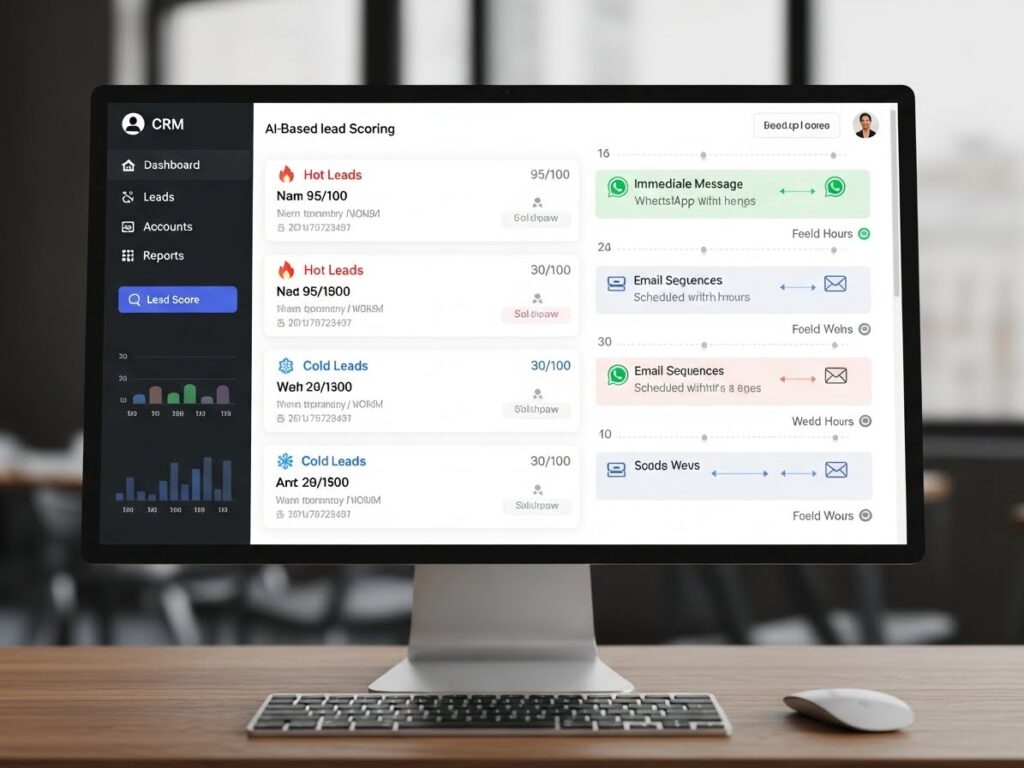
AI doesn’t replace humans. It amplifies their capacity where volume overwhelms manual processing. Here’s where it delivers the most measurable impact:
Lead Scoring:
AI models analyse engagement behaviour to assign a likelihood score that a prospective student will complete an application and enrol. Admissions teams can then prioritise follow-ups where they matter most instead of reacting to every inquiry equally.
Admissions Automation:
Once a lead is scored, automated workflows can trigger personalised messages based on where the student is in their journey. This might be a prompt to complete missing documents, reminders about deadlines, or next steps reminders. These automated responses are immediate and free admissions staff from repetitive tasks.
Application Screening:
AI can highlight low-eligibility forms or incomplete submissions earlier in the process. Instead of manually checking each file, systems can flag missing GPA information, absent test scores, or misplaced documents for quick correction.
Behaviour Tracking:
Modern systems track user behaviour on university websites. Which programs did they explore? How many times did they visit the requirements page? AI can turn these signals into predictions about who is likely to become an applicant. These behavioural insights help admissions professionals tailor their outreach and spot high-intent candidates earlier.
AI Chatbots in Student Admissions
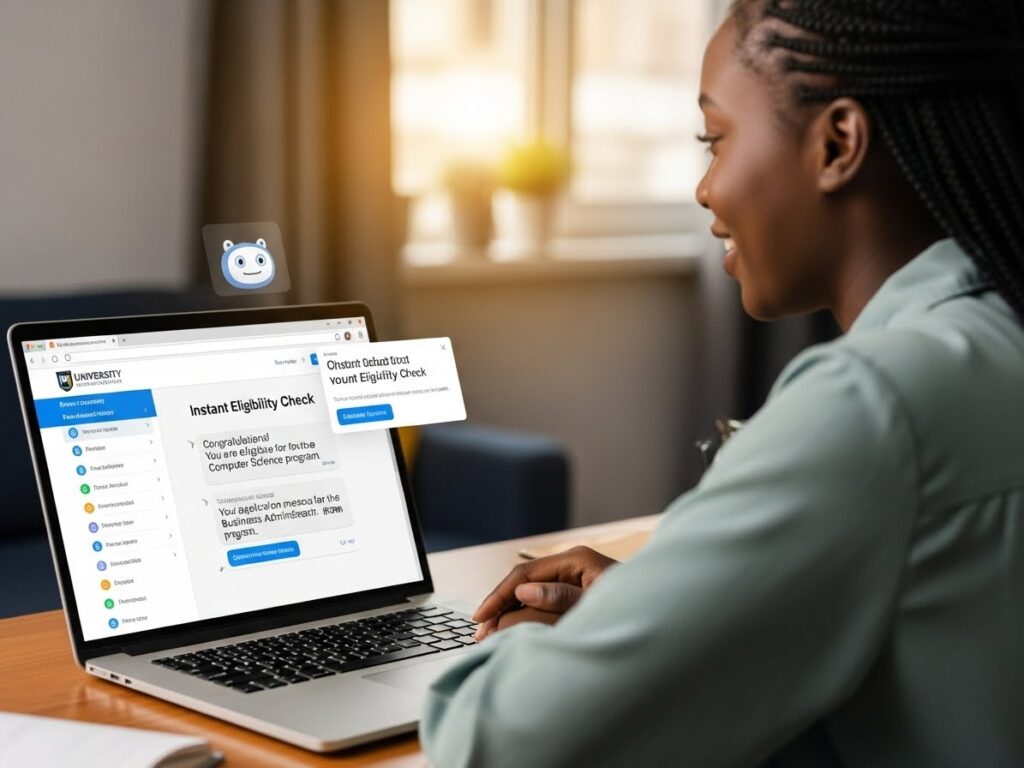
One of the most visible and effective forms of AI in admissions is the chatbot.
Today’s AI chatbots answer questions instantly. Prospective students can get responses on eligibility, program details, scholarship deadlines, application steps, and more, at any hour, across time zones. This removes the waiting time that often leads students to disengage.
These chatbots also conduct basic eligibility checks. By asking targeted questions upfront, they can filter out clearly ineligible applicants or gather key information before a human counsellor ever needs to intervene.
In terms of program choice, chatbots assist students in discovering the best fit based on their interests and academic background. Students often enter admissions journeys confused by course variations or unsure about prerequisites. Guided discovery boosts application accuracy and reduces mistakes.
Language support further expands reach. Many applicants come from non-English speaking regions or rural areas with limited access to admissions offices. AI chatbots can communicate in multiple languages, increasing engagement among previously hard-to-reach applicants.
Doc Review and Fraud Filtering With AI
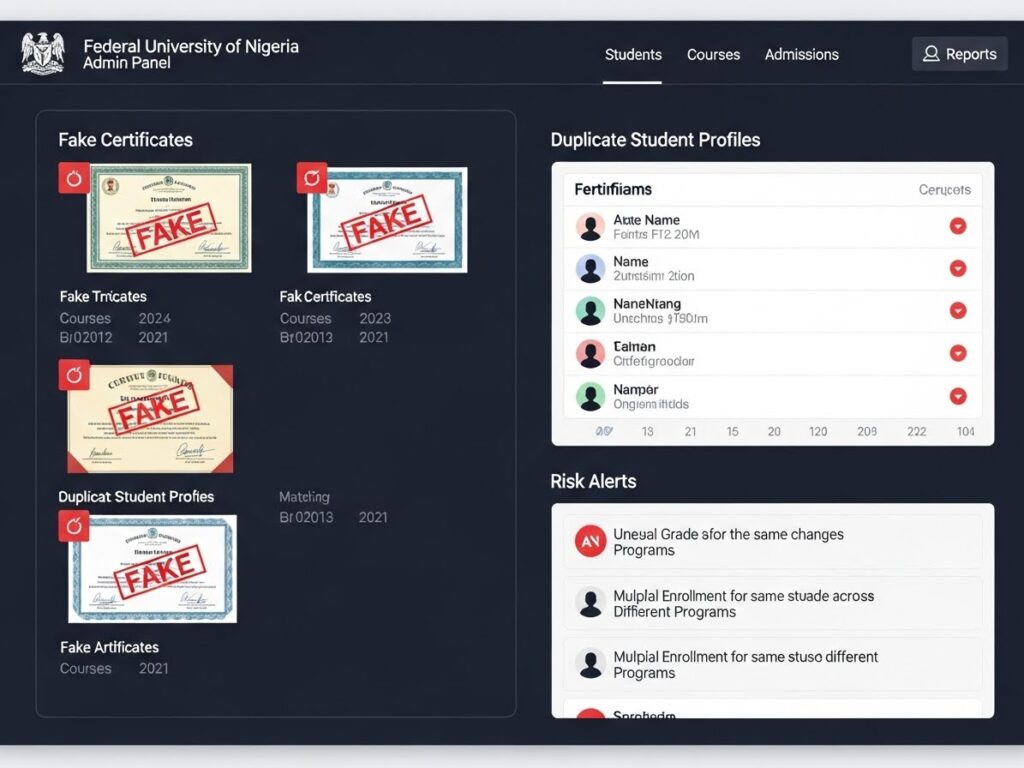
Admissions teams also spend a significant amount of time verifying documents. AI tools bring precision and speed to this burden.
Fake Certificate Detection:
Machine vision scans images and cross-references them with known formats, spotting signs of tampered or fraudulent certificates. In places where fake identity submissions were once a recurring problem, AI has prevented errors before they reached the human review stage.
Duplicate Application Filtering:
Students sometimes open multiple sessions or submit overlapping files. AI recognises and consolidates duplicates, ensuring clean data and reducing manual reconciliation.
Risk Scoring:
AI assigns risk levels to applications based on inconsistencies in data patterns. Those flagged for review are then prioritised by admissions staff, improving compliance and quality control.
What Fails When AI Runs Without Rules
AI can be powerful, but unchecked deployment leads to predictable problems.
Over-automation can strip away human judgment. When systems make decisions without adequate oversight, qualified applicants may be rejected because the AI missed nuance that a human would spot.
Incorrect intent tagging can misroute high-value leads. Poor training data or misconfigured scoring models might categorise a highly motivated applicant as “low priority,” delaying essential follow-up.
Without robust manual review pipelines, errors snowball. AI systems need periodic calibration, and humans must remain in the loop for exceptions and complex cases.
Finally, poor data quality undermines AI accuracy. Garbage in = garbage out. AI trained on incomplete or biased data will reinforce errors or inequities and could harm fairness in admissions outcomes.
How Universities Should Start AI Adoption
For institutions starting their AI journey, the path doesn’t begin with full-scale deployment.
Begin with a chatbot integrated into the CRM. This delivers immediate relief by capturing leads, answering questions, and centralising interactions. Start small, prove value, and gather performance data.
Add scoring and fraud filters next. Once chatbots are working reliably, incorporate predictive scoring and document verification to prioritise and protect your admissions funnel.
Test automation on one program first. Choose a pilot group, perhaps a high-volume undergraduate intake, and gather metrics on response time, conversion rates, completion rates, and student satisfaction.
Scale only after performance validation. Use data to refine your models, adjust workflows, and ensure fairness before expanding to all programs. Controlled rollout prevents costly mistakes and builds confidence across the admissions office.