

Universities everywhere, once defined by brick-and-mortar campuses, now find themselves navigating a dramatically different educational landscape. The abrupt pivot to online instruction during the COVID-19 pandemic disrupted decades of established norms and practices. Lecture halls emptied, and professors scrambled to deliver courses virtually, sometimes overnight. Campus infrastructure and traditional course models weren’t designed for that kind of flexibility or scale.
Even years after the lockdown, many students and staff remain hesitant to fully return to what used to be the norm. Surveys show that only 29% of students now prefer traditional face-to-face learning, while 28% seek hybrid models, following an increase in preference after 2023. Yet hybrid or flexible hybrid learning isn’t just a stopgap. It’s quickly positioning itself as the “new normal.”
This introduces an urgent question: How can universities strategically integrate flexible hybrid learning models to balance student demand, faculty needs, and institutional goals? Implementing a hybrid teaching framework isn’t about adding Zoom links; it requires rethinking course design, adopting inclusive blended learning strategies, and investing in robust digital infrastructure. Let’s explore the strategic path forward.
Why Flexible Hybrid Learning Models Are Shaping Higher Education

1. Post-COVID Shifts
The pandemic catalysed the largest disruption in higher education history. An estimated 1.6 billion learners were affected in more than 190 countries and all continents. Institutions quickly adopted blended and hybrid delivery formats, and some still continue the trend. Remote teaching was not only feasible but also effective.
A McKinsey study indicates both faculty and students want to sustain the interactive technologies honed during the pandemic, signalling that post-COVID classrooms will likely retain hybrid elements.
2. Rising Demand for Flexibility
One survey reveals that 82% of students choose hybrid learning for its flexibility and autonomy. Another report found that adult undergraduates and graduate students strongly favour hybrid formats (55% and 61%, respectively).
Professionals seeking to upskill also favour hybrid university programs, especially part-time MBAs that allow simultaneous work and learning, leading to a 30% increase in online MBA offerings over five years.
3. Global Trends
Institutions worldwide are launching hyflex models, courses where learners choose between in-person and remote attendance. European and North American universities are experimenting with synchronised classrooms or campus immersions, addressing the blending of online and face-to-face integration. In Australia, campuses increasingly host empty lecture halls as students opt for recorded or remote materials, reflecting a global demand for choice.
Core Components of Flexible Hybrid Learning Models
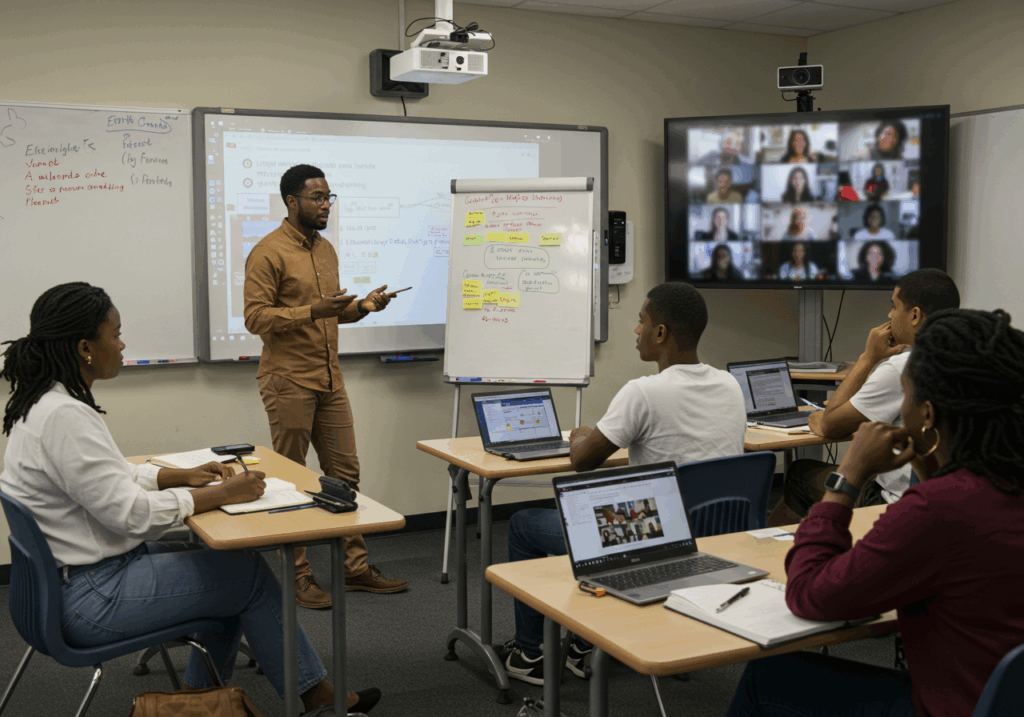
To effectively implement flexible hybrid learning models, universities must design a framework incorporating course design, technology, campus culture, and support systems.
1. Course Design: Synchronous vs Asynchronous
An intentional balance of synchronous (live sessions, real-time Q&A) and asynchronous (pre-recorded lectures, discussion boards) formats lies at the heart of blended learning strategies. This ensures flexibility without compromising engagement. Research indicates that blended learning often produces better outcomes than purely face-to-face or fully online formats.
2. Technology Stack
- Virtual Classrooms & LMS Integration: Platforms like EdiifyLMS or Blackboard must support seamless navigation across devices, enabling one-click access to live and recorded sessions.
- Mobile Access: Students now expect full course access on their phones to watch lectures, complete quizzes, and engage on forums.
- Emerging Tools: Extended reality (XR), simulation labs, and AI adaptive learning are becoming prominent in hybrid teaching frameworks.
3. Faculty Readiness
Faculty need training in both pedagogy and tools covering interactive strategies, inclusive practices, and digital fluency. Institutions that provided strong support during the pandemic report smoother transitions to long-term hybrid models.
Benefits for Students and Faculty
1. Personalised Learning & Accessibility
Students report greater motivation and improved outcomes in hybrid courses, and 64% of academic leaders noted improved performance. Motivations include flexibility, autonomy, and direct control over their schedules. Adult and first-gen students particularly benefit from the freedom to balance education with other commitments.
2. Faculty Work-Life Balance
Hybrid teaching fosters better work-life balance by minimising travel and enabling efficient interactions through digital channels, relieving workload while expanding outreach.
3. Institutional Resilience
Hybrid models build robustness into educational operations, allowing continuity during crises like pandemics or extreme weather, and reducing disruption risks.
Challenges in Implementing Flexible Hybrid Learning Models
While the advantages are compelling, several hurdles must be addressed:
1. Digital Infrastructure Gaps
Not all campuses, and certainly not all students, have reliable internet or access to updated devices. A BMC study showed that 2022 students faced issues like self-motivation, time management, and tech connectivity.
2. Faculty Training Needs
Despite access to tools, many faculty lack comfort with hybrid pedagogy. A systematic review identified technical, time-management, assessment, and communication challenges. Without ongoing professional development, hybrid models risk faltering.
3. Student Adaptability
Some students thrive in hybrid settings, but others may feel isolated or confused by fluctuating formats. Research at Aston University highlighted mixed preferences for video lectures and noted stress from screen use and self-regulation demands.
4. Concerns about Quality
There is employer concern about graduates’ collaborative and communication skills from fully online programs. Employer satisfaction with hybrid or face-to-face graduates was higher (88.3% vs 81.9%) (The Australian). This means quality must be safeguarded.
Successful Case Studies: Universities Leading in Hybrid Learning
Arizona State University (ASU) – ASU Sync
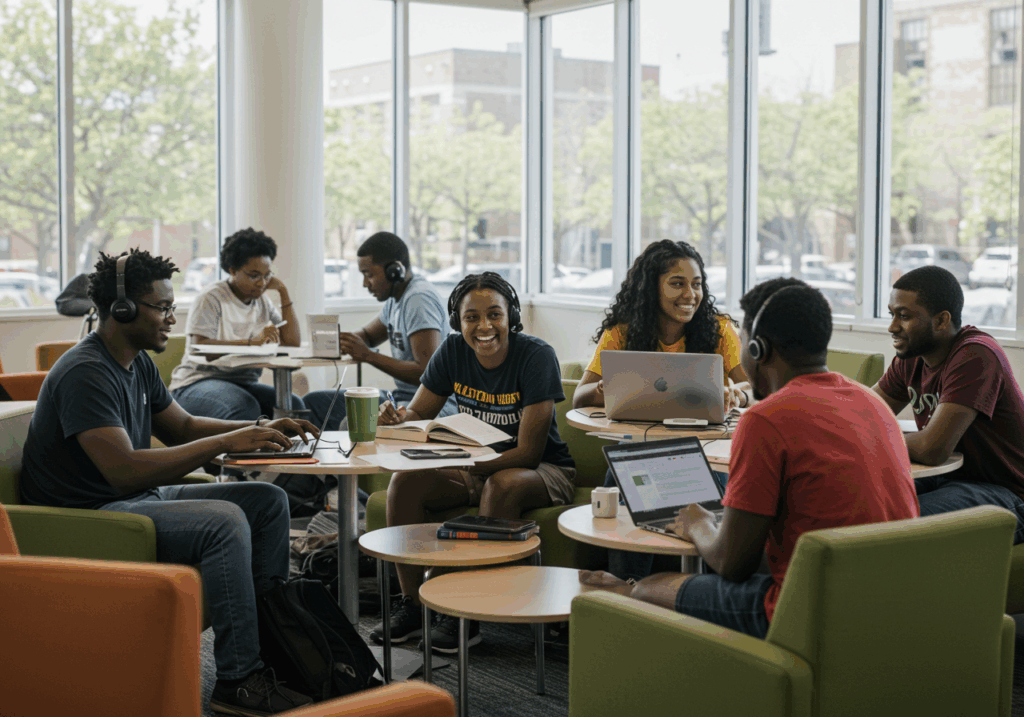
ASU developed “ASU Sync”: live-broadcasted in-person classes allowing remote students to participate in real time. Their prior investments in hybrid campus infrastructure made this leap smoother during COVID, leading to a robust hybrid learning environment.
Tepper School of Business, Carnegie Mellon
Tepper introduced “access weekends” for online MBA students, an immersive weekend on campus to foster networking and mentorship. As a result, 90% of online participants secured promotions or career changes within four months post-graduation, with median salaries reaching $159,183.
Ahmadu Bello University Distance Learning Centre (ABUDLC)
Ahmadu Bello University’s Distance Learning Centre (ABUDLC) has successfully implemented a blended learning model powered by Vigilearn Technologies, offering a strategic mix of in-person facilitation and robust digital delivery. Through Vigilearn’s EdiifyLMS and integrated tools, ABUDLC delivers pre-recorded lectures, live virtual sessions, mobile-accessible learning resources, all aligned with the university’s academic standards. This model reflects a scalable and sustainable approach to flexible education delivery in emerging markets.
How Edutech Global Supports Universities with Flexible Hybrid Learning Models
At Edutech Global, we empower universities to implement flexible education delivery models that blend online and face-to-face integration seamlessly through:
- Scalable LMS Integration
Our LMS solution, EdiifyLMS, manages synchronous and asynchronous content, mobile engagement, analytics, and secure access across devices.
- Virtual Classroom Platforms
Our virtual learning experience is driven by Studio, a powerful, cloud-based platform designed for seamless, real-time engagement. With features like interactive whiteboards, break out rooms, polls, screen sharing, and real-time chat, Studio enables educators to host dynamic live sessions that feel just as collaborative as in-person classes. Whether delivering lectures, facilitating group discussions, or hosting virtual office hours, instructors can create immersive and flexible learning environments that support diverse teaching styles.
- Faculty Onboarding & Training
Our training workshops cover hybrid pedagogy fundamentals: course design, student engagement, equitable assessments, and technology use.
- Continuous Support & Analytics
We provide ongoing technical support and analytics dashboards for tracking student participation across modalities, helping educators intervene early.
- Strategic Partnerships & Content Collaboration
Through affiliations, community-of-practice networks, and policy advisement, we help institutions refine their hybrid teaching frameworks in line with emerging best practices.
Are you ready to transform your campus into a dynamic hybrid learning environment? At Edutech Global, we’re committed to guiding your journey from course design and tech deployment to faculty training and analytics. Let’s reimagine how higher education can serve the world flexibly, dynamically, and effectively.