

Every year, thousands of students around the world dream of studying abroad. They look at institutions far from home, eager for new experiences, new knowledge, and new networks. Yet all too often, the journey from “I want to apply” to “I’ve been accepted” is mired in complexity. Multiple portals, long waiting times, unclear communication, and added costs can make the path daunting.
For students in Africa and everywhere else, the world of global university admissions can feel like it belongs to someone else, those with time, resources or insider knowledge. The process of applying to universities internationally, navigating visa procedures, paying fees in foreign currency, and tracking progress can be overwhelming. According to the global enrollment benchmark survey by StudyPortals, among institutions surveyed, 34 % saw growth in undergraduate international enrolments, while 26 % saw declines; and visa and policy issues were cited as a major barrier by 62 % of institutions globally.
But there is good news. As global student mobility expands, so do the tools that support it. Digital platforms are transforming the traditional application maze into a streamlined, transparent, accessible journey. These platforms are particularly relevant for Edutech-driven models: where software bridges the gap between student aspiration and institutional offering, where applications, processing, communications, and payments live under one roof. The result? Students can focus on preparing their portfolios, essays, and dreams, not juggling login sheets and chasing replies.
The Complexity of Traditional University Admissions

The path to applying for global university programmes has long been characterised by several pain points. Let’s look at the key challenges.
Multiple portals, delayed communication, and high costs
In many cases, prospective international students must navigate several portals: one for the university application, another for scholarship or financial aid, yet another for visa tracking or accommodation. Each portal may have its own login credentials, distinct deadlines, and different document requirements. The lack of a unified interface creates friction.
Communication delays add to the frustration. Without automated notifications, students may wait weeks or months for updates. The uncertainty can be unnerving, especially when deadlines are looming or visa decisions hinge on acceptance letters.
Cost burdens compound the issue. Application fees, couriering of documents, currency conversion charges for payment, travel costs for interviews, and visa fees all stack up. For students from countries like Nigeria, these costs can sometimes exceed what was budgeted for tuition or living expenses.
Lack of coordination between international universities
When applying to universities abroad, students often face regions with differing academic calendars, standards for transcripts, varied language requirements, and diverse credential-recognition systems. For instance, one university may ask for a certified transcript with an apostille, another may expect a digital upload in a specific format. Processing times differ, as do the methods for credential evaluation.
Moreover, universities in different countries seldom share a common platform for handling international applications. This means each institution sets its own rules, creates its own delays, and often offers little transparency to the applicant. The result is complexity, confusion and sometimes attrition of students who opt out when the process becomes too onerous.
In sum, the traditional way of handling global university admissions is a patchwork of systems, expectations, and barriers that disproportionately affect international applicants. This situation creates an opportunity for innovation, and that innovation is digital.
How Digital Platforms Simplify Global Admissions
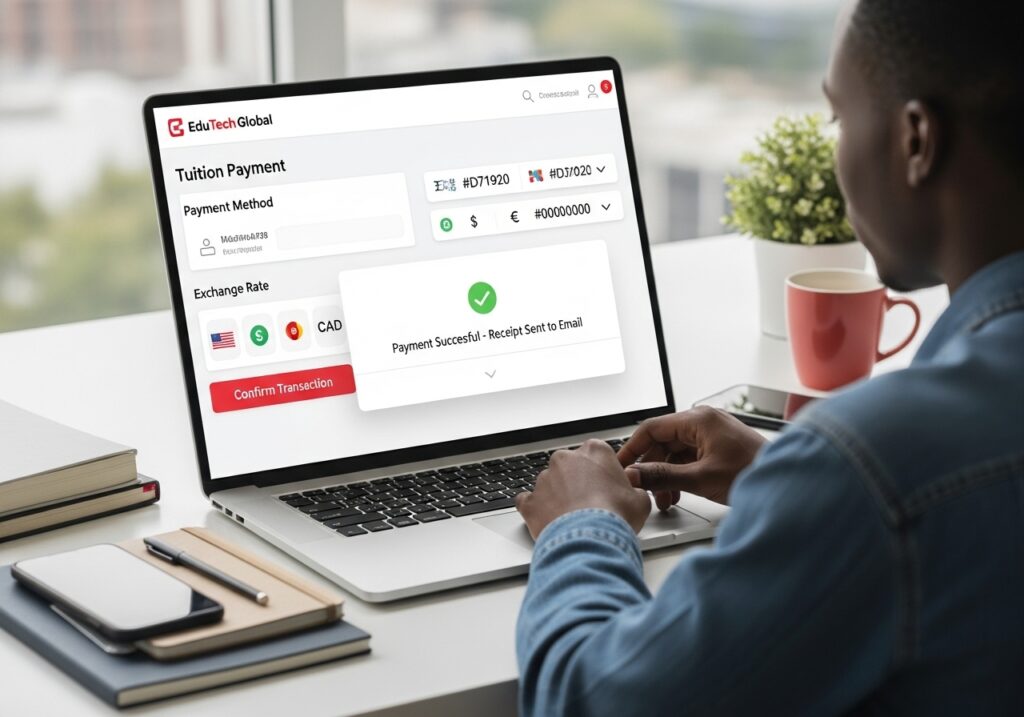
Digital platforms offer a transformative way to handle global university admissions. They bring cohesion, transparency, speed, and cost reduction. Here’s how they do it.
One-stop application systems streamline global entry
Rather than students managing ten different portals, a one-stop platform centralises the entire admission process. From browsing programmes, submitting applications, uploading documents, paying fees and tracking status, everything happens in one place. This unification reduces the time and mental overhead for the student. It also reduces administrative overhead for the university.
When information flows seamlessly, acceptance letters, invoices and offer communications get dispatched faster. Students from Lagos, Nairobi, or Mumbai no longer need to chase replies via email or phone; they glimpse their progress dashboard and know where they stand.
Integration with CRM and LMS tools for smooth processing
For institutions, the backend matters. Digital admission platforms that integrate with Customer Relationship Management (CRM) systems and Learning Management Systems (LMS) allow universities to treat applicants as engaged prospects, monitoring communication touchpoints, automating follow-ups, and aligning with academic launch dates.
For example, once a student is accepted and deposits are paid, the same platform may push relevant orientation materials via the LMS, schedule onboarding webinars, or trigger creation of the student’s account. This smooth handoff reduces the risk of leavers between admission and enrolment.
Such integration also enables better data collection on applicant behaviour. Universities can analyse which outreach efforts worked, where applicants dropped off, and how to improve conversion, thereby enhancing global admissions performance.
Features of Modern Global Admission Systems

To truly simplify global university admissions, digital platforms must offer specific features. Let’s look at what administrators should evaluate and implement.
Centralised dashboards
A unified portal where students submit all materials, track progress and receive updates. For administrators, a single dashboard that shows all active applicants, stages (e.g., “submitted transcript”, “interview scheduled”, “fee paid”), region-specific filters and custom alerts. This centralisation replaces disjointed spreadsheets, email threads and multiple systems.
Automated verification workflows
Systems should automate the verification of submitted documents. For example, once a transcript is uploaded, the platform may check its format, flag missing fields, and send reminders automatically. Some platforms integrate with third-party verification providers or leverage AI to detect inconsistencies. This reduces manual error and decision latency.
Real-time tracking and notifications
Applicants should receive automated and timely updates: “Your application has been received”, “Requirement missing: English score”, “Interview scheduled for 15 July (local time)”. Universities should also receive alerts when applicants stall at certain stages. This keeps momentum up and reduces the ‘lost in the system’ feeling.
Online payment integration for cross-border applications
International students often fight with payment issues: inability to use certain cards, currency exchange, and delayed bank transfers. A modern system supports multiple currencies, local payment gateways, instalments, and automatic payment confirmation. For universities, this means reconciliation dashboards and fewer manual follow-ups.
Multi-language and region-specific support
Given the global focus, the admission portal must support multiple languages, localised date/time formats, currency conversions, and regional nuance in messaging (for example, English proficiency waiver for certain countries). Localised counselling and support can be integrated into the portal to further reduce confusion.
Onboarding & transition into learning
Once admitted, students should move seamlessly into onboarding, registration, orientation and then into the LMS. The admission platform should hand off to the LMS and student information systems (SIS) without needing duplicate registration. This handover is critical for student satisfaction and retention, especially for online or hybrid international programs.
Analytics and funnel optimisation
Universities should monitor conversion metrics: enquiry to application, application to admission, admission to enrolment. The platform should provide region-specific analytics, drop-off heat-maps and support A/B testing of messaging and workflows. That data-driven approach is essential for optimising global university admissions strategy over time.
EduTech Global’s Role in Modernising Admissions
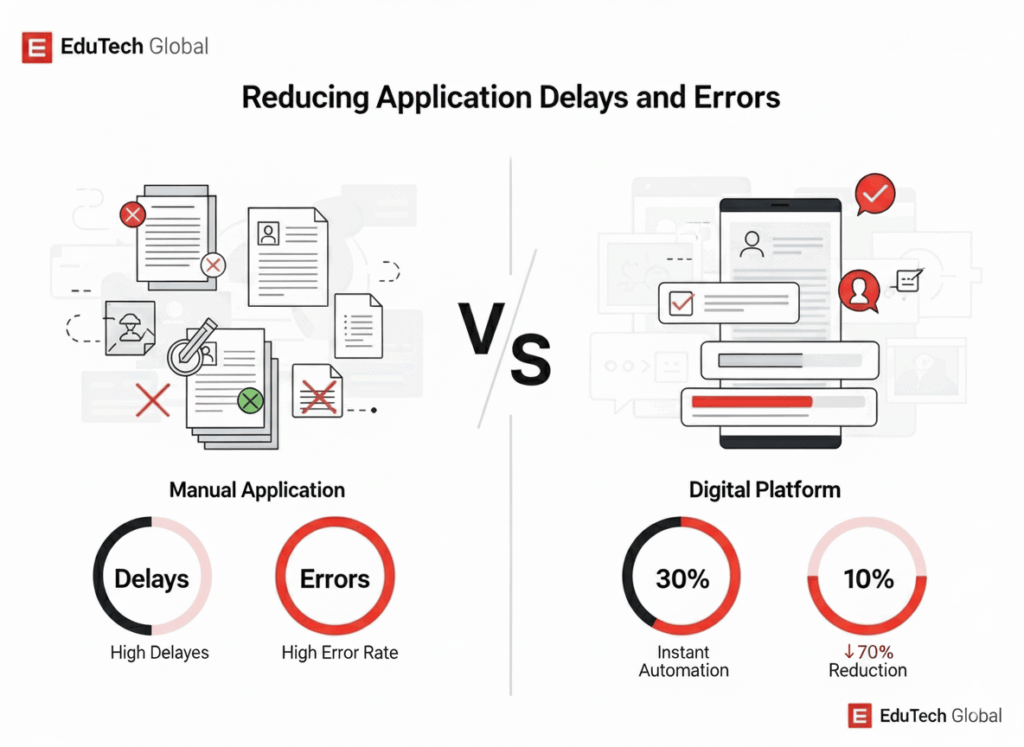
EduTech Global is helping universities streamline global admissions by connecting students, institutions, and administrators on a single, coordinated ecosystem. Through its business units, Edutech Business and Vigilearn Technologies, the organisation delivers both strategic advisory services and powerful SaaS tools that simplify every stage of international enrollment.
Edutech Business drives student recruitment, academic partnerships, and counselling support, ensuring that students are better prepared and institutions attract qualified applicants. Meanwhile, Vigilearn Technologies provides the digital infrastructure; its solutions include EdiifyLMS, Enroli SIS, Apply Portal, Exam Portal, and Studio.
Together, these modules create an end-to-end digital infrastructure. A student logs into Apply Portal, submits an application, pays fees, is admitted, gets registered via Enroli SIS, and begins classes in Ediify LMS without needing multiple disjointed systems. For universities, the platform reduces administrative effort, shortens time-to-offer and ensures a consistent experience regardless of geography.
Significant reduction in time from inquiry to admission
Historically, the time from first inquiry to verified admission could span weeks or months. With tools like Apply Portal, many steps are automated: document uploads are checked, status updates are issued, payments are validated, and offer letters are dispatched electronically. This reduces cumbersome steps and creates a more responsive experience.
For example, a student from Lagos could receive a status update the same day they upload a test score, rather than waiting for manual review. An admissions officer could trigger follow-up automatically rather than manually sending reminders. The result: faster admissions, improved conversion, broader global reach.
By modernising admissions in this way, EduTech Global (via Vigilearn’s Apply Portal) is helping both universities and students realise the promise of global study with less friction and greater transparency.
The Future of Cross-Border Admissions
What comes next in global university admissions? Two key technologies are shaping the future: AI and blockchain.
AI-driven applicant screening and document authentication
Artificial intelligence will increasingly assist in verifying academic transcripts, detecting fraud, and matching student profiles to programs. For example, a system may analyse uploaded documents and highlight inconsistencies, reducing manual review time. As global admissions volumes grow, AI will make systems smarter and faster. Institutions that integrate AI workflows will have a distinct edge.
Blockchain and secure credentials
Blockchain can securely store and transmit academic credentials, certificates and verifications across borders. This adds a layer of trust for students and institutions alike, particularly when dealing with international records. As cross-border admissions increase, blockchain offers a way to cut intermediary verification costs and reduce document fraud risk.
Real-time student analytics for better placement decisions
Beyond admission, universities will leverage analytics to monitor enrolment patterns, learner behaviour, performance and outcomes, even before the student’s first term starts. This enables institutions to proactively support at-risk students, tailor orientation, improve retention and ultimately enhance graduate outcomes. For global learners especially, analytics can signal when the student may need more support or where regional adaptations are required.
Enhanced digital experience and global scalability
Expect admissions portals to become more mobile-friendly, intuitive and integrated with marketing automation, chatbots, virtual counselling and virtual events. Students will expect “their” portal to reflect their language, timezone and payment context. Institutions that provide this experience will attract more global learners and lower abandonment rates. The platforms will support scalability so that enrolling students from Latin America, Africa and Asia feels as smooth as recruiting locally.
Strategic partnerships and ecosystems
Institutions will increasingly partner with platforms, technology providers and regional networks rather than build everything in-house. That means selecting partners who can offer both technology and local recruitment/counselling expertise. The trend points toward bundled ecosystems rather than standalone admission modules. For universities seeking global growth, the insight is clear: partner or build, but move fast.
The future of global university admissions is digital. Institutions that embrace modern platforms, automation and global support will win the best-fit students at lower cost, faster speed and with higher satisfaction.