
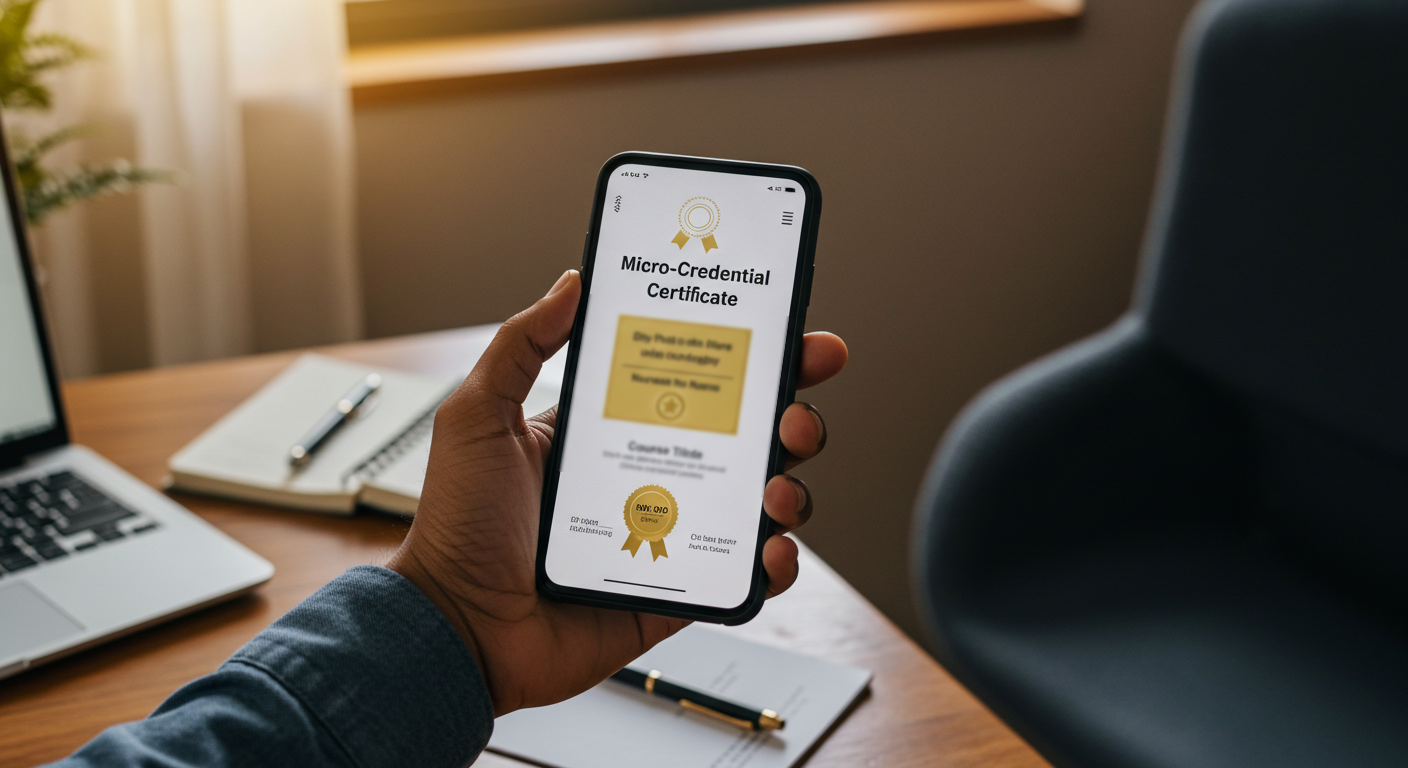
What if education became purely about what you can do, rather than how long you spent doing it? Why must learning take years before it counts? What if your skills could speak louder than transcripts? Could short, focused bursts of study reshape the very meaning of qualification?
Today, education is asking deeper questions about relevance, efficiency, and purpose. In a fast‑moving world, do we need another four‑year degree when we could gain an industry‑recognised micro‑credential in a matter of months?
As knowledge evolves at breakneck speed, traditional degrees sometimes feel like slow ships in waters needing nimble boats. This shift is sparking a global demand for short courses and micro‑credentials, championed by learners and employers alike.
Growing Global Demand for Short Courses and Micro‑Credentials

According to a recent report, the global micro‑credential market is estimated to grow at a compound annual growth rate (CAGR) of about 14.5 % from 2023 to 2030, with short courses registering the fastest growth segment.
Market research also projects that the Micro‑Credentials Courses Market, valued at around USD 7.11 billion in 2025, is expected to reach USD 17.35 billion by 2034, growing at ~10.4 % CAGR over the decade.
Meanwhile, UNESCO and IIEP highlight a convergence of trends, technology, lifelong learning, and industry needs that make short courses and micro‑credentials poised to become a dominant feature of global training pathways.
A global Coursera‑sponsored survey of students and employers reported:
- 86% of students believe an industry micro‑credential helps them stand out to employers; 74% choose degree programmes offering such credentials.
- Among employers, 88% agree that a professional certificate strengthens an application, and 72% are more likely to hire someone who holds one.
Across all regions, over three‑quarters of higher education leaders plan to expand credit‑bearing micro‑credentials in the next five years.
What’s more, students and professionals are stacking these credentials like building blocks: gaining immediate value from each one, sometimes even before completing a degree.
What Are Short Courses and Micro‑Credentials?

Short courses and micro‑credentials are compact, focused programmes designed to certify specific skills or competencies. They are modular, competency‑based, often online, and deliver digital badges, certificates, or credits aligned with industry standards.
Difference from Full‑Time Degrees
Unlike full‑time degrees, which run three to four years, follow broad curricula, and are more expensive, these programs are bite‑sized, targeted, and industry‑relevant. They don’t confer full degrees, but they can qualify as stackable credits, leading to higher qualifications or simply enhancing job readiness voluntarily.
Benefits of Short Courses and Micro‑Credentials
Quick Skill Acquisition
Learners can complete a credential in weeks or months, rather than years, making it ideal for just‑in‑time skill gaps. University of Melbourne micro‑credentials, for instance, are designed to be completed in 4–8 weeks and count as a quarter of a postgraduate subject.
Affordable and Flexible
Costs are significantly lower than the per‑credit costs of full degrees. EdX MicroBachelors courses, for example, cost roughly $166 per credit, significantly less than standard university fees. Online delivery allows learners to study around jobs and responsibilities.
See: Cost of Studying Abroad from Nigeria: Scholarships, Visas & Hidden Fees
Industry Relevance
These credentials are often co‑developed with businesses or professional bodies. Employers are increasingly using skills‑based hiring rather than degree‑based thresholds, especially in areas such as AI and sustainability, where skills matter more than PhDs.
Rising Adoption in Nigeria and Africa
Nigerian Trends
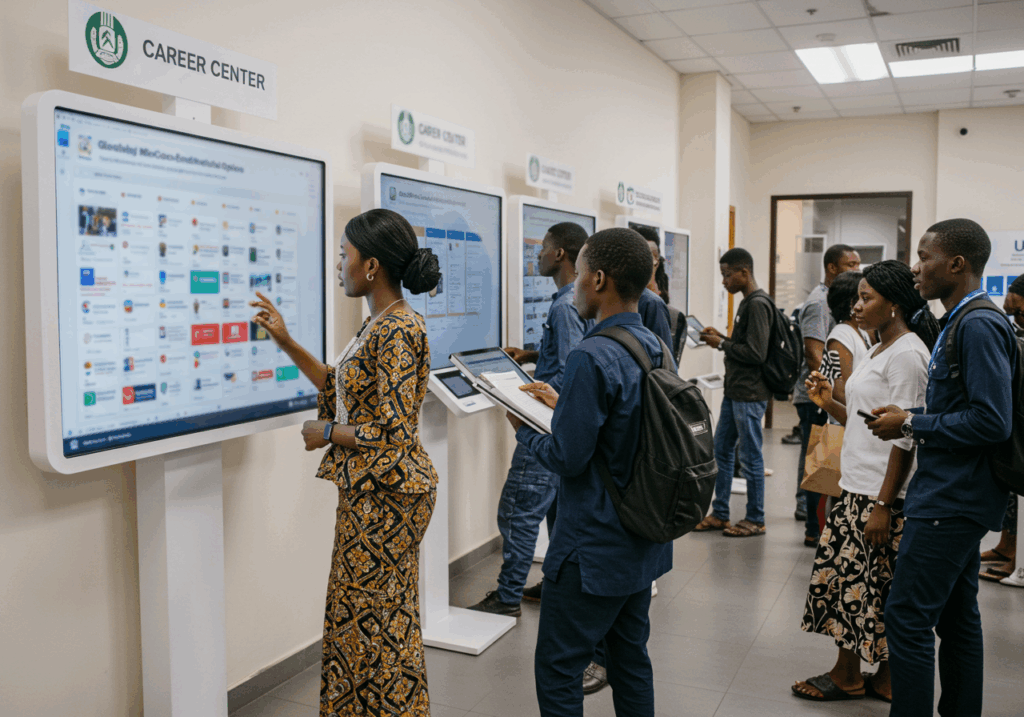
Nigeria’s youth unemployment exceeds 40%, prompting an urgent need for relevant, job‑aligned credentials. The National Open University of Nigeria (NOUN), in partnership with the Commonwealth of Learning, hosted regional workshops in early 2025 to define a national framework for micro‑credentials. NOUN’s Vice‑Chancellor stressed the potential of micro‑credentialing to reshape professional development, calling on the NUC to formalise standards.
Government initiatives such as the NITDA Digital States Initiative provide digital literacy and content‑creation micro‑certificates to thousands of youths across states such as Gombe, Lagos, Rivers and Kano.
Leading Platforms & Institutions
Digital‑native edtech platforms, such as AltSchool Africa and uLesson’s Miva Open University, are fast adopting modular credentialing models. Additionally, platforms like Coursera, FutureLearn, OpenLearn, and African Leadership University offer micro‑credentials for professionals and short online programs with global recognition.
Short Courses vs. Traditional Degrees: When to Choose What
For Working Professionals
Need to upskill without quitting your job? Short courses and micro‑credentials offer targeted, flexible options to stay relevant, especially in fast‑moving fields such as digital transformation, data science, or leadership.
For Students Exploring Interests
If you’re unsure about committing to a multi‑year degree, a short course or micro‑credential allows you to test the waters, build a CV, and accumulate stackable credits before enrolling in full programmes.
When a Degree Still Makes Sense
Degrees provide broad foundational knowledge, recognised qualifications, and deeper academic exploration in humanities, sciences, or research fields. They remain valuable in professions requiring rigorous credentials (medicine, engineering, law, academia). However, pairing a degree with concurrent micro‑credentials increases your job-readiness and makes you stand out.
How Edutech Global Helps Learners Access Micro‑Credentials
At Edutech Global, we recognise that finding the right short course or micro-credential can be overwhelming, especially with so many options available online and across different institutions. That’s why we take a hands-on, strategic approach to make access easier, more personalised, and highly impactful for learners across Africa.
Access to Short Courses and Micro-Credentials Through Trusted Partner Institutions
One of the ways we support learners is by offering short courses through our network of partner institutions. These are carefully selected universities, learning platforms, and professional bodies that meet global standards and provide industry-relevant programs. Whether you’re interested in tech, business, education, or the creative economy, we connect you to courses that are both accessible and internationally recognised.
Collaborating with Institutions to Create and Digitise Learning Programs
Beyond offering existing programs, we also work closely with local and international institutions to develop or digitise short courses. This means we help universities and training organisations transform their traditional content into flexible, online formats that align with current learner needs and labour market demands. By doing so, we ensure that more learners can access high-quality content from anywhere, at their own pace and convenience.
Tailored Guidance on Choosing the Right Short Course and Micro-Credentials Providers
For individuals who are unsure of where to begin or which direction to take, we provide personalised advice on short course providers. Our advisory team takes into account your career goals, educational background, and industry trends to recommend courses that are not only relevant but also impactful. Whether you’re looking to switch fields, gain a promotion, or explore a new skill, we help you make informed choices.
Through these three core avenues, Edutech Global ensures that learners are not just accessing short courses and micro-credentals, but are engaging with programs that are meaningful, recognised, and aligned with their future ambitions.
We draw on global data, from market growth trends to employer surveys, to ensure your choices match real demand.
Ready to upskill fast and boost your employability with short courses and micro‑credentials? Discover how flexible, affordable, industry‑aligned learning can transform your career or academic journey. Reach out to Edutech Global today for personalised advice and curated course pathways: Contact Us Now.