

There’s a unique electric feeling about revisiting something you thought you knew, only to discover it in a new form. That’s the sensation many students and educators now have upon encountering virtual reality (VR) in learning. It’s not just a cool gadget or a fleeting novelty; VR carries the real promise of fundamentally reshaping the university classroom, one immersive experience at a time.
Students crave connection, relevance, and active participation; virtual reality delivers all of that and more. Rather than reading about an anatomical structure or studying static diagrams, imagine stepping inside a beating heart, observing blood flow, watching chambers contract, all in real time. VR doesn’t just present content, it invites students into it.
This isn’t science fiction. Universities worldwide are adopting VR to build immersive, interactive experiences that transcend traditional limits. Whether practicing surgical techniques without any risk, walking through three-dimensional architectural designs, or touring remote archaeological sites, VR opens doors to experiential learning that were unthinkable just a decade ago.
The Allure of Virtual Reality’s Potential
The excitement around VR in higher education isn’t just hype; it is grounded in compelling evidence and meaningful shifts in pedagogy. Students learn by doing, and VR accelerates that through immersive scenarios that feel vividly real and deeply memorable. This is the kind of engagement that doesn’t fade in 10 minutes; it sticks.
Benefits of Virtual Reality in University Learning
Immersive Classrooms That Transcend Walls
Virtual reality redefines what a “classroom” can be. Gone are the four walls; instead, students find themselves submerged in environments, from simulated operating theatres to virtual archaeological digs. The World Economic Forum lauds VR as a game-changer for experiential learning, enabling students to “visualize their actions’ outcomes first-hand” and break free from traditional boundaries of time and space.
Hands-On Practice in Safe Settings
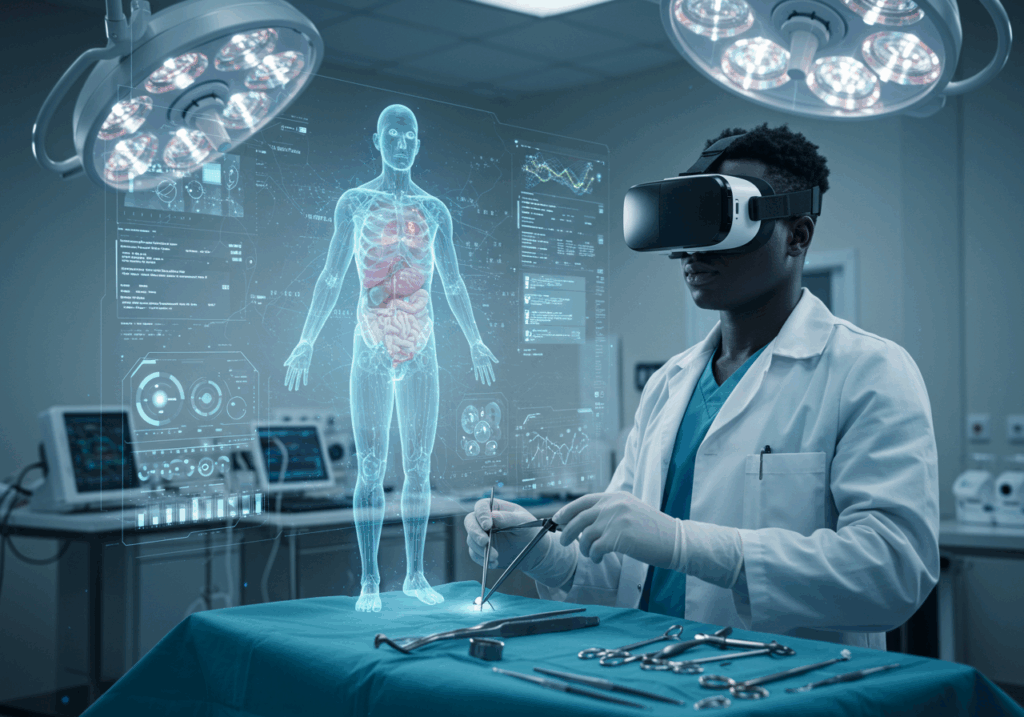
Medical, engineering, and design students, in particular, benefit from risk-free, repeatable practice. EdTech Magazine describes how virtual chemistry labs allow students to perform hazardous experiments, like generating toxic gases, with no danger at all, offering the tactile familiarity of real labs in a safely contained digital environment. Medical schools are using VR to dissect virtual cadavers, practice surgeries, intubation, diagnose patients, and even simulate hospice care, providing invaluable, realistic exposure without ethical or logistical constraints.
Stronger Retention Through Interactivity
Immerse yourself in a virtual scene, touch objects, make decisions, and observe consequences; this experiential learning naturally sticks. The benefits are quantifiable: immersive learning can yield retention rates as high as 75%, compared to just 10% for reading and 5% for lectures, reports the National Training Laboratory, quoted via the World Economic Forum. PwC further quantifies VR’s impact: learners experience up to four times the focus and learning speed, nearly quadruple emotional connection, and almost threefold confidence to act on what they’ve learned.
Sustained Engagement and Motivation
VR ignites curiosity. Students stay motivated through interactive, sensory-rich experiences that feel less like chores and more like explorations. The immersive quality of VR fosters richer collaboration and deeper educational interaction, according to the World Economic Forum. These experiences draw learners in and keep them engaged where traditional passive learning often falls flat.
Use Cases of Virtual Reality in University Learning
Medical Training
VR in medicine isn’t futuristic; it’s already deeply impactful. From virtual cadaver dissection to scenario-based simulations of emergency procedures, universities are delivering lifelike, repeatable, and controlled clinical training environments. This complements physical labs and live clinical placements, offering students high-pressure practice without patient risk.
Architecture & Design
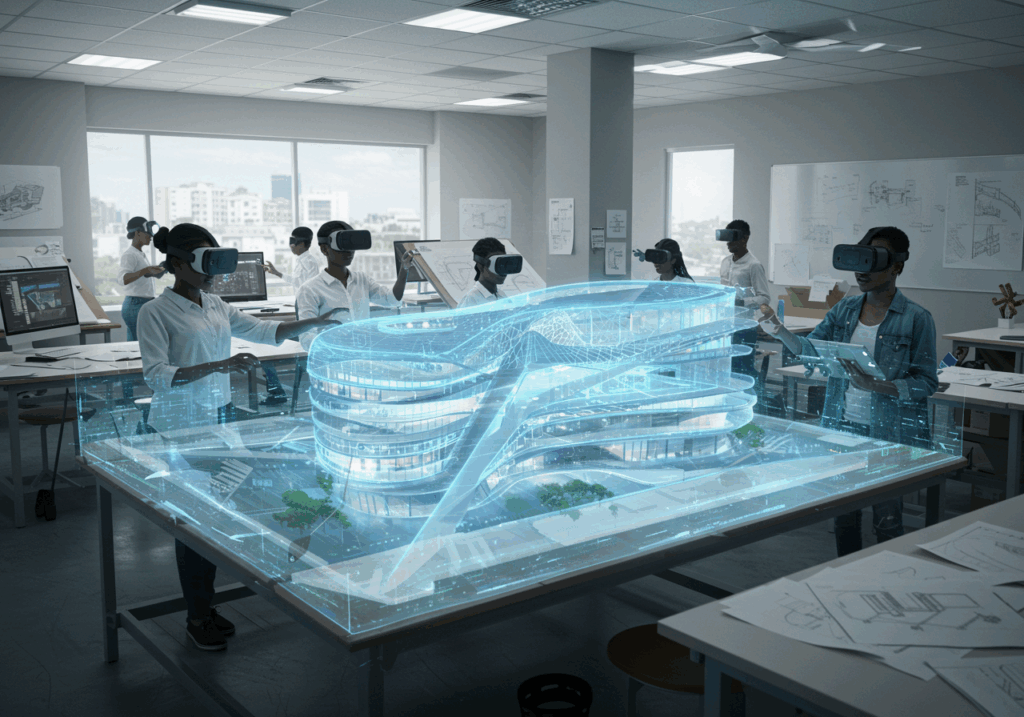
Students can now walk through three-dimensional models of buildings before they exist in reality, adjusting spatial relationships, materials, and ambiance on the fly. The combination of immersive visuals and tactile controllers makes these virtual walkthroughs deeply intuitive. EdTech Magazine notes that immersive design tools are facilitating real-time visualization and fine-tuning of creative work in fields like arts and design.
Science Labs & Virtual Experiments
Virtual labs bring a world of experimentation into the classroom, even scenarios too costly or dangerous to replicate physically. CDW’s partnership with universities enables virtual chemistry labs where students can conduct complex experiments freely, exploring and failing without hazards.
History, Geography & Cultural Immersion
History and geography aren’t abstract when you can explore ancient civilisations or traverse foreign terrains virtually. Virtual campus tours, archaeological site explorations, and immersive metaverse environments allow students to experience learning at a visceral level. The metaverse enables immersive campuses where students “enter the virtual campus … learn, explore, and socialise” from anywhere.
Challenges of Virtual Reality in University Learning
No transformative innovation comes without hurdles. As VR expands, institutions must navigate several real challenges.
High Cost of Equipment
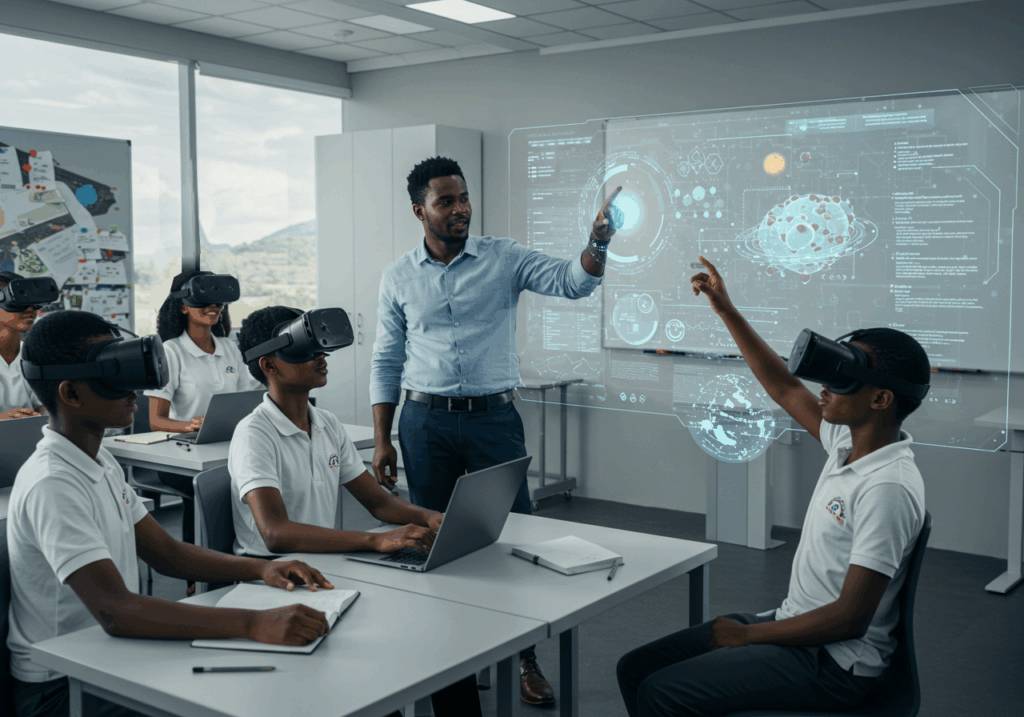
High-end VR headsets, controllers, and supporting software carry high upfront costs. While VR environments are scalable, blended setups where some students use headsets and other laptops can start small; the initial investment may still strain budgets.
Training Faculty & Instructional Design
VR’s power lies in how it’s integrated into teaching. But educators need pedagogical training to design effective VR experiences. At Southern New Hampshire University, early efforts teach that inviting student feedback (especially from gaming-savvy Gen Z learners) and keying the experience to learning outcomes are critical lessons.
Content Availability & Production
High-quality VR content is still limited in some disciplines. While custom content exists, scaling across curricula requires time, resources, and expertise.
Accessibility & Equity
Inclusive design is essential. Not all students can use VR equipment comfortably; issues like motion sickness, physical disabilities, or sensory sensitivities must be accounted for. Institutions must plan for accommodations and universal access from the start.
Privacy, Security & Ethical Considerations
VR headsets collect a lot of data, body movements, spatial coordinates, even physical surroundings. As EDUCAUSE warns, privacy and security must be addressed before widespread adoption. Policy frameworks, ethical guidelines, and institutional protocols must evolve alongside the technology.
Future of Virtual Reality in University Learning
The road ahead for VR in universities is exciting, driven by technological progress, institutional momentum, and cross-disciplinary innovation.
More Affordable Devices
Consumer VR hardware continues to shrink in size and price. UC Berkeley and EDUCAUSE note that as devices become lighter and cheaper, adoption across institutions will ramp up. Stanford-level labs may no longer be required for every adoption.
Growing VR Content Libraries & Shared Resources
The expansion of VR content in fields such as medicine, architecture, and the arts is gaining traction. Shared platforms, grant-backed content development (like NEH-supported archeological VR models), and institutional collaborations will accelerate availability.
Global VR Collaborations & Virtual Campuses
Imagine shared virtual field trips, co-taught courses across borders, or virtual campuses connecting students worldwide. The metaverse is already enabling such immersive, democratized learning: institutions in Kenya, Laos, and beyond are building virtual campuses accessible across continents.
Integration with AI for Personalised Learning
As VR matures, blending AI with immersive environments will create adaptive experiences. From real-time feedback during virtual labs to AI-driven scenario branching, the synergy between AI and VR promises intelligent, personal learning journeys, a powerful frontier.
Institutional Vision & Incremental Growth
According to a futures framework cited by EdTech Magazine, gradual but steady change seems the most likely path, a mix of growing adoption, pilot programs, and strategic scaling rather than overnight transformation.
Virtual reality is more than a classroom tool, it’s an invitation: step in, interact, explore, and emerge changed. Universities that embrace this invitation won’t just teach subjects, they’ll cultivate immersive journeys, where students don’t just learn about their world but also immerse themselves in it.