

Nigeria’s education technology (EdTech) sector is poised for a transformational leap. Industry trackers now predict that the Nigerian education technology market will smash through the $400 million revenue barrier as early as 2025, setting the stage for even faster expansion to 2030. Hitting that figure would not only validate years of experimentation but also signal that digital learning Nigeria is maturing into a full‑blown growth engine one capable of reshaping K‑12, higher‑education, and corporate training nationwide.
In this blog, we explore the Nigeria Education technology market forecast and unpack what this $400M milestone means for educators, startups, investors, and the nation at large.
Nigeria’s EdTech Market: An Overview
Current Valuation and Projections
Analysts at Techpoint Africa cite research from EdTech showing that Nigeria’s EdTech revenues are on track to reach $400 million in 2025, up from an estimated $270–300 million in 2024. This reflects a strong digital education economy that’s taking shape in real time.
On a continental scale, The African Exponent values the broader online learning growth in Africa at $3.4 billion in 2024, with an expected climb to $19.7 billion by 2034 and Nigeria already commands the largest single-country share.
In line with this optimism, the 2024 Africa EdTech 50 report by HolonIQ ranked Nigerian startups as the most prominent, with 34% of the top 50 EdTech companies in Africa based in Nigeria. This reflects the country’s disproportionate influence on EdTech trends 2025 Nigeria, particularly in mobile-first learning and hybrid education models.
Government Push & Private Sector Activity
The Federal Government’s National Digital Economy Policy and Strategy (SRAP 2.0) for 2024–2027 prioritizes broadband infrastructure, digital-skills development, and public-private partnerships all of which directly empower EdTech investment in Nigeria.
Complementing this, private innovation hubs like CcHUB, iDEA Hub, and university-backed distance learning centres offer startup incubation, free cloud credits, and regulatory guidance helping shorten go-to-market time for EdTech founders. You can also read on How Mobile Learning Is Shaping Education in Nigeria
What the $400M Milestone Means

Reaching a $400 million valuation isn’t just a financial benchmark; it’s a signal of market maturity and scale. Local founders often struggle with “Nigeria risk” discounts. Demonstrating nine‑digit annual revenues helps reduce perceived risk, enlarging seed‑to‑Series B cheque sizes. In practical terms, this means:
- Investor Confidence: Both local and global investors see Nigeria as a viable hub for scalable EdTech solutions.
- Startup Momentum: Homegrown platforms can now move beyond survival into expansion, offering wider services, better UX, and increased reach.
- Policy Alignment: Greater market size justifies stronger regulatory frameworks and public-private collaborations.
The EdTech investment Nigeria narrative thus shifts from speculative to proven growth like how fintech validated itself after the first unicorns. The milestone also boosts Nigeria’s position in Africa’s digital learning ecosystem, making it a potential gateway to regional expansion across West Africa and beyond.
Growth Drivers in Nigeria’s EdTech Space

What exactly is fuelling this growth? Let’s unpack the key drivers:
One of the most powerful growth drivers in the Nigerian education technology market is smartphone adoption. According to GSMA, smartphones are projected to account for 61% of all mobile connections in Nigeria by 2025. This shift means that mobile-first design is no longer optional; it’s essential. Every EdTech platform must now prioritize user interfaces, course formats, and delivery styles that are optimized for handheld devices.
Closely tied to this is the advancement in mobile internet coverage. The latest GSMA Sub-Saharan Africa Report confirms that 4G connectivity is now available in all 36 states of Nigeria, with usage gaps narrowing at an impressive pace. As coverage improves, features like HD video streaming, AI-driven personalized learning, and adaptive content delivery become viable across urban and rural areas alike. This technical foundation significantly expands the reach and effectiveness of digital learning platforms.
Adding to this momentum is Nigeria’s youthful demographic profile. World Bank data indicates that 64% of Nigerians are under the age of 25, and across Sub-Saharan Africa, nine out of ten children do not achieve basic reading proficiency. These figures point to enormous demand not just for foundational literacy and numeracy education, but also for upscaling and lifelong learning pathways. As a result, the average learner’s lifetime value to EdTech providers remains high, especially for platforms that can evolve with their users’ needs over time.
Want to see how mobile learning is helping more people get educated in Nigeria? Read our post: How Mobile Learning Is Shaping Education in Nigeria. and discover Why Hybrid MBAs Are Taking Off in West Africa.
Key Sectors Benefiting from the EdTech Surge
While education is a broad sector, certain verticals stand out in Nigeria’s EdTech boom:
1. K-12 Education
Digital classrooms, exam prep platforms (like uLesson), and curriculum-based video content have gained wide acceptance among secondary school learners and parents alike.
2. Higher Education & Distance Learning
The rise of online degree platforms like EduTech Business offering programs from reputable universities such as Ahmadu Bello University Distance Learning Center and Babcock University Distance Learning Center has removed geographic barriers and reduced cost burdens.
3. Corporate Training & Upskilling
With remote work on the rise, companies are turning to digital training tools and learning management systems (LMS) to upskill employees. From SMEs to multinationals, demand for soft skills, data literacy, and business tools training is booming. As corporate training evolves, understanding its value is key. Our feature on Corporate E-Learning ROI in Nigeria offers just that.
4. Vocational & Informal Learning
Short courses in tech, design, and entrepreneurship, especially those delivered via WhatsApp, Telegram, or mobile apps, are becoming popular among underserved communities looking for alternative income routes.
Investment Trends & Global Attention
Over the last five years, Nigeria has seen increased EdTech investment from both local VC firms and international players. In the last two years, Nigeria’s EdTech sector has caught the attention of global investors and platforms. Earlier in 2024, TechCrunch reported that Nigerian EdTech startup Klas raised $1 million in seed funding to scale its “Shopify for teachers” platform.
Additionally, accelerator programs like the CcHub EdTech Fellowship, covered by Quartz Africa, are fueling innovation by offering funding, mentorship, and product support to dozens of startups building in this space.
These moves have cemented Nigeria’s role as a regional hub for online learning growth Africa, pulling in both capital and top-tier talent.
Barriers to Watch
Despite the optimism, challenges remain.
1. Infrastructure Gaps
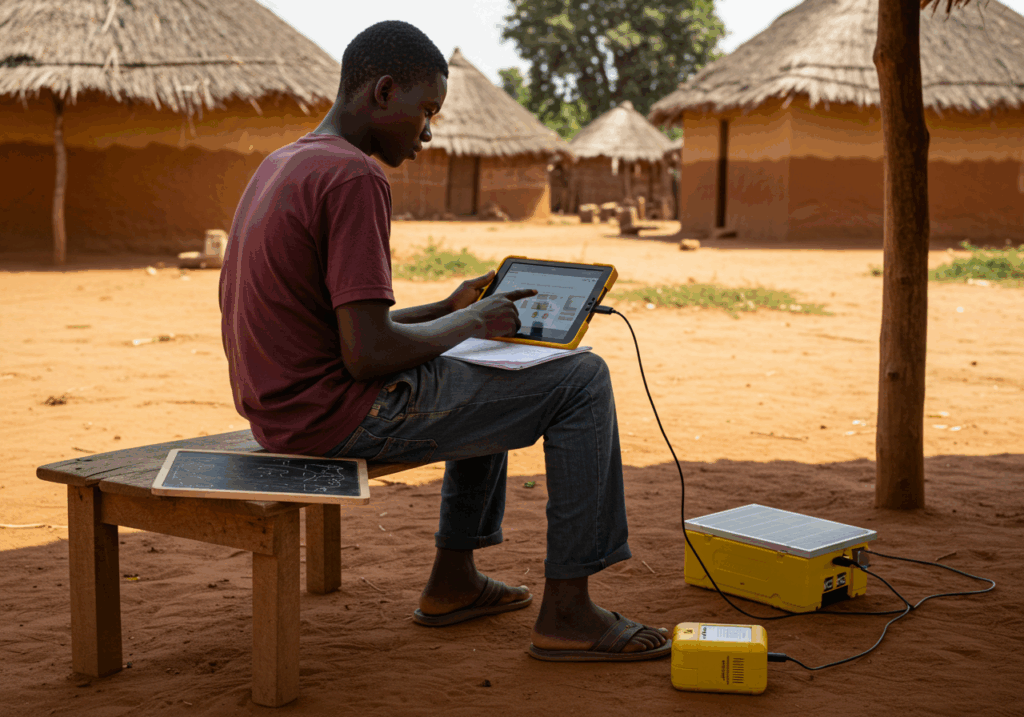
Erratic electricity supply, poor rural connectivity, and inadequate school infrastructure continue to hinder consistent adoption of digital tools.
2. Data Costs
While Nigeria has one of the cheapest mobile data rates in Africa, many students and low-income earners still find it difficult to stream videos or download heavy files regularly.
3. Fragmented Regulation
A lack of clear policy for accreditation of online degrees and EdTech companies creates trust barriers for learners and employers.
What This Means for Educators & Tech Firms
- The Nigeria EdTech market forecast isn’t just a statistic it’s a call to action. For educators, it means rethinking traditional delivery models and adopting tech-enabled, competency-based content. For tech firms, it opens the door to partnerships with universities, government initiatives, and corporate clients seeking scalable training tools.
- Emerging innovations include local language platforms, personalized AI tutors, and credentialed short courses that align with job-market demands. If your organization is exploring collaboration or wants to deploy digital learning tools, let’s talk. You can reach us via our contact page.
Conclusion: A Defining Decade Ahead
- From 2025 to 2030, Nigeria’s EdTech journey will shape not only its own future but potentially the future of education across Africa. As the Nigeria EdTech market forecast points to accelerated growth, players across the board educators, technologists, investors, and policy makers must seize this moment to build sustainable, scalable impact.
At EduTech Global, we’re committed to enabling this transformation by partnering with institutions, empowering educators, and building learner-first solutions for the next generation. As we look ahead to EdTech trends 2025 Nigeria, we see a future shaped by mobile-first access, personalized learning paths, and robust content in local contexts. Our work aligns with these trends not just by following them, but by actively contributing to the innovation that drives them. Whether it’s through scalable digital platforms or hybrid program models, we’re focused on making learning more accessible, measurable, and future-ready across the country. Why Online Degrees Are the Future for African Learners