

The Rise of AI Chatbots in Higher Education
Across campuses, one theme keeps resurfacing in student feedback and IT planning meetings: support needs to be faster, clearer, and available beyond office hours. Today’s learners juggle work, caregiving, and community commitments alongside study. They look for answers at 10 p.m. as often as at 10 a.m. When information about admissions, course registration, or financial aid isn’t instantly accessible, frustration builds, and so does the risk of missed deadlines and attrition.
AI chatbots are stepping into this gap with a practical promise: 24/7, multilingual help that can resolve the bulk of routine questions in seconds, escalate complex cases to humans, and continuously learn from every interaction. Demand for round-the-clock help is real and measurable. A recent Salesforce education snapshot found 63% of students wish they had access to 24/7 assistance.
At their best, AI chatbots become a front door to student support services, reliable, kind, and tireless, while freeing humans to focus on the nuanced conversations where empathy, judgment, and creativity are essential.
Why Student Support Services Need AI

Student-facing offices handle a staggering volume of repetitive queries: “How do I reset my LMS password?”, “When is the add/drop deadline?”, “Where do I upload my form?” These questions peak at predictable times, the admissions offer season, registration week, and the first two weeks of classes, often overwhelming phones and inboxes. Contact centres then face long queues, slower response times, and rising student frustration.
AI chatbots in education address this by automating high-frequency, low-complexity questions and triaging the rest. EdTech Magazine notes that universities increasingly use AI to streamline contact centre operations and improve communications with prospective students, helping institutions keep up with surges in demand without linearly scaling staff.
The impact isn’t just theoretical. Georgia State University (GSU) famously deployed “Pounce,” a proactive, text-based chatbot, to support incoming students. In its first season, Pounce delivered more than 200,000 answers and reduced summer melt by 22%, meaning hundreds more students made it to day one. Later analyses documented a 21.4% reduction in summer melt for students who engaged by the June 1 priority deadline. These aren’t marginal gains; they translate into persistence, revenue stability, and better use of human advising time.
Key Benefits of AI Chatbots for Students
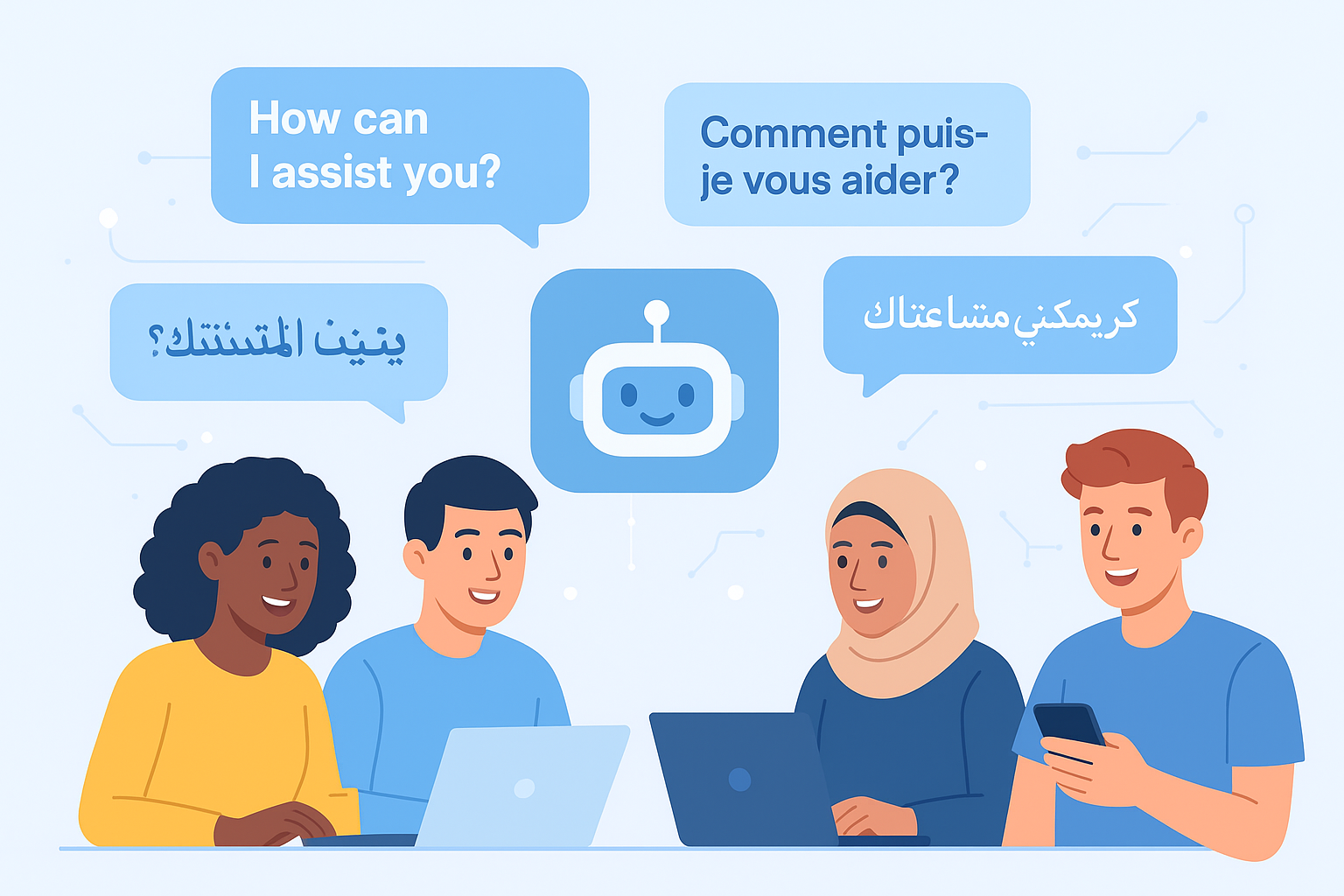
Instant answers to FAQs:
Students shouldn’t need to parse multiple web pages or wait on hold for routine information. Well-designed chatbots surface deadlines, policy explanations, and “how-to” steps instantly, and can deep-link to forms or knowledge base articles. In practice, many institutions see the vast majority of chat interactions fall into a resolvable FAQ bucket.
Multilingual support for global learners:
International students often need extra guidance across time zones and languages. Chatbots can translate intents, provide answers in students’ preferred languages, and hand off to staff when sensitive issues arise. This levels the playing field for students who are new to a country, institution, or academic system.
Personalised assistance with learning resources:
“Smart” chatbots do more than pass along static answers; they can connect to campus systems (LMS, SIS, CRM) to show a student their deadlines, course registration status, or holds, and nudge them to the next best action.
Round-the-clock availability:
Students increasingly expect self-service and conversational help at any hour. The earlier cited Salesforce figure, 63% wanting 24/7 assistance, reflects a shift in expectations that human-only models struggle to meet, particularly in commuter and online programs.
Impact on Universities and Staff
Freeing staff for complex cases
When an AI assistant resolves the repeated “where, when, how” questions, advisors and support staff reclaim time for conversations that require empathy and context: financial aid appeals, crisis referrals, and academic planning. EdTech Magazine’s coverage of AI in higher ed highlights this rebalancing of work as institutions modernise communication workflows.
Data collection and analytics
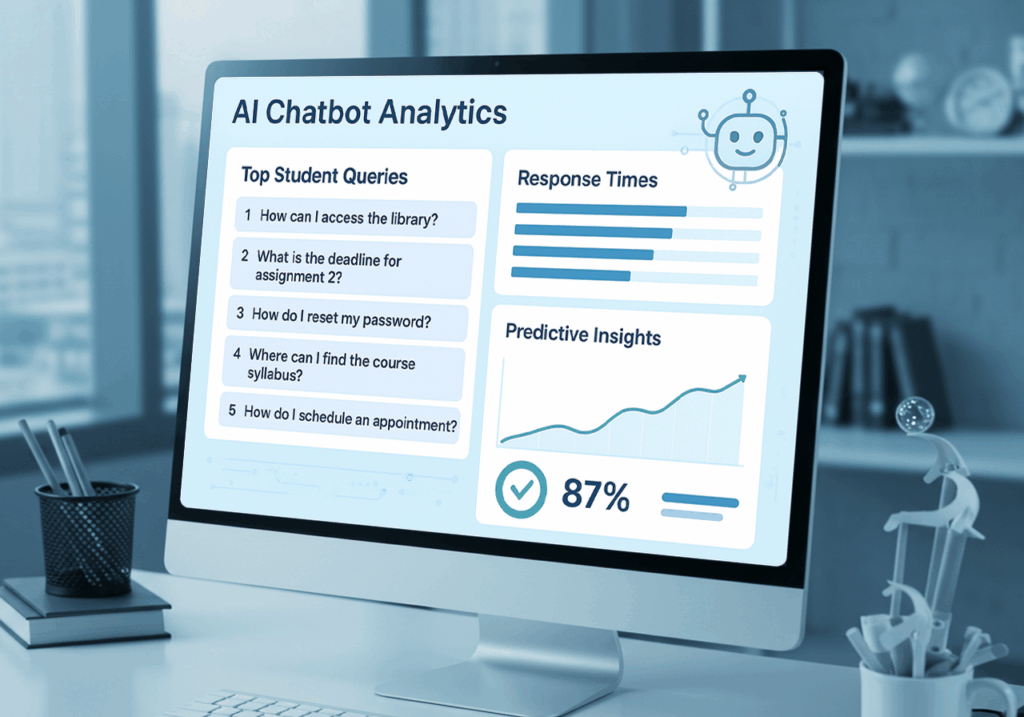
Every interaction is structured data: top questions by week, where students get stuck, which answers fail to satisfy, and when to staff live chat. This evidence helps departments update web content, refine processes, and plan staffing for peak periods. As a concrete academic outcome example, randomised controlled trials in large, introductory courses found that an AI chatbot increased the likelihood of earning a B or higher by 5–6 percentage points and reduced course drop rates in one setting, evidence that well-targeted conversational support improves performance, not just satisfaction.
Cost savings in support infrastructure
AI in higher education doesn’t magically reduce budgets, but it does enable scale without proportional headcount, keeping response times low even when inquiries spike. EdTech Magazine has chronicled how institutions use AI to manage budget pressure while maintaining service levels, a practical path to doing more with the same resources.
Best Use Cases of AI Chatbots in Higher Education
Admissions guidance
From “Is my transcript received?” to “How do I apply for housing?”, admissions sees a flood of repeat questions. GSU’s Pounce is the benchmark case: thousands of proactive texts guided students through forms, financial aid verification, and next steps, shrinking summer melt in the process. For prospective students (and parents), this feels like a personalised concierge at the moment motivation is highest and confusion is common.
Course registration
In the two weeks around registration, chat volume can soar. A chatbot that knows a student’s program, prerequisites, and registration window can answer “Can I take X before Y?”, “Why is there a hold?”, and “What are my next steps?” and then open the correct page. Several universities reported smoother registration cycles after deploying chatbots that combine knowledge base answers with SIS-aware prompts, a pattern EdTech Magazine has described in its AI use case reporting.
Exam and deadline reminders
Nudges matter. Chatbots tied to the LMS can send reminders for assignment deadlines, exam windows, and academic integrity tutorials. Trials show that low-friction, timely nudges, delivered where students already are, improve completion of academic tasks and can lift grades in large gateway courses.
Mental health and wellness support
Chatbots are not therapists, but they can provide evidence-based self-help exercises, psychoeducation, and triage, and they never take a night off. Early randomised studies (e.g., Woebot) found reductions in self-reported depression and anxiety among college students over short intervals, and more recent research continues to test the efficacy of generative AI and messaging-based support for young adults. Still, experts urge caution: these tools complement, not replace, human care, and must be designed with crisis escalation pathways.
Future of AI in Student Support
Deeper LMS and SIS integration
The most helpful AI chatbots in education are context-aware. As APIs mature, expect tighter links to the LMS (grades, announcements), SIS (holds, enrollment status), CRM (communications history), and knowledge bases. These assistants should fit squarely within the campus digital ecosystem, not standalone widgets, but connective tissue for student support services.
Predictive analytics for student success
Chat conversations reveal patterns: topics that spike before withdrawals, confusion points that correlate with missed deadlines, or signals of disengagement. Connecting chatbot data to student success dashboards can help advisors reach out proactively before a small roadblock becomes a barrier to persistence.
Human + AI hybrid models
The best designs keep humans in the loop. A mature model routes sensitive topics: financial emergencies, academic appeals, mental health, to people instantly, while the bot handles triage, appointment scheduling, and follow-ups. This hybrid ensures dignity, accuracy, and compliance, and it builds trust: students know that if an issue is complex, a person will help.
Real Examples to Learn From
Staffordshire University
Beacon (U.K.). A 24/7 “digital coach” that helps with timetables, FAQs, tutor contact, and campus services, accessible on web and mobile, integrated into the university’s wider digital vision for student success.
Deakin University
Genie (Australia). A round-the-clock, smartphone-based assistant that has handled thousands of daily conversations at scale, surfacing personalised information and resources—and offering an early look at how AI assistants evolve into core student apps.
Enhancing Student Experience with AI Chatbots
When thoughtfully designed and well governed, AI chatbots in education make student support services faster, fairer, and more accessible. Students get accurate answers, in their language, at any hour. Staff get breathing room to focus on complex, high-stakes conversations. Leaders get the data they need to refine processes and plan resources.
The human touch still matters. The goal isn’t to replace advisors, counsellors, or front-desk teams; it’s to let them do what they do best by taking the repetition off their plates. That balance, automation plus empathy, is where AI in higher education shines.