
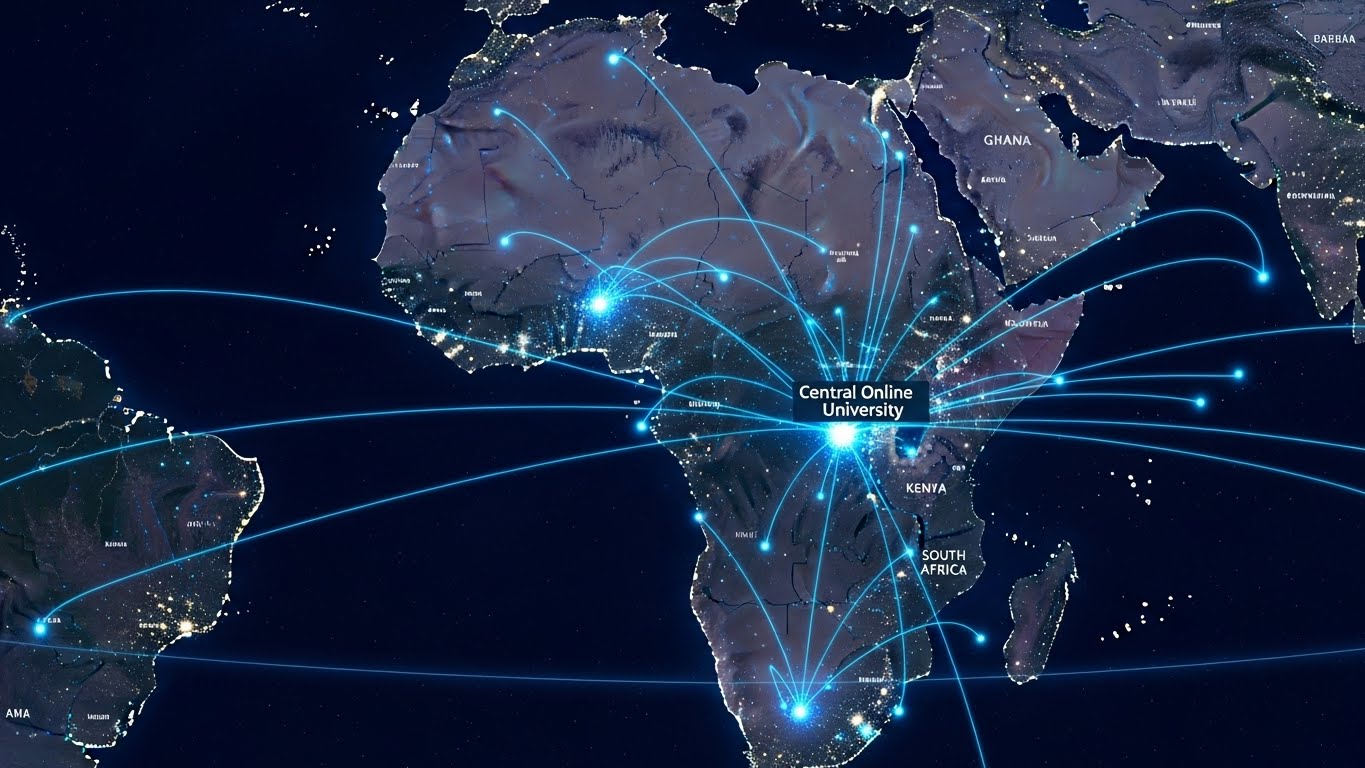
Over the past decade, Africa has quietly emerged as one of the most significant growth frontiers for global higher education. A young population, rising demand for internationally recognised qualifications, and accelerating digital adoption have created new possibilities for learning that do not depend on physical campuses. Yet anyone who has tried to run an online program across multiple African countries knows that the opportunity comes with real complexity.
Pan-African online education is not simply uploading course content and opening applications. It is delivering a consistent academic experience across countries with varying bandwidth realities, payment systems, regulatory environments, and learner expectations. A student in Nairobi, Accra, or Kigali may be enrolled in the same degree as a student in London or Toronto, but their path to accessing that education looks very different.
Global universities that succeed in Africa tend to share one defining trait: they combine centralised academic control with strong local operational support. They design systems that are flexible enough to work across borders but structured enough to maintain quality, compliance, and trust. This balance is what turns ambition into sustainable delivery.
Why Africa Needs Centralised Delivery Models

Africa is often spoken about as a single market, but operationally, it is anything but that. Universities delivering cross-border education across the continent face a set of challenges that make fragmented or country-by-country systems inefficient and risky.
Bandwidth and infrastructure gaps
Internet access has improved significantly across Africa, but reliability and speed still vary widely by country, city, and even neighbourhood. A decentralised system where each region uses different platforms or content formats often leads to uneven student experiences. Centralised delivery models allow universities to optimise content for low-bandwidth environments, standardise access methods, and apply performance improvements across the entire network rather than fixing issues in isolation.
Payment limitations
Many African students do not use international credit cards, and where cards are available, transaction failures are common. Bank transfers can be slow and expensive, while mobile money systems differ by country. A centralised financial architecture, designed to accept local payment methods while settling funds globally, prevents revenue leakage and reduces friction for learners.
Local legal and regulatory differences
Education regulations, data protection laws, and accreditation requirements vary across jurisdictions. Without a central framework guiding compliance, universities risk inconsistent practices that expose them to legal or reputational harm. Centralised models allow institutions to define global standards while adapting execution to local legal realities.
Read more: How Partner Institutions Can Expand Global Enrolment Through EdTech Collaborations
Regional Support Hubs: The Bridge Between Global and Local
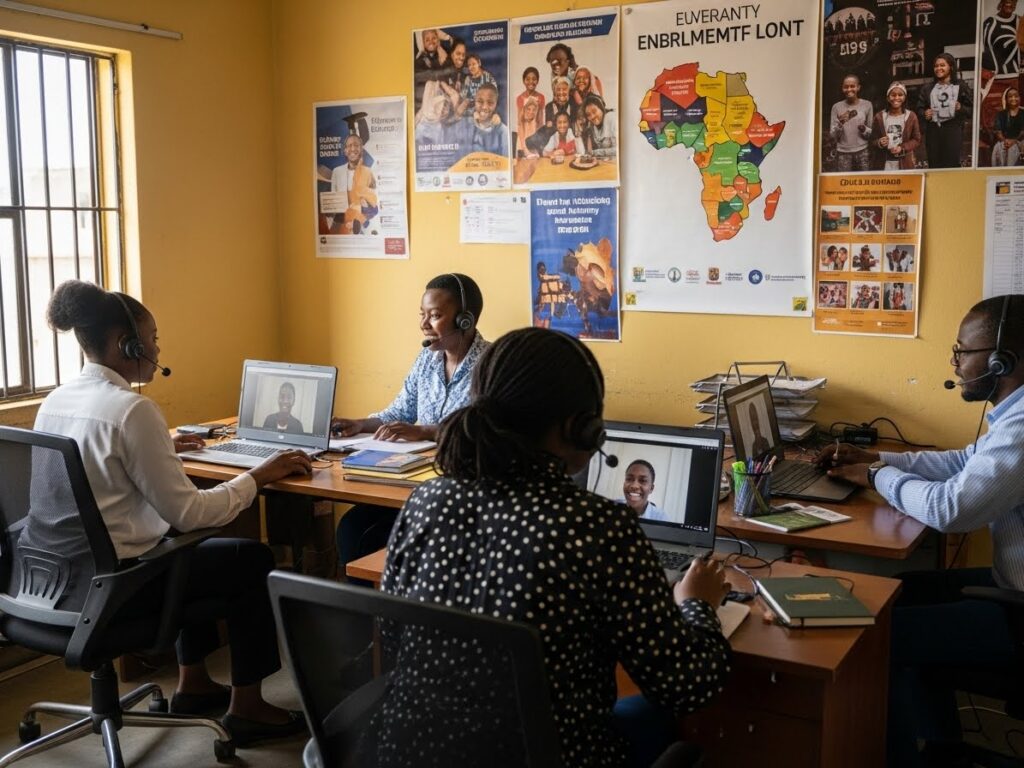
While centralisation provides structure, it cannot replace local understanding. This is where regional support hubs come in.
Successful global universities typically establish regional hubs across key African markets. These hubs are not full campuses, but operational centres staffed with people who understand local contexts, languages, and student expectations. Their role is to translate global systems into local experiences.
Local enrolment teams are often the first point of contact for prospective students. They understand how to explain international qualifications in locally relevant terms, guide applicants through documentation requirements, and address concerns about credibility or recognition. This human layer builds trust, especially in markets where online education is still met with scepticism.
Compliance and regulatory handling is another critical function. Regional teams work closely with legal advisors and education authorities to ensure that recruitment practices, data handling, and certification align with local laws. They flag regulatory changes early, allowing the central team to adjust policies before issues escalate.
These hubs also play a key role in student retention. When learners face challenges, whether academic, technical, or financial, having access to support that understands their context makes a measurable difference. According to insights from UNESCO and the British Council, student success in cross-border education is closely tied to the availability of locally relevant support structures.
Without regional hubs, even the most sophisticated online programs struggle to maintain engagement and trust across diverse markets.
Centralised LMS and Exam Control: Protecting Quality at Scale
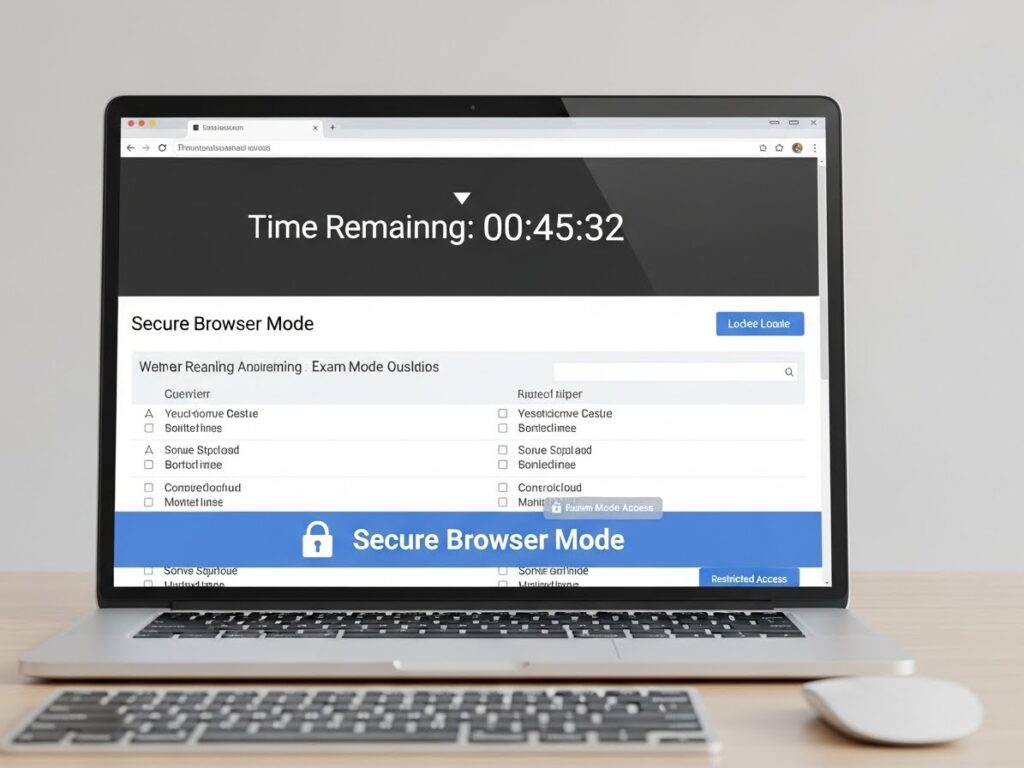
At the heart of most pan-African online programs is a centralised learning management system. This is where global consistency meets local accessibility.
A centralised LMS ensures that all students, regardless of location, access the same curriculum, learning outcomes, and academic resources. Content updates, policy changes, and instructional improvements are rolled out once and applied everywhere. This reduces academic drift and protects the integrity of the qualification.
Standardisation does not mean rigidity. Leading universities design content with modular structures, offline access options, and mobile-friendly formats to accommodate varying connectivity levels. Central control allows these adaptations to be governed by clear standards rather than ad hoc decisions.
Exam and assessment control is equally important. Timed online exams, proctored assessments, and central grading policies help maintain credibility. For cross-border education, assessment integrity is often where reputations are won or lost. Centralised systems allow universities to apply uniform exam windows, identity verification, and grading rubrics, while regional hubs support logistics and student readiness.
This approach reassures accrediting bodies, employers, and students that a degree earned online in Africa meets the same standards as one earned elsewhere. It is a cornerstone of credible global education delivery.
Payment Routing Across Borders: Making Access Practical

One of the most underestimated challenges in African online university programs is payment.
Students may be willing and able to pay, but the method matters. A system that only accepts international cards or foreign currency transfers automatically excludes large segments of the market.
Effective pan-African programs implement local currency intake options. This includes bank transfers to local accounts, mobile money, and regionally popular payment gateways. Students see fees in familiar currencies and avoid unpredictable conversion costs.
Read more: Payment Drop-Off in Online Admissions and How to Fix It
Behind the scenes, these payments are aggregated and routed through global settlement systems that allow the university to manage revenue centrally. This separation between front-end payment experience and back-end financial control is critical. It simplifies accounting, reduces exposure to currency volatility, and ensures transparency across regions.
Institutions that neglect this layer often face delayed payments, reconciliation issues, and frustrated students. Over time, these operational frictions erode trust and increase dropout rates.
What Breaks Without Local Operations
The risks of ignoring local operations are not hypothetical. They show up quickly and visibly.
Refund delays are a common issue. Without local teams to process and explain refunds in line with regional banking systems, students experience long waits and poor communication. What begins as an administrative delay often turns into reputational damage, amplified through social media and word of mouth.
Student churn is another consequence. When learners feel unsupported, misunderstood, or stuck navigating foreign systems, they disengage. Even strong academic content cannot compensate for persistent operational frustration. Research and commentary from the World Bank consistently highlight the link between learner support and completion rates in digital education.
Internally, the absence of local operations creates strain. Central teams become overloaded with market-specific issues they are not equipped to handle, slowing decision-making and increasing errors. Over time, this undermines the very efficiencies that centralisation was meant to create.
Designing for Africa at Scale
Running pan-African online education programs is not about choosing between global and local. It is about designing systems where each strengthens the other.
For global universities considering expansion into Africa, the lesson is clear. Success depends less on technology alone and more on thoughtful operational design. Institutions that invest in both central control and local presence are better positioned to serve students sustainably and credibly.
As demand for cross-border education continues to grow, the universities that thrive will be those that respect Africa’s diversity while building systems strong enough to span it. If you are exploring how to structure or scale such programs, resources and insights from Edutech Global and its broader perspectives on education delivery, available on the Edutech Global blog, can help inform the journey.