

More data is flowing through a modern university than most institutional leaders realise. Every time a student logs into a learning management system, submits an assignment, attends a lecture, or even fails to show up, a data point is generated. Multiply that across thousands of students, dozens of courses, and multiple academic years, and you have a vast, largely untapped reservoir of insight. The challenge is not collecting the data.
It never has been. The challenge is turning it into action. That is precisely what learning analytics in higher education is designed to do.
As universities face mounting pressure to improve student retention, justify outcomes, and allocate resources more efficiently, the ability to translate raw academic data into meaningful decisions has moved from a nice-to-have to a strategic necessity. Institutions that understand this are already pulling ahead. Those who do not risk making expensive decisions based on instinct rather than evidence.
Read more: Harnessing Big Data in Higher Education for Better Student Outcomes
What Learning Analytics in Higher Education Actually Means
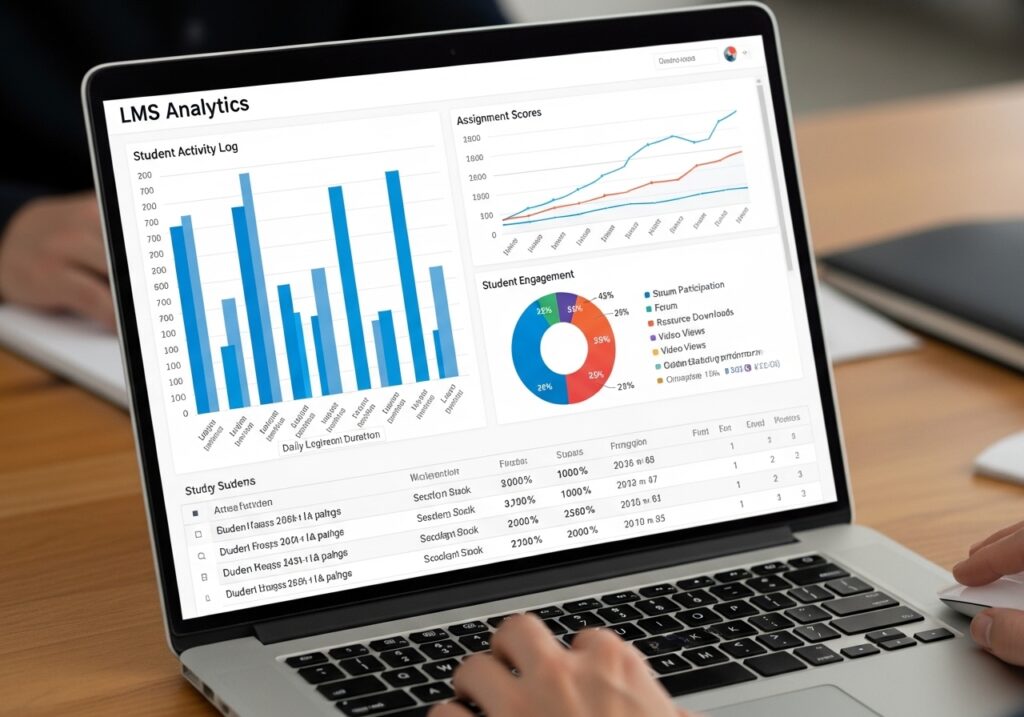
Learning analytics is formally defined as the measurement, collection, analysis, and reporting of data about learners and their contexts, for the purpose of understanding and optimising learning environments. In practice, it means universities using data to answer questions they have always had but could never fully answer: Who is at risk of failing? Which courses are poorly designed? Where are students disengaging, and why?
Universities generate enormous volumes of academic data daily. A single semester of activity across a mid-sized institution can involve millions of individual interactions: clicks, submissions, grade records, attendance logs, and forum posts. The value of education learning analytics lies not in any single data point but in combining these streams to reveal patterns that human advisers, however well-intentioned, simply cannot detect at scale.
What Data Universities Can Analyse
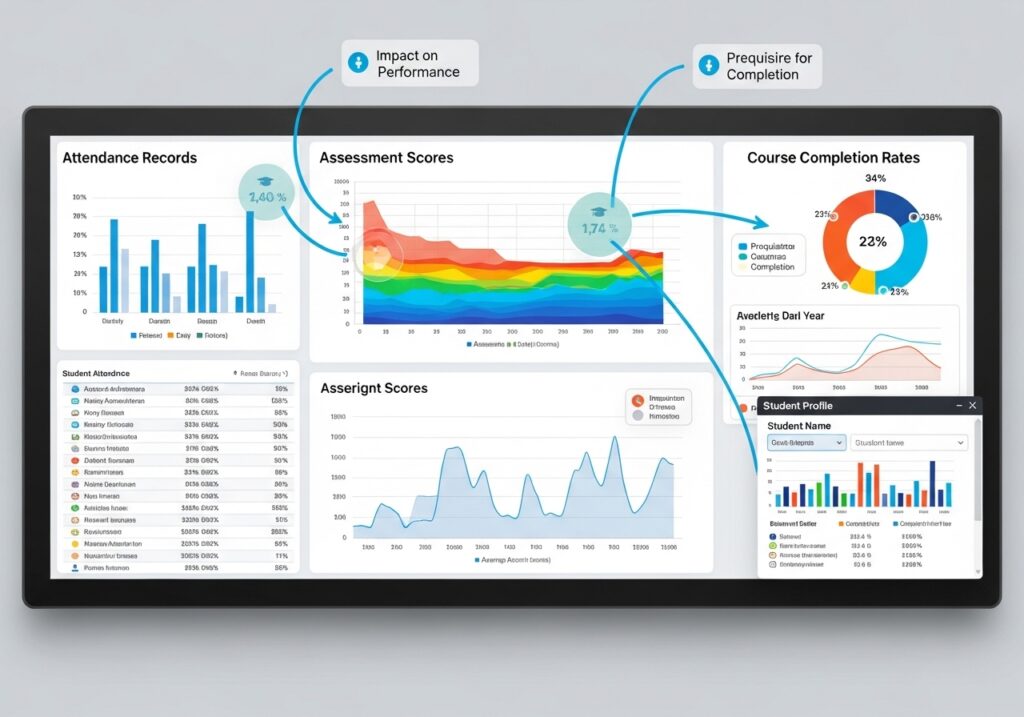
The richness of institutional data is often underestimated. The most actionable sources include:
- LMS activity data: Login frequency, time-on-task, resource access, forum participation, and assignment submission patterns.
- Assessment performance: Grades, score trends across assessments, performance by module or cohort.
- Attendance and engagement metrics: Physical or virtual attendance, library access, and student services interactions.
- Course completion rates: Module pass rates, withdrawal patterns, progression between academic years.
When these datasets are combined and analysed together, they stop describing what happened and start explaining why. A student who is logging in regularly but consistently submitting assessments late, for instance, may be struggling with workload management rather than academic ability. That distinction matters enormously for the kind of support offered. Student data analytics makes that level of nuance possible.
How Learning Analytics in Higher Education Improves Student Success

The most compelling evidence for learning analytics in higher education comes not from theory but from practice. Georgia State University in Atlanta is the most widely cited example. Since introducing its GPS Advising system in 2012, which uses predictive analytics in education to track over 800 risk factors per student daily, the university has raised its four and six-year graduation rates by 20 percentage points. That is among the most dramatic improvements recorded by any national university in the United States.
The system generates more than 55,000 one-to-one advising meetings per year, all triggered by data alerts rather than students walking through a door. Crucially, the gains have been greatest for historically underserved students. Black, Hispanic, first-generation, and low-income students now graduate at rates equal to or above the overall student body.
The practical benefits of this kind of analytics capability extend well beyond early intervention. They include:
- Early identification of at-risk students before problems compound.
- Personalised learning support, matching interventions to individual need rather than applying blanket approaches.
- Targeted academic advising, allowing staff to focus attention where it matters most.
- Improved course design, using engagement data to identify content that consistently loses students.
Predictive analytics in education adds another layer entirely. Rather than responding to failure after it occurs, institutions can flag risk weeks or months in advance, intervening at the moment of maximum impact.
Read more: Optimising Student Data Systems for Universities
The Role of Analytics in Institutional Decision-Making

The benefits of learning analytics in higher education extend well beyond individual student support. At the institutional level, analytics gives leadership the evidence base to make decisions that were previously based on assumptions or tradition.
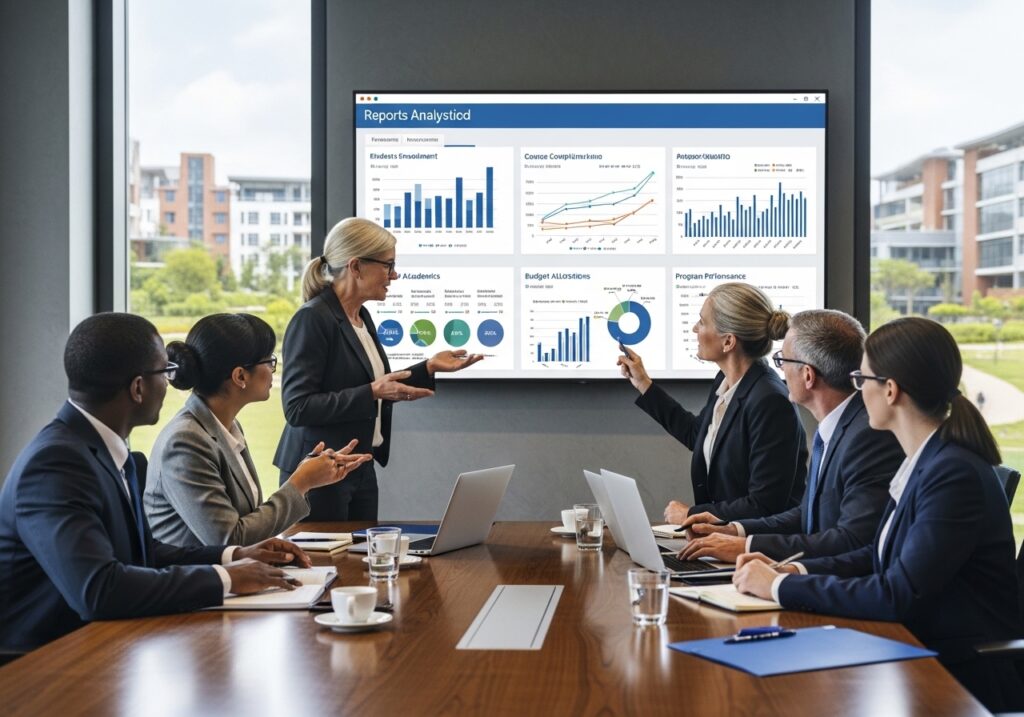
Programme performance can be evaluated properly: not just by enrolment numbers but by actual learning outcomes, student progression, and post-graduation employment data. Teaching effectiveness can be assessed with far greater nuance, using engagement and performance data alongside student feedback. Curriculum planning becomes evidence-driven rather than assumption-led, with module reviews informed by real data on where students consistently struggle or disengage.
For university boards and senior leaders, this matters strategically. The OECD has long emphasised the importance of evidence-based policy in education systems, and EDUCAUSE, the leading US higher education technology body, consistently identifies analytics capability as a defining characteristic of future-ready institutions. In an era of performance-based funding and public accountability, institutions that can demonstrate impact through data are in a fundamentally stronger position than those that cannot.
Challenges Universities Face in Implementing Learning Analytics
It would be misleading to suggest that learning analytics in higher education is straightforward to implement. Most institutions face significant structural and cultural barriers.
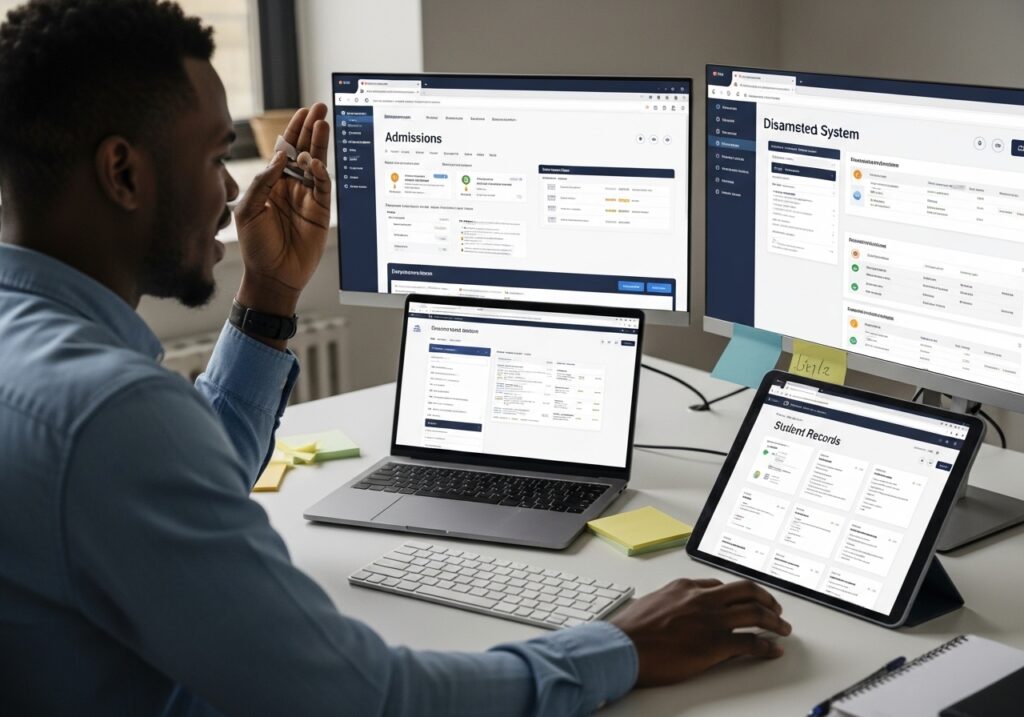
Fragmented data systems are perhaps the most common. Student records may sit in one system, LMS data in another, and financial information in a third, with no meaningful integration between them. Without joined-up data, analytics produces incomplete pictures at best and misleading ones at worst.
Analytics expertise is another persistent gap. Industry research highlights that only 23% of educators believe graduates possess adequate data science skills, while 69% of employers rank analytics proficiency as critical. Universities face stiff competition from the private sector for qualified analysts and data scientists.
Privacy and compliance concerns are particularly acute. In the UK and Europe, GDPR requirements create real obligations around the storage, use, and disclosure of student data. Students must understand how their data is being used, and institutions must demonstrate lawful, proportionate, and transparent processing.
Finally, institutional resistance to change should not be underestimated. Faculty who feel that analytics encroaches on academic autonomy, or administrators uncomfortable with data-driven oversight of their work, can slow implementation significantly. Governance and infrastructure are not the most exciting topics in education strategy. But they are the ones on which analytics programmes succeed or fail.
Building a Learning Analytics Strategy for Universities
For institutions ready to move beyond interest and into implementation, a structured approach is essential. Attempting to deploy sophisticated analytics on a weak data foundation is a fast route to expensive failure.
A practical framework should involve:
- Integrating institutional data systems so that academic, operational, and student services data can be analysed together.
- Establishing analytics governance frameworks that define data ownership, access controls, privacy protections, and ethical guidelines.
- Training faculty and professional staff to interpret and act on analytics outputs, rather than assuming the tools will be self-explanatory.
- Adopting analytics platforms capable of producing accessible dashboards and reports for non-technical users.
The most important principle here is to scale gradually. Institutions that attempt to implement system-wide analytics in a single programme are far more likely to encounter resistance and failure than those that begin with targeted pilots, demonstrate value, and expand from a position of evidence and trust.
Edutech Global works with institutions at precisely this stage, helping translate strategy into sustainable, structured implementation. For further insight on education technology approaches, the Edutech Global blog covers institutional perspectives in depth.
The Future of Learning Analytics in Global Education
The field is moving quickly. The World Economic Forum has identified AI-driven personalisation as one of the defining shifts in the future of education, and learning analytics sits at the centre of that transformation.
The trends shaping the next decade include:
- AI-driven predictive analytics that model student outcomes with increasing accuracy, flagging risk earlier and with greater precision.
- Real-time learning dashboards that give students, advisers, and faculty live visibility into engagement and performance.
- Adaptive learning systems that adjust content difficulty, pacing, and format dynamically based on individual student data.
- Cross-institution data collaboration, allowing universities to benchmark against sector-wide patterns and share insights on what intervention strategies actually work.
The global education learning analytics market reflects this momentum. Market analysis values the sector at USD 14 billion in 2025, with projections to reach USD 37 billion by 2030, driven by adoption across both higher education and corporate learning environments. Student data analytics is no longer an emerging concept. It is becoming infrastructure.