
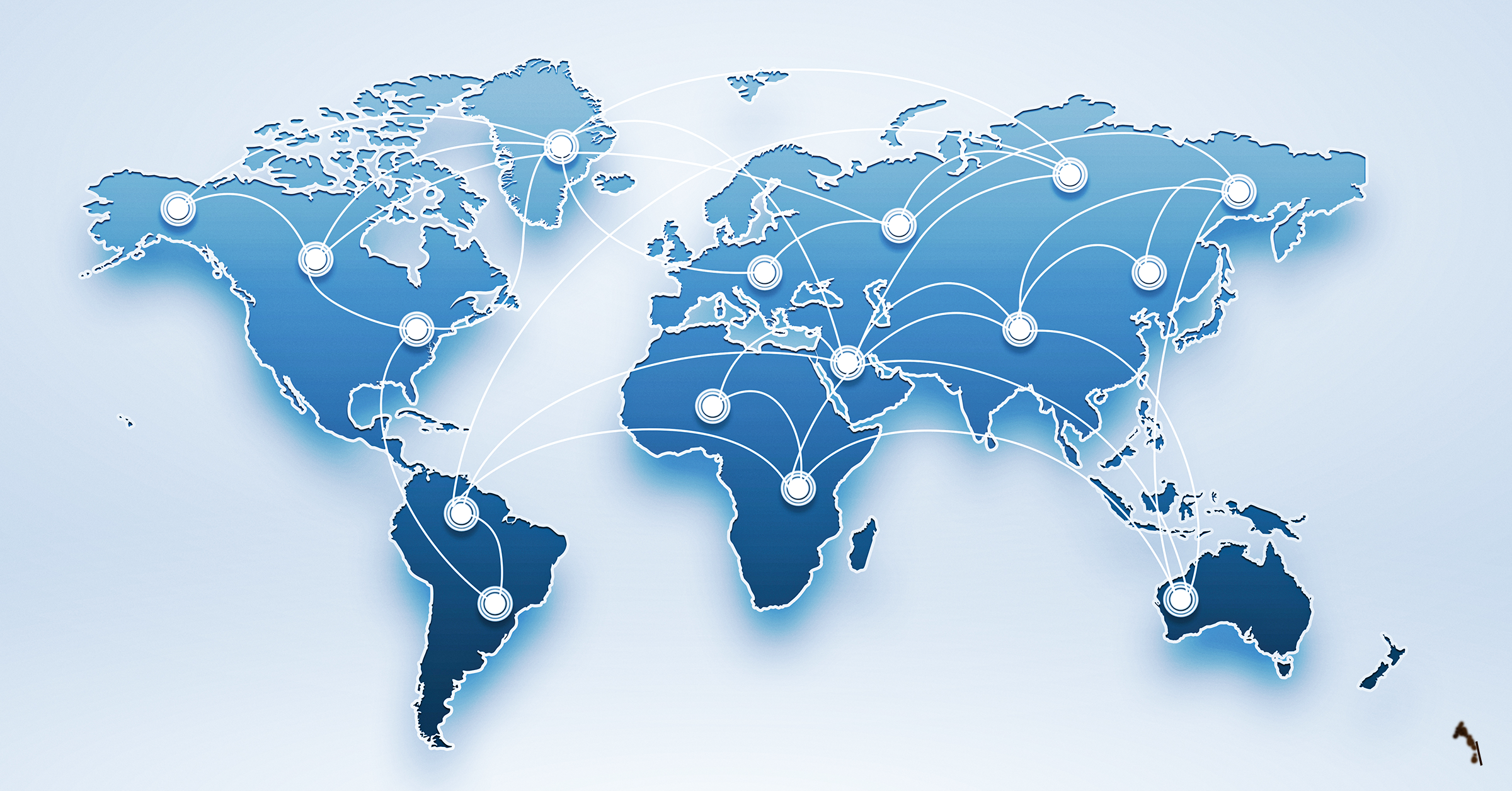
Something fundamental is shifting in higher education. For decades, the ambition of a world-class university was measured largely by the prestige of its domestic campus, the quality of its local faculty, and the calibre of students walking through its gates. Today, that metric is insufficient. The most forward-looking institutions are asking a different question entirely: not how many students can we attract to our campus, but how many students around the world can we reach? Cross-border education has moved from a niche strategy to a central pillar of institutional growth, driven by surging global demand, the rise of digital learning, and the recognition that knowledge has no natural borders.
The scale of this shift is striking. According to WENR, approximately 6.9 million international students were studying outside their home countries in 2024, a record high, with projections suggesting the figure could exceed 10 million by 2030. But physical mobility tells only part of the story. Cross-border education, broadly defined, encompasses the movement of people, programmes, providers, and curricula across national or regional boundaries. It includes joint degrees, branch campuses, franchise arrangements, and fully online delivery. For university leaders, school owners, and higher education policymakers, understanding these models is no longer optional. It is strategic.
Read More: Cross-Border Online Education: Opportunities and Policy Challenges
What Cross-Border Education Actually Means for Institutions

UNESCO and the OECD define cross-border higher education as any arrangement in which the learner, programme, or provider crosses a national jurisdiction. This matters for institutions because the term captures a wide variety of delivery models, each with distinct operational, regulatory, and financial implications. A university is not simply “going global” when it admits international students; it is genuinely engaged in cross-border education when it delivers qualifications, programmes, or learning experiences beyond its home country, whether through a local partner, a physical campus, or a digital platform.
The demand driving this expansion is not uniform. It is concentrated in regions where domestic higher education capacity has not kept pace with population growth and economic aspiration. Sub-Saharan Africa, South and Southeast Asia, and parts of the Middle East represent enormous unmet demand. Institutions that understand this geography and build partnerships accordingly are positioning themselves at the leading edge of global university collaborations.
Models of Cross-Border Education Partnerships

There is no single template for cross-border expansion. Institutions typically choose from a range of models, depending on their risk appetite, regulatory environment, and strategic objectives.
Joint and dual degree programmes allow two universities in different countries to co-award a qualification, giving students credentials recognised in both systems. At least half of European higher education institutions surveyed by the European University Association now offer at least one joint programme, according to OECD research.
Student exchange agreements remain the most established form of international education partnerships, facilitating short-term mobility and building long-term institutional relationships. They are often the first step before deeper collaboration.
International branch campuses represent the most significant physical commitment. A home institution establishes a physical presence in a foreign country, delivering its curriculum under local regulation. According to a Springer Nature study on Asian branch campuses, countries such as Malaysia, Singapore, China, and South Korea have used branch campuses as deliberate tools to build economic competitiveness and attract global academic talent.
Online and hybrid programme delivery has become the most scalable model. Digital platforms allow universities to reach students in dozens of countries simultaneously, dramatically reducing the cost and complexity of international expansion.
Read More: Global Education Technology Market: Growth, Challenges, and Opportunities
Why Universities Are Making This Investment

The institutional case for cross-border education is built on several converging incentives. Access to new student markets is perhaps the most immediate. As domestic enrolments plateau or decline in many Western institutions, international expansion offers genuine revenue diversification. Beyond income, there is the matter of global brand positioning: institutions with a credible international footprint attract better research talent, stronger industry partnerships, and higher-quality domestic applicants.
Research collaboration is another powerful driver. Data from Times Higher Education, cited by the World Economic Forum, shows that 59% of research published by UK-ranked universities now comes from cross-border collaborations, up from 50% in 2016. For Singapore’s universities, the figure reaches 68%. These are not peripheral activities; they are reshaping what it means to be a research-intensive institution.
A 2023 survey by the International Association of Universities found that globally, 70% of higher education institutions reported an increase in international partnerships over the previous five years. In the Asia-Pacific region, that figure rose to 79%. The momentum is real, and the institutions not engaging with it risk being left behind.
Operational and Regulatory Challenges

For all its opportunities, transnational education carries significant operational complexity. Accreditation presents the most immediate challenge: who is responsible for quality assurance when a programme is delivered in one country but awarded by an institution in another? The answer varies by jurisdiction, and the inconsistency creates regulatory risk.
A systematic review published in the Journal of Higher Education Policy and Management identified quality assurance as the central tension in cross-border higher education, noting that national agencies are often constrained by local requirements that make them ill-suited to evaluating internationally delivered programmes. The ROQA-TNE project, involving quality assurance agencies from Germany, Italy, and the UK, was launched precisely to address this gap, following a 2024 ministerial commitment across the European Higher Education Area to strengthen oversight of transnational education.
Cultural and academic alignment is equally important. Curriculum design, assessment standards, and pedagogical expectations differ across national systems. Institutions that underestimate these differences often find that partnerships fail not because of regulatory problems, but because of misaligned expectations on the ground. Partnership governance, including clear agreements on decision-making, branding, and quality control, is essential from the outset.
Read More: How Universities Can Attract More International Students Through Online Programs
The Role of Technology in Enabling Global Education
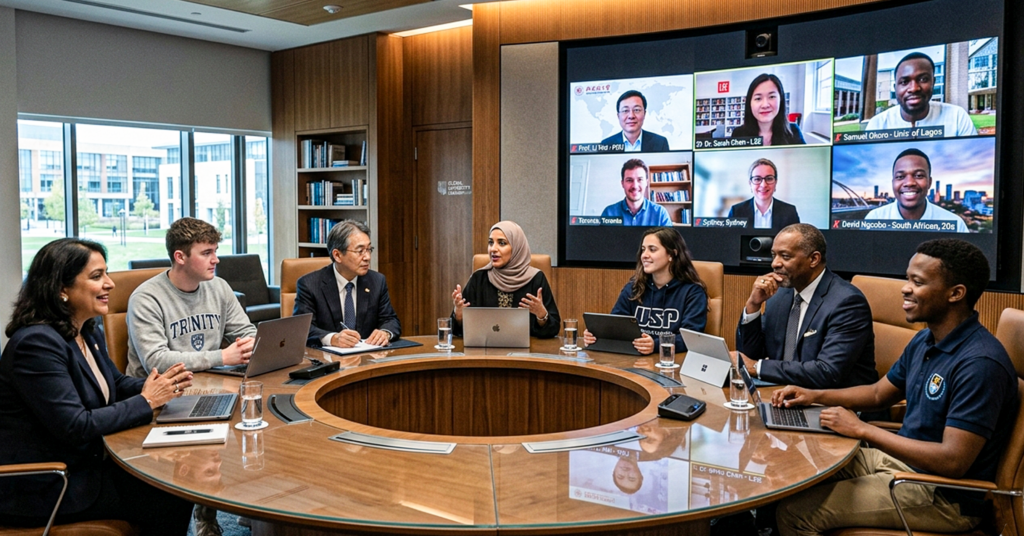
Technology is not just supporting cross-border education; it is redefining what is structurally possible. Digital learning platforms allow content to be delivered at scale across time zones. Virtual classrooms enable live interaction between students in Lagos, Lahore, and London. Centralised admission and student management systems make it operationally feasible for a single institution to support thousands of international learners simultaneously.
Research published in Frontiers in Education highlights how AI-driven platforms are enabling personalised learning support, dynamically adjusting content difficulty and providing culturally relevant case studies for students in diverse contexts. The same research notes that China’s international education platform now connects over 1,300 universities worldwide, and recorded over 210% growth in its user base in 2024 alone.
For institutions exploring international expansion, technology also reduces the fixed costs that once made cross-border education prohibitive for all but the wealthiest universities. A well-designed digital delivery model can reach thousands of students in a target market before a single brick is laid on a branch campus.
Building a Cross-Border Education Strategy
For university leaders and education policymakers beginning or scaling international partnerships, the strategic foundations matter as much as the operational details. Several principles consistently distinguish successful global university collaborations from those that stall.
Selecting the right partner institution requires careful due diligence on academic culture, regulatory standing, and shared institutional values. Agreeing on programme delivery models early, including how content is localised and how assessments are managed, prevents disputes later. Embedding a quality assurance framework that satisfies both home and host country regulators is non-negotiable. Aligning with global education policies, including the OECD and UNESCO Guidelines for Quality Provision in Cross-Border Higher Education, provides a credible governance baseline.
Platforms such as Edutech Global support institutions at each stage of this process, from strategic planning through to technology-enabled delivery and student management, offering the infrastructure that makes international education partnerships operationally sustainable. The Edutech Global blog also provides ongoing insight for education leaders navigating this evolving landscape.
The Future of Cross-Border Education
The trajectory of cross-border education is upward, and the competitive landscape is intensifying. Transnational education models are proliferating beyond the traditional English-speaking markets. Countries including Germany, Japan, South Korea, and China are actively building their own international education partnerships, creating new destination options for globally mobile students.
Hybrid and online delivery will continue to grow as the default entry point for institutions seeking international reach without the capital commitment of a physical campus. Meanwhile, the World Economic Forum has consistently argued that higher education’s role in addressing global challenges, from climate change to workforce transitions, depends on precisely the kind of cross-border collaboration that international education partnerships make possible.
For university boards, school owners, and education policymakers, the direction of travel is clear. Cross-border education is not a supplementary activity for institutions with surplus ambition. It is becoming the defining dimension of what it means to lead a globally relevant institution in the decades ahead. The question is no longer whether to engage, but how to do it well.