
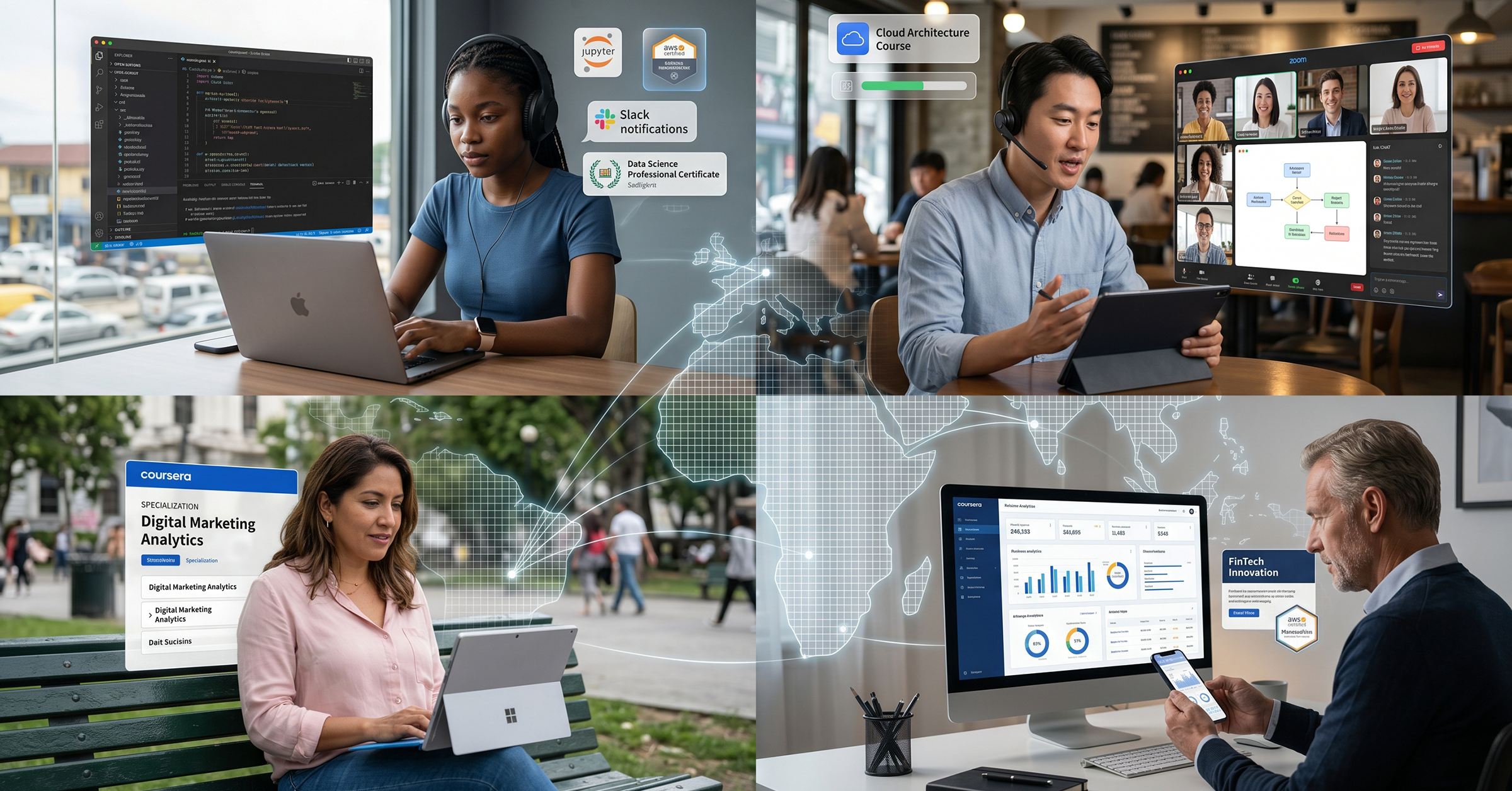
The most educated person in the room may not have a degree. And increasingly, they know it.
This is not a provocation aimed at universities; it is a description of a structural shift already underway across global labour markets and learning ecosystems. For the better part of a century, the degree served as both a mark of knowledge and a ticket to professional credibility. The two were inseparable, and institutions held a near-complete monopoly over both. That monopoly is fracturing. Not because universities have become irrelevant, but because the infrastructure of knowledge has become genuinely distributed.
Learners today can access world-class instruction on YouTube, build verifiable portfolios on GitHub, earn employer-recognised certifications through Coursera and LinkedIn Learning, and develop deep expertise through professional communities operating in real time across every timezone. What happens when knowledge becomes more accessible than the institutions that traditionally controlled it? That question is no longer hypothetical. It is the operating reality of the 2020s.
Read More: Digital Skills Gap in Education: A Global Policy Challenge
The Rise of the Invisible University and Why Informal Education Is Replacing University Degrees
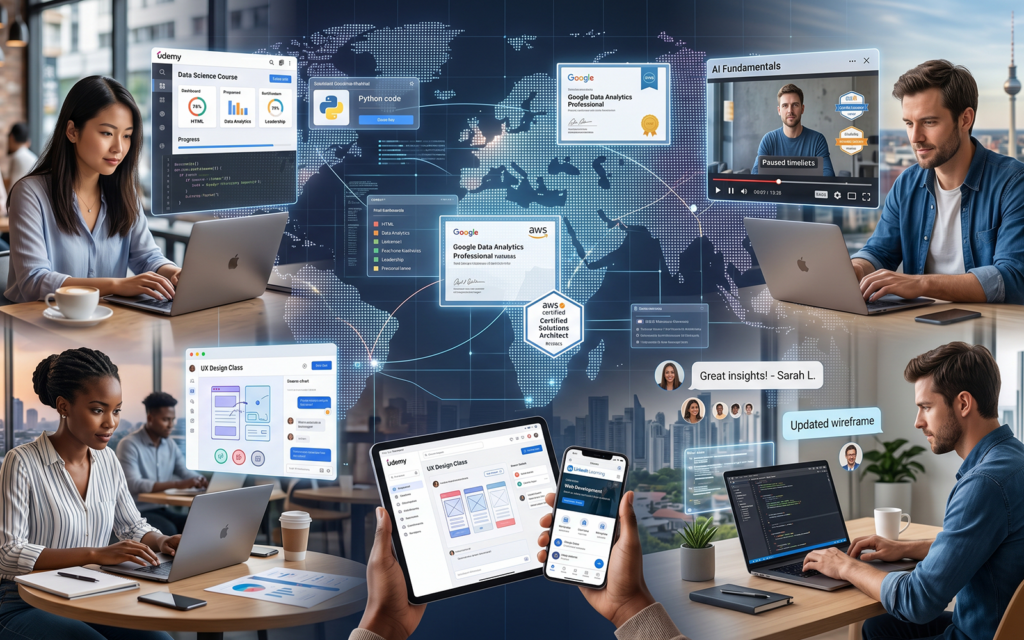
There is no headquarters for the Invisible University. No founder, no accreditation body, no campus map. It is a global learning ecosystem assembled, piece by piece, by hundreds of millions of learners building expertise outside traditional academic structures. And it is growing fast.
Coursera alone now counts 197 million registered learners and generated $757 million in revenue in 2025. Udemy ended 2024 with approximately 77 million learners on its platform. The global MOOC market was valued at $26 billion in 2024 and is projected to grow at a compound annual rate of 39.3% through 2034. These numbers do not represent a niche or a passing trend. They represent a parallel education system operating on a genuine scale.
The Invisible University draws on several overlapping sources of learning:
- Self-paced platforms: Online courses, microcredentials, and professional certificates from Coursera, Udemy, edX, and others allow learners to study at their own pace and stack qualifications incrementally.
- Creator-led education: Industry practitioners, engineers, designers, and strategists now teach directly, bypassing institutional gatekeepers entirely and often delivering more current, applied knowledge than a semester-long course could.
- Community-based learning: Peer forums, professional networks, LinkedIn groups, and WhatsApp communities have become genuine engines of skill transmission, particularly in fast-moving fields like data science, digital marketing, and software development.
- Workplace learning: Real-world projects, apprenticeship-style development, and employer-funded upskilling produce competencies that traditional degree programmes often cannot replicate in time.
What ties all of these together is not a shared curriculum but a shared outcome: millions of people are learning every day without ever enrolling in a traditional degree programme. Informal education replacing university degrees as the primary vehicle for skills development is not a future scenario. For a significant portion of the global workforce, it is already the present.
Why This Shift Is Happening
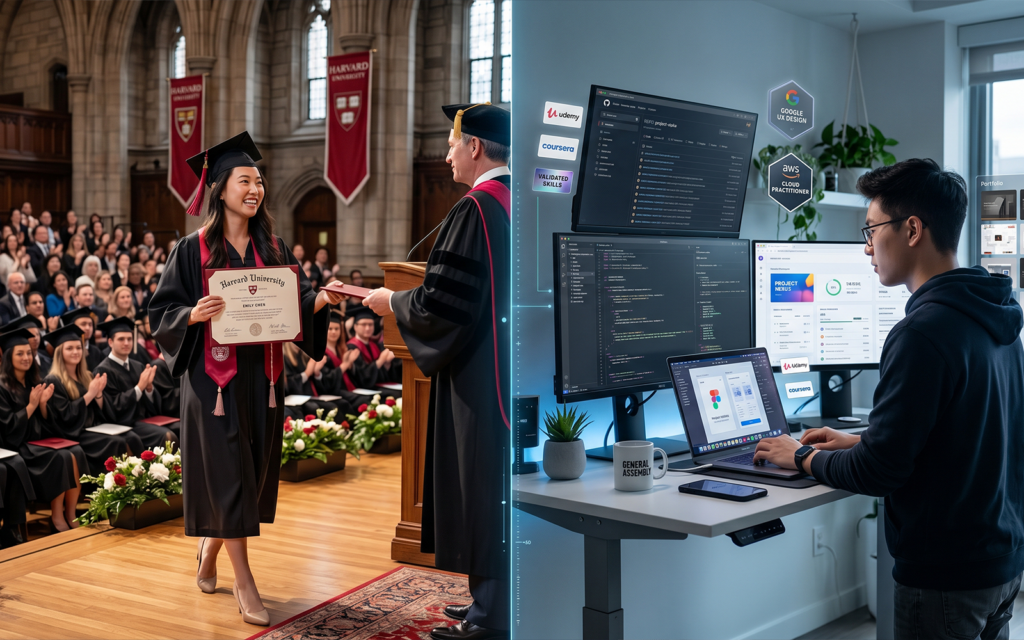
The forces driving this change are structural, not seasonal. They will not reverse when the economy shifts, or enrolment figures recover.
Cost is the most visible factor. University tuition has continued rising in nearly every major economy while graduate wages have not kept pace, eroding the financial logic of the traditional degree for many learners. Accessibility is the second driver: digital learning reaches people in geographies, circumstances, and life stages that traditional institutions simply cannot serve. A working professional in Lagos, a career-changer in Manila, or a parent in rural Indonesia does not have the luxury of a three-year residential degree. They do have a smartphone and an internet connection.
Speed is the third pressure point. Industry needs evolve faster than curriculum approval cycles. The OECD Policy Outlook 2025 notes directly that policy priorities must include “creating short, adaptable learning opportunities that fit around personal and professional responsibilities,” acknowledging what learners have already figured out on their own. By the time many degree programmes update their syllabi to reflect a new technology or methodology, that technology has already become an industry standard. And underpinning all of this, the internet has dramatically reduced the monopoly that universities once held over knowledge itself. Information that once required a library, a lecturer, and an institutional subscription now requires a search query.
Read More: What Global Employers Really Think About Online Degrees
The Credential Crisis: When Knowledge and Degrees Stop Moving Together

For most of the twentieth century, the equation was clean: a degree signified knowledge, and knowledge came with a degree. Today, that equation has broken down. Knowledge and credentials no longer move in lockstep, and the gap between them is widening.
Consider the software developer who taught herself Python through online tutorials and open-source contributions and who now leads an engineering team. Or the digital marketer who built an agency on the strength of a Google Analytics certification and two years of campaign results. Or the product designer whose portfolio, assembled through freelance contracts and community feedback, speaks more clearly to an employer’s needs than any transcript could. These are not edge cases. They represent a growing cohort of professionals for whom informal education replacing university degrees is not a compromise but a deliberate and rational choice.
What has changed most significantly is how employers evaluate competence. Portfolios, open-source contributions, certifications, and demonstrated project outcomes are increasingly accepted as evidence of readiness. Skills-based hiring is not a euphemism for lowering the bar; it is a recalibration of where the bar is measured. When demonstrated competence becomes more immediately legible than formal credentials, the credential loses some of its exclusive function, though not all of it.
What the Workforce Is Already Telling Universities
The labour market signals are not subtle. According to research published by Intelligent.com, 55% of companies removed bachelor’s degree requirements in 2023, and 45% planned further reductions in 2024. The Indeed Hiring Lab reported that the share of job postings with no formal educational requirement grew from 48% in 2019 to 52% in early 2024, with postings requiring a bachelor’s degree falling across nearly every sector. By 2023, 73% of employers were already using skills-based hiring practices.
The pattern holds across public and private sectors alike. Governments across the United States, the United Kingdom, and several European countries have removed degree requirements for large portions of civil service roles. Employers who have made this shift report concrete gains: 83% say it expands access to talent, 69% say it creates a more diverse workforce, and 75% say it has improved their organisation overall.
The most important nuance here is this: the workforce is not rejecting universities. It is expanding the definition of credibility. A degree still commands respect and, on average, still correlates with higher lifetime earnings. But it is no longer the only pathway to professional legitimacy, and employers have stopped pretending otherwise. The OECD’s Education at a Glance 2025 acknowledges plainly that “giving people credentials for specific skills they have learned, even if they do not complete their studies, can help them demonstrate their abilities to employers.” That is a significant institutional concession from one of the world’s leading education policy bodies.
Why Traditional Universities Cannot Afford to Dismiss This Trend
This is not an argument against universities, and any framing that presents it as such is missing the point. Universities continue to produce research that drives civilisational progress. They provide structured intellectual environments that cultivate critical thinking in ways a playlist of online courses simply cannot replicate. They create professional networks, provide accredited pathways into regulated professions, and deliver the kind of rigorous, sustained academic development that employers value in complex and senior roles.
But ignoring the alternative learning ecosystem carries serious institutional risk. Universities are no longer competing only with other universities. They are competing with every credible source of learning available on the internet, and those sources are multiplying faster than any single institution can respond to. The stakes include declining exclusivity in credential provision, shifting learner expectations shaped by the flexibility and speed of digital platforms, and growing competition for the time and enrollment of learners who have more choices than any previous generation.
Institutions that dismiss informal education replacing university degrees as a marginal phenomenon are misreading both the data and the direction of travel. The OECD Trends Shaping Education 2025 argues directly that education systems must remain flexible enough to accommodate evolving demands. Flexibility, by definition, requires acknowledging what is already happening outside institutional walls.
The Universities That Will Thrive in the Next Era
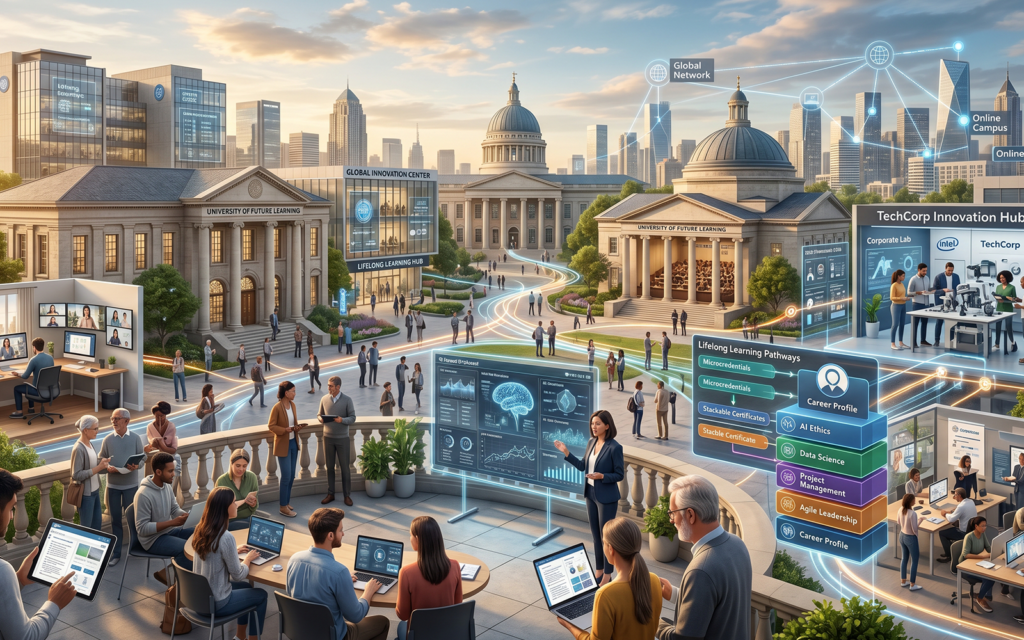
The institutions best positioned for the next decade are those already shifting from a campus-centric to a genuinely learner-centric model. This is not merely a philosophical pivot; it is a structural transformation in how education is designed, delivered, and recognised.
Future-ready universities are doing several things differently:
- Integrating microcredentials into stackable, modular learning structures that allow learners to accumulate credentials over time rather than in a single, unbroken arc.
- Recognising prior informal learning formally, giving academic credit for skills acquired through professional experience, online courses, and non-traditional routes. Estonia’s nationally recognised prior learning system, which formally acknowledges skills gained through work, volunteering, and informal study, offers one replicable model.
- Designing flexible pathways that serve part-time learners, working professionals, and career-changers, not only traditional school-leavers seeking a first degree.
- Deepening industry collaboration to ensure that curricula reflect genuine labour market needs, closing the gap between academic approval cycles and workforce realities.
- Building lifelong learning models that keep alumni and working professionals engaged with the institution long after graduation, transforming universities from one-time credential providers into continuous learning partners.
The insight underlying all of this is that future universities will succeed by functioning as platforms, not just campuses. They will serve learners across life stages, geographies, and learning modalities. The WEF estimates that 60% of workers will require retraining by 2027. The institution that captures that retraining relationship will define the next era of higher education.
The Real Question Is Not Whether Universities Will Change
The evidence that informal education is replacing university degrees as the dominant route to skills development for significant portions of the global workforce is now substantial. The more productive question for university leaders and policymakers is not whether alternative learning will grow; it already has. The question is whether universities will lead the transition or respond to it after the landscape has reshaped itself around them.
Institutions that wait for the debate to settle before adapting will find that the learners, the employers, and the infrastructure have already moved. Those who engage now, by integrating alternative pathways, recognising non-traditional credentials, and building the digital infrastructure required to compete in a distributed learning environment, will define what the university means for the next generation. The next decade will not reward the most traditional institutions. It will reward those with the intellectual honesty to see the full learning ecosystem and the strategic clarity to position themselves within it.
EduTech Global: Building the Infrastructure for the Next Era
EduTech Global works with universities, governments, banks, and development partners to build the infrastructure that makes this transition possible. From modernising educational delivery and expanding digital learning ecosystems to integrating new credential models and improving learner access at scale, EduTech Global operates as a strategic partner helping institutions navigate the shift from institution-centric to genuinely learner-centric education. The organisations that will shape the future of higher education are those that choose to move before disruption forces them to. Explore EduTech Global’s partnership framework and start the conversation.
Looking Ahead: The Age of the Distributed University
The future of higher education is unlikely to be fully traditional or fully alternative. It will be blended, distributed, and more complex than either camp in the current debate allows. Knowledge will come from many places. But trust, validation, structured intellectual rigour, and clear pathways to professional credibility will remain essential, and those are precisely where universities hold an irreplaceable role.
The question for every university leader is not whether to acknowledge the Invisible University. It is already operating at scale, serving hundreds of millions of learners, and reshaping what employers expect. The question is: when learning becomes available everywhere, what distinctive and irreplaceable value does your institution contribute? That answer, thought through honestly and acted upon with urgency, is the foundation of institutional relevance for the decades ahead.
Frequently Asked Questions
Can informal learning replace university degrees? In skills-intensive fields, informal education is already replacing university degrees as the primary route to professional competence for a significant portion of the workforce. Platforms collectively serving hundreds of millions of learners, combined with employer shifts toward skills-based hiring, reflect a genuine structural change. However, for regulated professions, research careers, and roles requiring sustained academic development, formal degrees retain specific and significant value. The realistic picture is coexistence, with the balance shifting in favour of informal routes in fast-moving sectors.
Are employers accepting alternative credentials? Yes, and in growing numbers. In 2023, 55% of companies removed bachelor’s degree requirements for some positions, and 73% of employers used skills-based hiring. Industry certifications, portfolio evidence, and microcredentials are increasingly treated as legitimate signals of competence, particularly in technology, design, marketing, and business functions.
What is the future of university degrees? University degrees will retain importance for research, regulated professions, and complex professional development. However, the degree’s function as the sole gateway to professional credibility is diminishing. The OECD anticipates that institutions offering modular, stackable, and formally recognised credentials for a mix of formal and informal learning will be best positioned for the coming decades.
How does informal learning compare to formal education? Informal learning offers speed, flexibility, and accessibility that formal education cannot presently match. Formal education provides depth, sustained intellectual rigour, structured progression, and institutional validation. The most capable learners in today’s market combine both, drawing on whichever source is most appropriate for the skill or context in question.
What are non-traditional education pathways? Non-traditional pathways include online courses, MOOCs, professional certifications, bootcamps, apprenticeships, portfolio-based development, workplace learning programmes, and community-driven peer education. They provide routes to professional competence that do not require enrolment in a traditional degree programme.
Will universities remain relevant in the future? Yes, but on substantially different terms than today. Universities that integrate flexible learning models, formally recognise prior informal learning, and build genuine industry partnerships will remain highly relevant. Those who treat the degree as self-evidently superior without adapting their delivery and structure risk progressive marginalisation by a more agile and distributed learning ecosystem.
The future of education will be shaped by institutions willing to evolve before disruption forces them to. Start a partnership conversation with EduTech Global and explore how your institution can lead the next era of learning, credentials, and workforce development.