
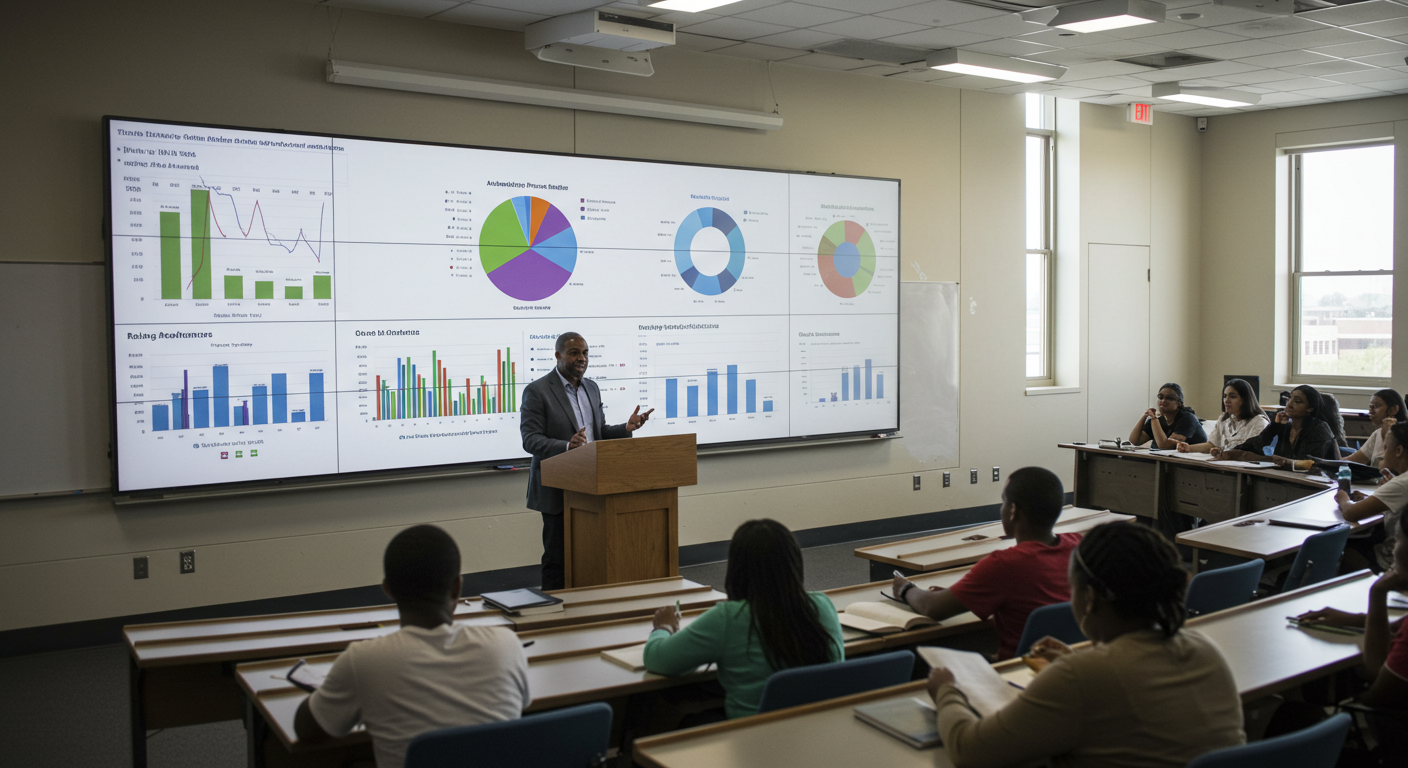
Higher education is undergoing a quiet revolution. Beneath its traditional lecture halls and ivy-covered facades lies a burgeoning world of data, vast, varied, and powerful. From the moment a student logs into a learning management system to their final exam submission, streams of data are generated. And universities are waking up to the transformative potential of harnessing this data. Across strategic committees and IT offices, “Big Data in higher education” is no longer a buzzword; it is becoming a cornerstone of institutional strategy, catalysing better student outcomes, smarter resource allocation, and more personalised learning experiences.
But what exactly does the phrase: Big Data in Higher Education, mean in real terms? To unlock its full potential, we must first understand its nature, scope, and implications. This article will take you through everything from the sources of big data to real-world applications, challenges we still need to tackle, and what the future holds.
At EduTech Global, our mission is to help institutions leverage education technology, with a strong spotlight on data-driven innovations. If you’re curious about AI and how it’s reshaping teaching, you might find our article on Artificial Intelligence in Education enlightening.
Understanding Big Data in Higher Education

What does Big Data mean in an academic context? In essence, Big Data in higher education refers to the enormous volumes of information generated by academic institutions every day, too vast and fast-moving for traditional tools to handle effectively. According to thought leaders, it includes not just size, but the potential to generate “actionable intelligence” that drives student success.
Learning analytics, according to the 1st International Conference on Learning Analytics and Knowledge, is “the measurement, collection, analysis and reporting of data about learners and their contexts, for purposes of understanding and optimising learning and the environments in which it occurs.” Meanwhile, academic analytics applies business-intelligence techniques to institutional data to produce insights at scale.
Universities gather data from a mosaic of sources: learning management systems (LMS), student information systems (SIS), course assessments, student surveys, and even social media engagement platforms. Every click, every assignment submission, every discussion post counts. Such information, when organised and interpreted, helps institutions improve performance and spot new opportunities.
A key driver behind the adoption of big data in higher education is the imperative to improve student retention and performance. With mounting pressure on universities to demonstrate value, employing data-driven strategies is now a strategic necessity, empowering educators to predict challenges before they arise, personalise interventions, and allocate resources more effectively.
How Big Data in Higher Education Improves Student Outcomes

- Identifying At-Risk Students Early with Predictive Analytics
One of the clearest and most impactful applications is early identification of students at risk of dropping out or underperforming. Learning analytics models use historical data: attendance, grades, and engagement metrics, to flag struggling students, enabling timely outreach and support. This proactive approach can significantly improve retention and outcomes.
- Creating Personalised Learning Paths
No two students learn the same way. Big data in higher education allows for dynamic, personalised learning pathways tailored to individual learning styles. By analysing engagement patterns, such as video views, quiz attempts, and discussion participation, an institution can adapt content delivery: offering extra practice for those who need it, or accelerating those who are ahead.
- Measuring and Improving Teaching Effectiveness
Beyond students, faculty benefit from data insights too. By tracking patterns in student performance, institutions can spot areas where course materials may not be effective or where pedagogical approaches need tweaking. In essence, big data in higher education serves to illuminate both ends of the teaching-learning exchange.
Real-life Examples
Georgia State University: Data-Driven Retention and Graduation Gains
Georgia State University (GSU) has become a benchmark for how big data in higher education can transform student success. By analysing a decade of student records, GSU identified over 800 risk indicators; from course missteps to slow credit accumulation, and built the GPS Advising system. This predictive analytics platform refreshes nightly and alerts advisors when a student veers off track, prompting timely interventions instead of waiting for failure signals.
The university pairs these insights with practical solutions like Panther Retention Grants, which provide up to $1,500 in micro-aid to students facing small financial hurdles that could derail their studies. Coupled with proactive advising, responsible for tens of thousands of targeted meetings each year, and tools like AI chatbots to reduce summer melt, GSU ensures that data doesn’t just predict risk but actively shapes outcomes.
The results are striking. Since the early 2000s, GSU has nearly doubled its graduation rate, eliminated equity gaps across race and income, and now produces thousands more graduates annually. Most notably, African-American, Hispanic, first-generation, and Pell-eligible students now graduate at the same or higher rates as the student body overall. GSU’s success shows how data, when combined with human support and financial flexibility, can scale retention and completion without restricting access.
Australian Universities: Using Data to Boost Graduate Employability
In Australia, several leading universities have embraced big data analytics in education to strengthen graduate employability outcomes. By collecting and analysing data from student internships, industry projects, and career services, institutions like the University of Sydney and UNSW Sydney have built evidence-based strategies that align academic programs with market demands. These insights inform curriculum design, ensuring that students develop both technical and soft skills valued by employers.
Work-Integrated Learning (WIL) is a key pillar of this approach. Through placements, internships, and real-world projects, universities track not just participation rates but also graduate employment outcomes. The data allows career centres to refine services, from personalised resume workshops to interview preparation, so students are not only academically prepared but also career ready.
The payoff is clear. UNSW Sydney has achieved a QS Graduate Employability score of 97.7, while the University of Sydney scores 93.1, ranking them among the world’s best for employability. These results reflect how systematic use of student and employer data helps bridge the gap between higher education and the labour market, turning analytics into tangible opportunities for graduates.
Challenges of Implementing Big Data in Higher Education

- Data Privacy and Compliance
Collecting and analysing student data comes with immense responsibilities. Institutions must comply with global standards such as GDPR (in Europe) and local data protection laws, ensuring student data is managed securely, transparently, and ethically.
- Skills Shortage in Analytics
A widespread barrier is the shortage of professionals who can interpret large-scale educational data, data scientists who understand both advanced analytics and pedagogical nuances are rare. This skills gap hampers institutions from fully harnessing the capabilities of big data.
- Integration Issues with Legacy Systems
Many universities operate with fragmented IT systems, LMS separate from SIS, siloed databases, and outdated infrastructure. Integrating these systems into a unified analytics framework, such as central data lakes, is both technically and administratively challenging. According to EDUCAUSE, few campuses have mature data governance or centralised data repositories, yet these are vital for transforming data into strategic insight.
Future Trends in Big Data for Higher Education
- AI-Driven Adaptive Learning Platforms
The next frontier of big data in higher education lies in AI-powered platforms that adapt content on the fly. These systems analyse a student’s performance and behaviour in real time, adjusting difficulty levels and content types to optimise learning, pushing personalisation to a new level.
- Real-Time Data Dashboards for Academic Advisors
Imagine advisors having dashboards that display student engagement scores, risk indicators, upcoming deadlines, and performance trends—all in real time. These tools enable timely interventions and more informed conversations.
- Predictive Career Guidance Tools
By analysing historical data on student pathways, skill demand trends, and employment outcomes, institutions can offer students predictive guidance, answering questions like “Which modules help you land a job in data science?” or “Which internships correlate with higher employment rates?”
At EduTech Global, we believe in harnessing data not just as numbers, but as narratives, stories that reveal student behaviours, needs, and potential. Want to connect and chat about data-driven strategies? Visit our homepage or drop us a line via our Contact Us page.