

Education no longer stops at a campus fence or a national border. When a learner in Accra enrols in a degree taught by a university in Edinburgh, when a working professional in Jakarta earns a micro credential from a U.S. institution, that is cross-border online education in action. The term describes transnational delivery of courses, programs, and credentials through digital platforms, where the teacher, learner, and institution can be separated by distance yet connected through networks and learning systems.
For institutional leaders, school owners, and policymakers, cross-border online education is both an opportunity and a governance puzzle. It promises access to new student markets, revenue diversification, and mission amplification. At the same time, it surfaces hard questions about accreditation, national recognition, data protection, and equitable access.
What is Cross-Border Online Education?
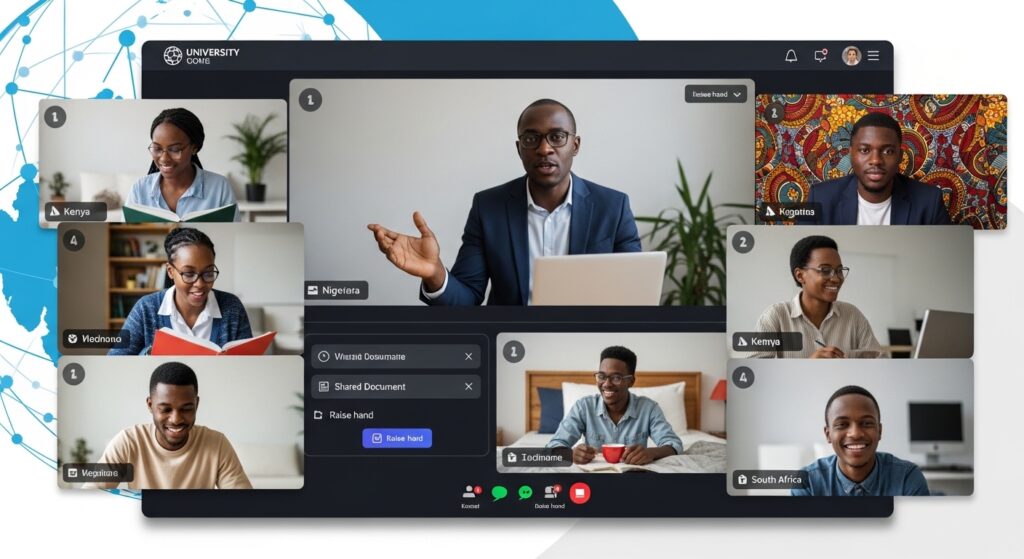
Cross-border online education refers to educational offerings delivered by an institution in one country to learners located in other countries through online channels. This includes fully online degree programs, blended or hybrid models aimed at international cohorts, micro credentials, and corporate training delivered across jurisdictions. It overlaps with broader concepts such as international online education and transnational education policy, but its defining feature is geographic separation combined with digital delivery.
Read more: Short Courses and Micro-Credentials: The Next Big Shift in Education
The internationalisation of education has produced record global enrolments in higher education; UNESCO reports the number of students enrolled worldwide reached a record 264 million, highlighting both the demand and the need for systems that can recognise and regulate qualifications across borders.
Why Cross-Border Online Education Is Expanding

Several converging trends explain why more institutions are offering international programs online.
First, learner demand is rising. Growth in tertiary participation and the mobility of students, both physical and virtual, means institutions with the right digital offerings can reach learners who cannot relocate for study. International student numbers rose sharply over the last two decades, reflecting a sustained global appetite for cross-border learning.
Second, remote accessibility and improvements in learning platforms make high-quality instruction possible at a distance. Modern learning management systems, synchronous collaboration tools, and credentialing platforms support complex program models that would have been impractical a decade ago.
Third, workforce mobility and employer demand for targeted upskilling are creating new markets for micro credentials, stackable credentials, and short courses that employers recognise across borders. These products are attractive because they are modular, fast to deliver, and often directly linked to labour-market outcomes.
Finally, institutional positioning matters. Universities and vocational providers see cross-border online education as a strategic route to diversify revenue, build global reputation, and extend their research and industry partnerships beyond domestic limits.
Regulatory and Accreditation Challenges

Cross-border delivery is not merely a technical exercise; it conflicts with national regulatory frameworks designed for campus-based provision. Key stumbling blocks include:
National recognition differences
Countries differ in how they recognise foreign qualifications and online delivery. A program approved and accredited in one jurisdiction may not be automatically recognised elsewhere, creating uncertainty for graduates who expect their credentials to be portable.
Licensing and compliance
Some countries require foreign providers to obtain local licences, register with authorities, or partner with local institutions. These licensing regimes vary widely, and failure to comply can result in restrictions or reputational risk.
Quality assurance and standards
Existing quality assurance agencies often focus on in-person provision. The UNESCO/OECD guidance on cross-border higher education and subsequent codes of practice emphasise protecting learners and ensuring quality in transnational arrangements, but implementation remains uneven across regions. Institutions must be prepared to meet both home and host-country standards.
Data protection and jurisdictional complexity
Cross-border programs collect personal and performance data that are subject to multiple legal regimes. Complying with different privacy laws, on data residency, consent, and transfer, adds operational complexity and cost.
These regulatory challenges mean that successful cross-border online education requires more than a polished course: it requires legal due diligence, regulatory mapping, and proactive engagement with recognition and quality assurance bodies.
Read more: How Universities Can Attract More International Students Through Online Programs
Technology Infrastructure for Cross-Border Delivery

Delivering international programs at scale depends on robust, inclusive technology choices:
- Scalable LMS systems. Choose platforms that support large, geographically distributed cohorts, integrate analytics for learning outcomes, and offer single sign-on and interoperability with other campus systems.
- Low-bandwidth compatibility. Design content and delivery modes for variable connectivity. As a rule, always offer asynchronous alternatives, downloadable resources, and mobile-friendly interfaces to reach learners with limited bandwidth.
- Secure data systems. Use cloud providers with clear data-sovereignty options, implement encryption and role-based access, and design retention policies that satisfy both home and host-country rules.
- Multilingual and cultural support. Localise content, provide multilingual interfaces, and invest in culturally responsive pedagogy to improve engagement and completion.
Reliable international delivery is not about buying the most feature-rich system; it is about choosing resilient, compliant, and adaptable technology that matches learner contexts.
Policy and Governance Considerations
Institutions entering cross-border online education must adopt governance practices that align academic quality and regulatory compliance.
Institutional accountability
Define ownership for international programs: who holds academic responsibility, who manages student services, and how outcomes are monitored. Clear accountability reduces the risk of program drift and protects institutional reputation.
Government oversight and collaboration
Many governments are developing frameworks for transnational education. Institutions should engage early with host-country regulators, seek recognition pathways, and explore public-private partnerships where appropriate. International frameworks and guidance, such as the OECD’s advice on quality assurance, offer practical starting points for these dialogues. (OECD)
Data protection regulations
Map data flows and align them to applicable laws. For large cross-border cohorts, consider contractual arrangements with cloud providers that specify processing locations and compliance responsibilities.
Cross-border collaboration frameworks
Consortia models, articulation agreements, and local partnership arrangements can ease regulatory burdens and improve student support. Thoughtful partnerships also help with local marketing, student services, and regional accreditation requirements.
Long-Term Strategic Impact
When managed well, cross-border online education offers durable strategic benefits.
- Global brand positioning. Delivering quality programs internationally strengthens reputation and can support on-campus recruitment and research collaboration.
- Enrollment diversification. Digital offerings can smooth enrollment cycles and reduce dependence on a few source markets.
- Digital diplomacy and soft power. International education builds long-term relationships and influences, an asset for both institutions and nations.
However, these gains require investment in governance, pedagogy, and equitable access. The World Bank’s education data resources and country indicators are useful starting points when planning investments to reach underserved populations. (databank.worldbank.org)
Practical Takeaways for Leaders
- Map regulatory risk first. Before launching, produce a regulatory and recognition map for each country you intend to serve. This prevents downstream compliance surprises.
- Design for accessibility. Prioritise low-bandwidth, mobile-first experiences and asynchronous pathways to maximise inclusion.
- Partner locally. Use articulation agreements or local partners to navigate licensing and provide on-the-ground student support.
- Invest in quality assurance. Align programs to both home and host benchmarks, collect evidence of learning outcomes, and publish clear pathways for credit recognition.
- Treat data governance as strategy. Build a data classification and residency plan that supports both operational needs and legal compliance.
For practical resources on governance and quality frameworks, consult the guidelines from UNESCO and the OECD, and review country education indicators via the World Bank. For more insights and operational guidance, visit Edutech Global’s home page and our blog: https://edutech.global/, https://edutech.global/blog/.