

Nigeria’s edtech market forecast 2026 begins with an important observation: between 2020 and 2025, digital learning stopped being an experiment and became a structural part of Nigeria’s learning ecosystem, with adoption accelerating across schools, universities, training firms and corporate L&D teams. That surge gives a window into how quickly the country’s learning landscape is transforming and where it may be headed next. As we approach 2026, the EdTech curve seems poised to rise even more steeply.
Digital learning in Nigeria did not grow simply because it was a “nice to have.” Rather, it became necessary. Nigeria saw a convergence of rising smartphone adoption, expanding internet connectivity, and a growing appetite for flexible, accessible learning. These changes created fertile ground for EdTech: virtual classes, online courses, and learning management systems became not only practical but often the default.
As we look ahead to 2026, many of those same forces remain in motion, and new ones are consolidating. More students, educators, and enterprises are expecting digital-first solutions. More institutions are investing in learning platforms, automation, and mobile-friendly digital campuses.
Read More: Nigeria EdTech Market Forecast 2025–2030: Why the $400M Milestone Matters
Overview of Nigeria’s EdTech Growth Path
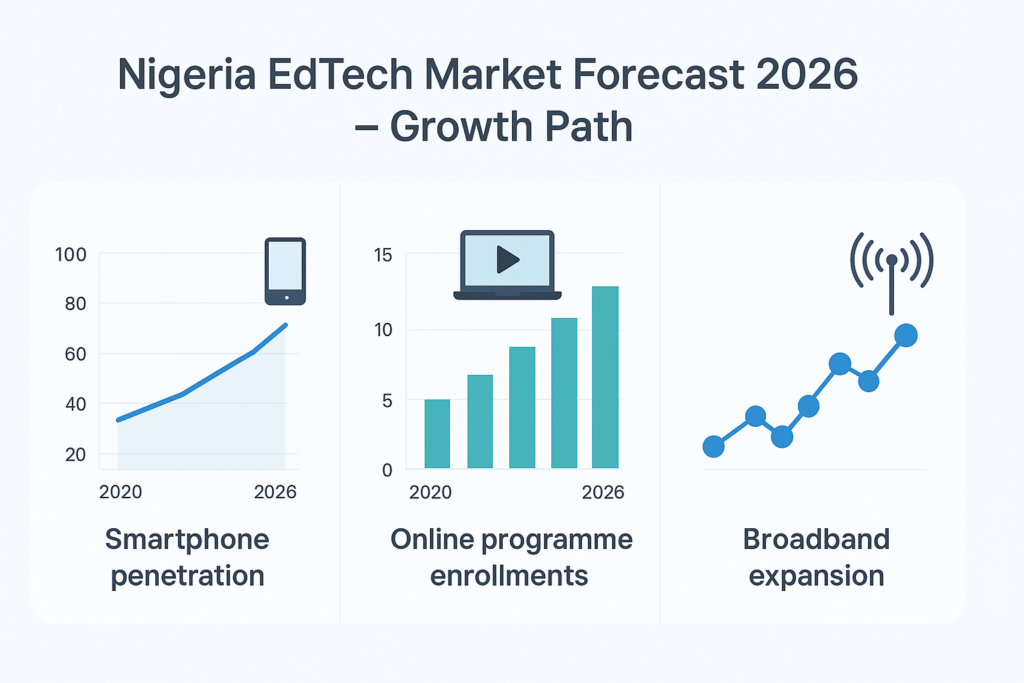
Between 2020 and 2025, Nigeria witnessed a steady uptick in the adoption of EdTech, driven by multiple interlinked shifts.
First, the country strengthened its digital infrastructure. Broadband penetration has been climbing. According to recent data, broadband penetration reached nearly 49.34% in 2025, reflecting about 106.97 million high-speed internet connections. Mobile-first internet access became the norm rather than the exception.
Second, there has been a surge in smartphone penetration. Affordable devices, many imported from China or built for budget-conscious users, made internet-enabled phones accessible to broad segments of the population. This accessibility unlocked demand for mobile internet use, including online education, social media, streaming, and more.
Third, with the shift to digital and remote work (especially after global disruptions like the COVID-19 pandemic), Nigerian institutions, universities, colleges, and training firms began exploring alternatives to traditional classroom-based learning. Online programmes, remote lectures, and digital training started being seen not as a temporary substitute but as a viable, long-term option. Over time, this changed perception and increased adoption.
Finally, EdTech platforms that offered courses online, accessible from mobile devices and at the learner’s convenience, became increasingly appealing. This shift laid the foundation for a sustainable, scaling EdTech ecosystem in Nigeria.
It is this convergence of factors, mobile-first internet, rising broadband, accessible devices, and flexible learning demand, that makes the 2026 forecast compelling. The growth is not random; it is rooted in big structural changes in how Nigerians access education and the internet.
Market Size Outlook for 2026
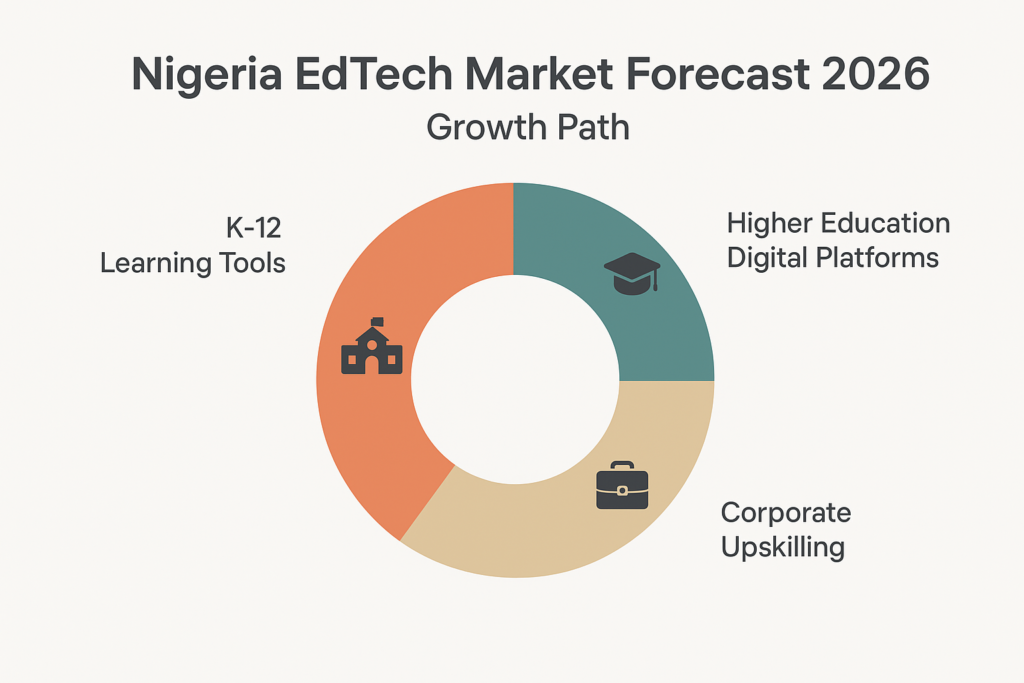
Estimating the future size of Nigeria’s EdTech market involves building on recent data and projecting forward in a conservative but realistic way.
According to a recent industry estimate, the online education market in Nigeria is projected to approach about US$159.6 million in revenue by 2025. If we conservatively assume continued growth driven by increasing internet access, growing smartphone adoption, and rising institutional demand, the market could easily grow by at least 15–20% annually up to 2026, possibly pushing the total market revenue to around US$185–200 million by the end of 2026. That would represent a substantial increase from 2025, as institutions and learners alike deepen their reliance on digital platforms.
Breaking this down by segment:
- Basic Education (K–12 and secondary schools): As broadband spreads beyond major cities, some private and public schools will begin piloting or scaling hybrid or fully online learning components. While traditionally slower to adopt digital education in rural or underserved areas, increasingly available mobile internet and smartphone-based learning may accelerate uptake. This could represent a modest but growing slice of the market in 2026, perhaps 10–15% of total revenues.
- Higher Education: Universities and colleges are likely to form the bulk of demand. With increasing international collaborations, distance-learning programmes, and hybrid delivery models becoming more accepted, higher education could constitute 40–50% of the market revenue by 2026. Many institutions will likely subscribe to Learning Management Systems (LMS), automation tools, and digital exam/assessment portals.
- Corporate Learning & Vocational Training: This is perhaps the fastest-growing segment. As companies, both local and multinational, seek to upskill employees, and as new training firms emerge offering short courses in digital skills, entrepreneurship, and soft skills, demand for corporate learning solutions should rise sharply. We would expect this segment to grow to make up 30–40% of total EdTech market revenue in 2026.
These projections assume continued growth in internet access, affordability of smartphones and data, as well as increased trust in online education, but also consider that significant portions of the population remain offline or under-connected.
Drivers Powering Growth in 2026
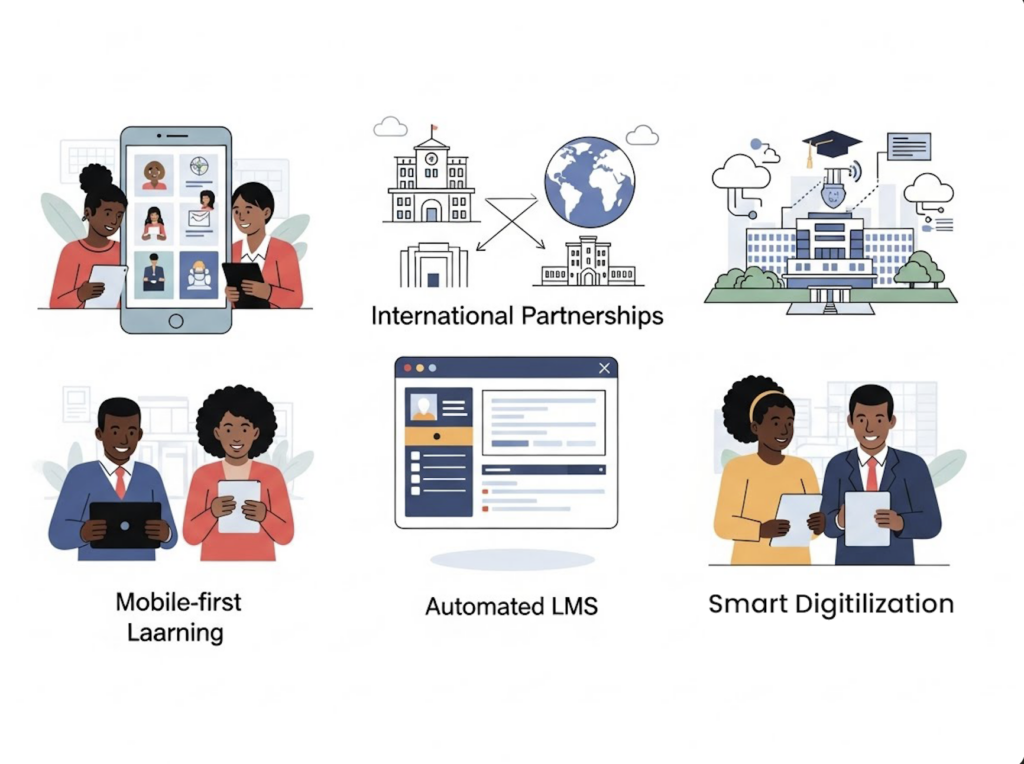
Several factors are likely to power Nigeria’s EdTech growth throughout 2026 and beyond.
1. Rising Smartphone Penetration
In 2025, smartphone penetration reportedly surged, with optimistic estimates suggesting that as many as 140 million Nigerians may own smartphones by the end of the year. For the EdTech sector, this is critical: it means a much larger potential user base that can access online courses, learning platforms, and mobile-friendly content.
2. Expansion of Broadband and Mobile Internet Infrastructure
Internet infrastructure has improved significantly. As of 2025, broadband penetration reached nearly 49.34%. Mobile broadband, especially 4G and increasingly 5G, is becoming more widespread, enabling faster, more reliable access that supports streaming lectures, video conferencing, and real-time collaboration.
As infrastructure improves and the costs of data continue to moderate, more learners and institutions will find digital education viable and scalable.
3. Growth of Institutional Adoption: Universities, Training Firms, Corporate Learning
Institutions are beginning to realise that digital or hybrid delivery models offer many benefits: scalability, flexibility, cost-efficiency, and reach beyond physical classrooms. This institutional adoption is critical if the EdTech market is to grow significantly. As more organisations commit to LMS platforms, digital exam portals, remote training systems, and corporate learning modules, demand will rise across all segments: basic education, higher education, and corporate training.
4. International University Partnerships and Online Programmes
Global trends show that cross-border education and remote learning are growing. For Nigeria, partnerships between local institutions and international universities offering online courses or blended programmes can drive demand. Nigerian students may prefer to enrol in foreign programmes without leaving home. For local institutions, offering globally certified online courses can enhance prestige and attract learners.
Such partnerships can also encourage investment in quality EdTech infrastructure, better course design, and standardised assessments, contributing to the robustness of the local EdTech ecosystem.
5. Institutional Decisions to Adopt Automation-First LMS Solutions
As administrators seek ways to streamline academic processes, reduce administrative overhead, and improve student experience, Learning Management Systems (LMS) and automation become attractive. Automating admissions, enrolments, assessments, grading, and student communications reduces friction, human error, and administrative costs.
For training companies and corporate learning providers, this automation-first approach means they can deliver courses at scale, with minimal overhead, and maintain consistency. As more institutions adopt LMS, the overall EdTech market footprint grows.
Challenges Slowing Down Adoption

Despite the optimism, there are structural and practical challenges that could slow down EdTech growth in Nigeria. Recognising them is essential, and institutions that plan will be better positioned to survive and thrive.
1. Network Quality Gaps and Uneven Access
While internet infrastructure has improved, Nigeria continues to face a digital divide. Urban centres like Lagos, Abuja, and Port Harcourt benefit disproportionately. Meanwhile, rural areas remain underserved. According to recent reports, rural communities accounted for less than 25 per cent of data usage even as overall data consumption surged.
This disparity means many potential learners, especially outside major cities, still lack reliable internet access. For EdTech providers and institutions aiming at nationwide reach, this digital divide remains a major barrier.
2. Digital Literacy and Educator Readiness
Owning a smartphone or having internet access does not automatically translate into readiness for online education. Many educators, particularly in older or less-resourced institutions, may lack training in digital pedagogy. Similarly, administrative staff may not be familiar with LMS, online assessment tools, or course design for digital platforms.
Without adequate training and a mindset shift, institutions may struggle to deliver quality online content, even if the technology is available. Low digital literacy among educators can lead to poor course delivery, low student engagement, and high dropout rates.
3. Affordability: Smartphones, Data Costs, and Economic Constraints
While smartphone penetration is rising, cost remains a major barrier. A 2025 report from a global telecom body indicated that in Nigeria, the high cost of smartphones continues to keep six in ten Nigerians offline.
For many Nigerians, buying a data-enabled smartphone or paying for data remains a significant expense, and in difficult economic times, education may not always be prioritised. This puts a ceiling on how quickly EdTech adoption can spread nationwide, especially among lower-income populations.
4. Low Awareness or Trust of Quality Online Programmes
Digital education has gained ground, but many learners, especially parents, employers, and older demographics, may still distrust the quality of online programmes. There may be doubts about accreditation, assessment integrity, and whether online learning offers the same value as traditional, in-person education.
Without awareness and perceived legitimacy, many may hesitate to enrol in online courses, reducing demand. Institutions that launch online programmes without marketing, transparency, and quality assurance may face low uptake.
What Institutions Should Do to Stay Ahead
If institutions, universities, colleges, training firms, or corporate learning providers want to capitalise on the EdTech wave and position themselves to win in 2026, certain strategic steps are essential.
1. Invest in Faculty and Staff Training in Digital Pedagogy
One of the biggest bottlenecks in digital learning is not technology, but human readiness. Institutions need to invest in training their educators and administrators. Courses and workshops on online teaching methods, course design, student engagement, assessment integrity, and use of LMS should be standard.
By empowering faculty and staff, institutions ensure that digital content is delivered effectively, learners remain engaged, and course outcomes are met. This builds trust and lays a foundation for scaling.
2. Adopt Automation-First LMS Solutions and Digital Portals
Rather than retrofitting traditional processes into digital platforms, institutions should adopt learning management systems that are built for automation. Automation-first LMS solutions can manage admissions, enrolments, course delivery, assessments, grading, student communications, analytics, and certification.
For universities and colleges, these systems can streamline operations and reduce administrative burdens. For corporate training firms, automation supports scaling, delivering multiple courses to many learners with minimal overhead.
Over time, these systems also allow for data-driven improvements: institutions can track engagement, identify drop-off points, and tweak course design for better outcomes.
3. Design Mobile-Friendly Digital Campuses
Given Nigeria’s mobile-first internet behaviour, institutions must design digital campuses with mobile learners in mind. This means courses, lectures, and assessments that work seamlessly on smartphones. Video lectures should be optimised for mobile data; course interfaces must be lightweight, intuitive, and easy to navigate even on small screens.
Mobile-friendly design increases accessibility, especially for learners who may not own a laptop but own a smartphone. By prioritising mobile-first user experience, institutions can reach a broader, more diverse student base.
4. Build Awareness, Credibility, and Trust in Online Programmes
Institutions should invest in marketing, transparency, and accreditation to build trust in their online offerings. Clear communication about course content, certification, assessment methods, and learning outcomes helps build legitimacy.
Partnerships with reputable local or international institutions, and publicising these partnerships, can further boost credibility. Institutions should also gather and showcase student feedback, success stories, and outcomes to reassure prospective learners and employers about the quality of digital education.
5. Pair Digital Expansion with Inclusion Efforts: Reach Rural and Underserved Areas
To avoid leaving large portions of the population behind, forward-thinking institutions should design strategies to reach rural and underserved communities. This could involve:
- Offering low-bandwidth course versions (text-based, audio, or low-res video) suitable for limited internet access.
- Partnering with local community centres or libraries to provide internet-equipped learning hubs.
- Working with NGOs or government initiatives to improve connectivity and device affordability.
- Offering scholarships or low-cost plans for underserved learners.
By committing to inclusion, institutions not only expand their market but also help close Nigeria’s digital divide.
If you represent an institution, training firm, or corporation planning to ride this wave, now is the time to start building. And if you’d like guidance on selecting or deploying an LMS or building a mobile-friendly “digital campus”, we’re here to help. At Edutech Global, we believe the future of learning in Nigeria isn’t just digital. It is inclusive, flexible, and ready to scale.