

What does it mean to learn in an age where machines can adapt to you just as much as you adapt to them? When a classroom can respond in real time to each student’s pace, interests, and needs, is that a page from a sci-fi novel, or a reality we’re presently living?
As countries, industries and people across the globe embrace artificial intelligence, a quiet revolution is transforming how people engage with learning. The classroom is no longer a one-size-fits-all environment. AI-powered platforms now tailor content, pace, and support to the individual.
From Africa to Asia to the Americas, educators are leveraging artificial intelligence in education to break traditional learning moulds. Systems that once served vast numbers with uniform methodologies are giving way to adaptive technologies that offer each learner a unique educational path.
This shift is not theoretical. It is real. Real in global policy frameworks from UNESCO. Real in classrooms. And real in the way millions of students now engage with learning.
The Rise of Artificial Intelligence in Education Worldwide
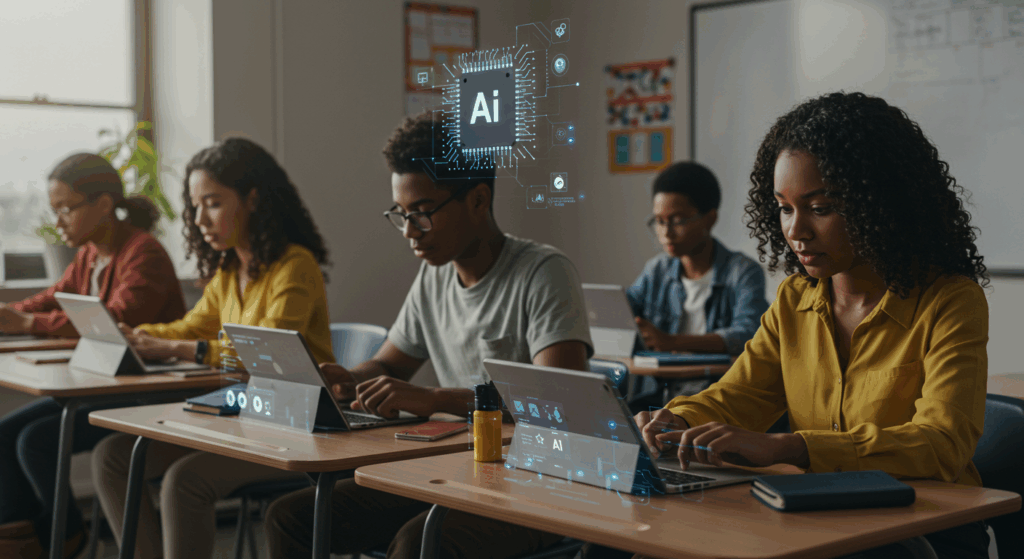
Over the last decade, interest in artificial intelligence in education has surged, fuelled by advances in machine learning and big data analytics. Global institutions like UNESCO have launched major initiatives, including the Artificial Intelligence and the Futures of Learning project, to guide the responsible integration of AI into teaching and learning. The institution highlighted AI’s capacity to address some of the most persistent challenges in education, including scaling quality learning, improving equity, and advancing Sustainable Development Goal 4.
In Europe, North America, and Asia, governments and institutions are piloting AI tools for real-time feedback, automated assessment, and adaptive content. At the same time, awareness is rising in Africa, as platforms unique to the region emerge, enriched by local insights and constraints.
Though infrastructure and access remain barriers in parts of the Global South, African innovators are showing that AI-powered education technology trends can deliver tailored learning even in low-resource settings. Real-world implementations across Nigeria, Ghana, Kenya and beyond are offering proof of concept and charting a path forward.
What Is Artificial Intelligence in Education?
Artificial intelligence in education refers to systems that use algorithms and data to enhance learning processes. At its core, AI in learning encompasses:
- Adaptive learning platforms which adjust content and pace based on student responses.
- AI tutors and chatbots, that respond to student queries on demand such as Solve Education!’s “Ed the Learning Bot” in Nigeria, deliver gamified and conversational learning on Telegram.
- Generative AI tools, offering on‑demand explanations, prompts or lesson plans (e.g. localised GPTs like the Ghanaian Teacher Educator AI).
- Automated assessment and feedback systems, which grade and provide suggestions in real time.
These tools form the heart of artificial intelligence in education, aimed squarely at making learning more personal.
How AI Personalises Learning for Students
Adaptive Course Paths
Adaptive platforms continually assess a learner and adjust their trajectory, providing more practice in weak areas and quicker progression through mastered topics. For example, a student struggling with algebraic concepts may receive more foundational practice before advancing. As mastery grows, the system dynamically introduces new topics.
Real‑time Feedback and Automated Assessments
Rather than waiting days or weeks, learners can receive instant feedback. AI-powered tests provide immediate insights, allowing students to correct misconceptions and teachers to identify patterns of defeat or success early. This is especially valuable in large classes where manual grading is impractical.
Chatbots and AI Tutors
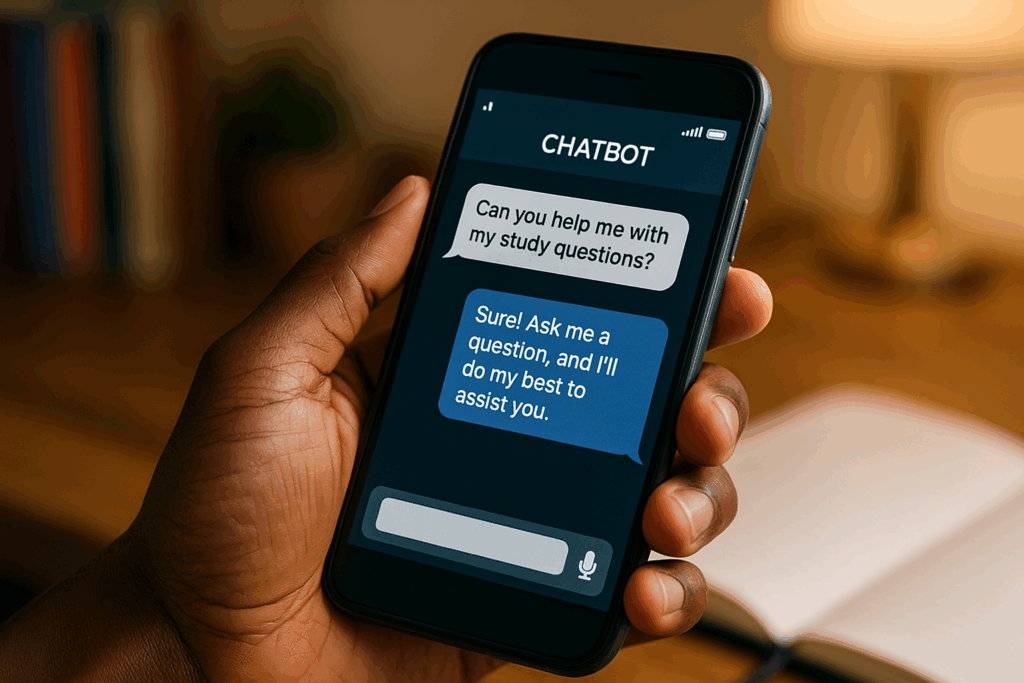
Learners often need assistance outside scheduled class hours. AI tutors, available 24/7, answer questions, offer hints, and suggest resources. In Ghana, the WhatsApp‑based tutor Rori helped over 1,000 students in grades 3–9 improve math performance over eight months, delivering a significant effect size of 0.37 (p < 0.001) compared to peers who did not use it.
Localised tools like Kwame for Science support science learners across West Africa. In an eight‑month deployment across 32 countries and 750 users, it delivered around 1,500 student queries with 87 % accuracy in top‑3 answers.
Benefits of Artificial Intelligence in Education
Personalised Pace
Every learner moves at their own speed. Struggling students get support; advanced learners move ahead without waiting. This flexibility respects individual learning rhythms.
Better Engagement
Interactive, tailored content keeps students motivated. Gamified chats, visuals, and adaptive challenges engage learners far more than generic textbooks.
Early Detection of Learning Gaps
AI analytics can flag trends: students missing key concepts, emerging risk of drop‑out, or persistent weakness before it becomes entrenched. Educators can intervene early.
Studies in Morocco show AI‑based predictive models can detect at‑risk students with 88 % accuracy, allowing timely support to avert dropout.
AI in African Universities and Schools
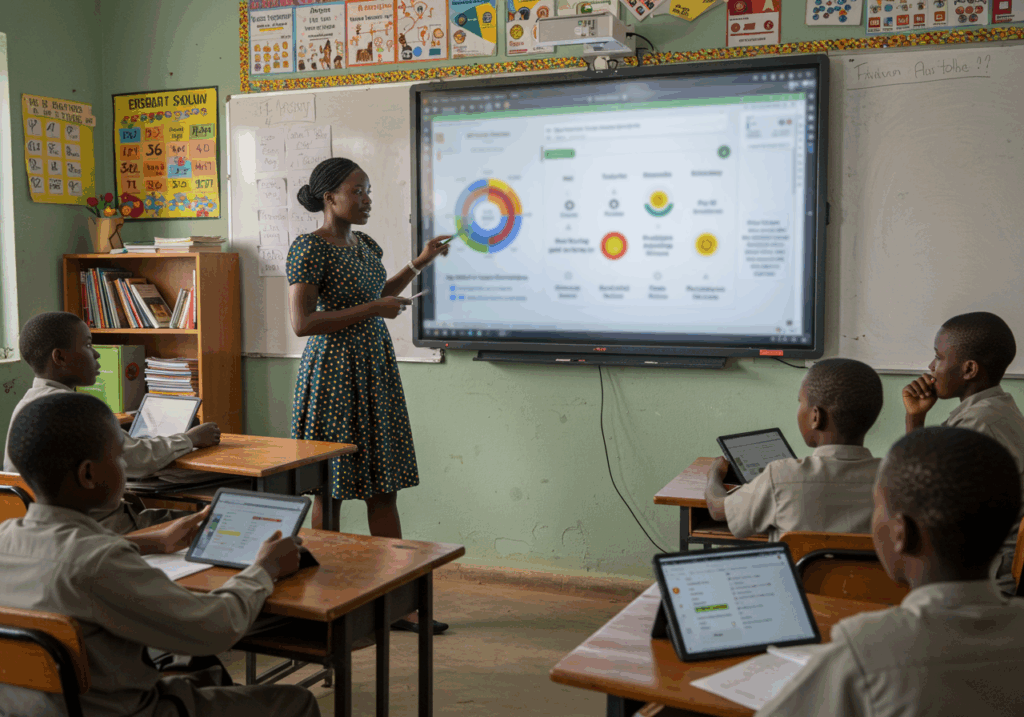
Across Africa, AI tools are moving from research prototypes into classrooms:
- Kwame for Science, an AI teaching assistant based on Sentence‑BERT, offers science students in West Africa answers to exam-style questions, and as deployed across 11 countries, it achieved 87–87.5% top‑3 accuracy in answering student queries.
- Nigerian platforms such as Afrilearn include personalised dashboards, quizzes, animated lessons and exam practice modules tailored to WAEC, JAMB, and NECO curricula.
- uLesson provides video lessons, quizzes, and homework help across several African countries, offering adaptive support to learners from Nigeria, Ghana, Sierra Leone, Liberia and Gambia.
- South Africa-based Snapplify includes Book Buddy, an AI assistant that helps students interact with digital textbooks and educational content in real time.
These examples illustrate how personalised education with AI is making learning more inclusive, even where connectivity and resources are constrained.
Key AI Tools and Platforms in Education
- Google’s AI tools support personalised feedback, translation, and accessibility in classrooms worldwide.
- UNESCO’s policy briefs, including AI in Education: Change at the Speed of Learning, emphasise the transformative potential of AI and the importance of equitable, human‑centred implementation.
- Brookings Institution frequently publishes research on AI in learning trends and how countries can harness AI safely.
These platforms demonstrate how edtech AI tools, both global and regional, are reshaping educational delivery, teacher support, and student agency.
How Edutech Global Connects Institutions with AI Solutions
At Edutech Global, our mission is to bridge educational institutions with bespoke innovations that foster personalised learning. We do this by:
- Assessing institutional needs, understanding curricula, learner demographics, infrastructure, and capacity.
- Curating AI solutions such as adaptive learning systems, chatbot tutors, and predictive analytics platforms, aligned with global standards like UNESCO’s recommendations.
- Supporting implementation, training staff, ensuring ethical and privacy compliance, and integrating with existing student data systems.
- Monitoring impact, tracking learning gains, engagement metrics, and user feedback, to refine interventions.
We have supported universities and schools to pilot chatbots, roll out adaptive dashboards, and interpret analytics reports. Our global reach and African experience position us uniquely to deliver AI‑powered education transformation.
Curious how artificial intelligence in education could elevate teaching and learning at your institution? Want to pilot adaptive tools or deploy multilingual chatbots tailored to local curricula? Edutech Global is ready to help.
Visit our Homepage and reach out via our Contact Page to schedule a discovery session. Let’s partner in designing a personalised future for your learners.
The question remains: are we ready to move beyond traditional classrooms and embrace learning designed for individuals? With AI and a human‑centred approach, the answer is yes. Let’s build that future together.