

Every year, employers, universities, and professional licensing bodies face the same uncomfortable reality: the certificates presented to them may not be what they claim to be. Fraudulent degrees, altered transcripts, and inflated credentials are not fringe concerns. They are persistent, global problems that cost institutions time, money, and trust. Traditional verification methods, reliant on phone calls to registrars, paper trails, and third-party intermediaries, were never designed for the pace or complexity of today’s world. They are slow, inconsistent, and surprisingly easy to circumvent.
That is precisely why the conversation around blockchain in education has shifted from theoretical possibility to practical implementation. At its core, blockchain is a distributed digital ledger: a system that records information in blocks, links those blocks chronologically, and makes the resulting chain tamper-proof. No single authority controls it; no single point of failure can compromise it. Once data is recorded, it cannot be altered without invalidating the entire chain. For a sector built on the credibility of its credentials, that property is transformative.
The pressures driving institutions toward blockchain learning records are real and well-documented. With the growing number of international students worldwide and the persistent issue of document forgery, blockchain is emerging as a secure means for digital transactions in education, driven by objectives of cost reduction, enhanced information security, and simplification of document verification processes. For school owners and administrators navigating cross-border enrolments and employer partnerships, the practical relevance of this technology is growing rapidly.
Read More: Blockchain Technology in Education in 2026
Why Blockchain in Education Addresses a Genuine Problem

The challenges facing credential management today are structural, not incidental. Paper-based certificates are physically vulnerable to loss, damage, and forgery. Digital files are easily altered with widely available editing tools. Even QR codes, once seen as a more secure alternative, are easily copied in the context of technology-mediated security.
The result is a verification system that imposes disproportionate costs on everyone involved. Employers must invest time and resources into confirming qualifications that should be instantly verifiable. International students face delays when their credentials cannot be easily authenticated across borders. Institutions themselves carry administrative burdens that have little educational value. In many countries, verification remains dominated by manual and paper-based processes that are slow, inefficient, and vulnerable to forgery, leading to credential fraud, delays in recruitment, and reduced international credibility of degrees.
Fragmented student record systems compound the problem. A learner who has moved between institutions, taken courses from multiple providers, or acquired professional certifications alongside formal qualifications typically has no single, portable record that captures the full picture of their learning. Blockchain directly addresses this fragmentation by enabling a single, immutable, and accessible ledger that follows the learner rather than the institution.
How Blockchain Is Used for Digital Academic Credentials
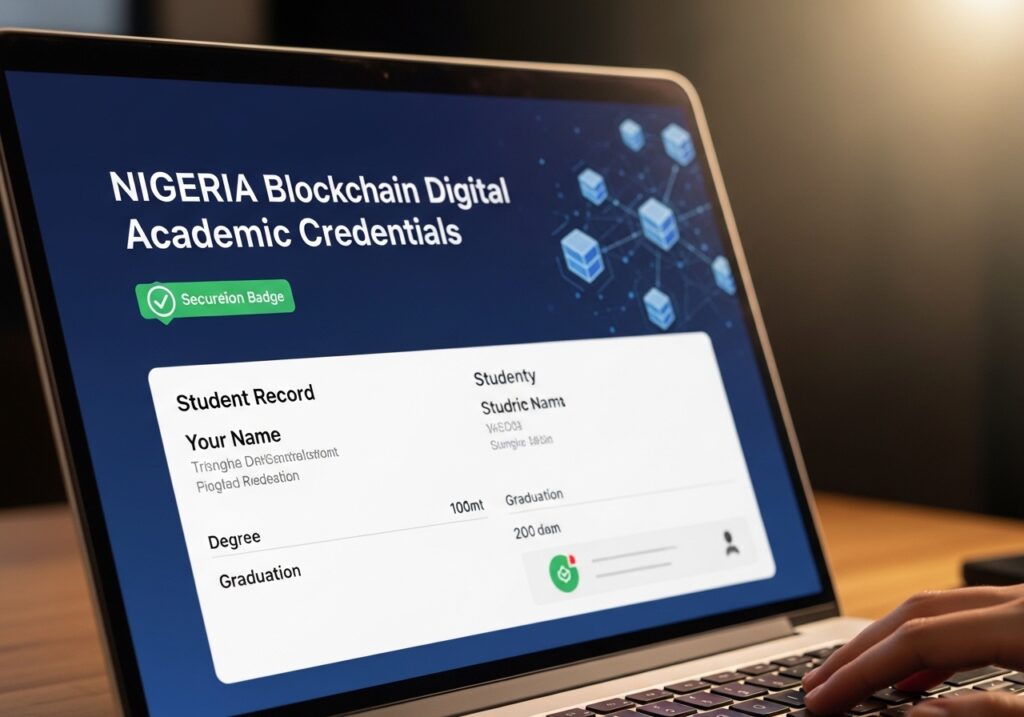
The most established application of blockchain in education is the issuance and verification of secure education credentials. Rather than existing as a PDF on a graduate’s laptop or a paper document in a filing cabinet, a blockchain-based diploma is cryptographically signed, timestamped, and stored on a distributed network accessible to any authorised verifier anywhere in the world.
MIT has become one of the first universities to issue recipient-owned virtual credentials, using the Blockcerts Wallet to give graduates a verifiable, tamper-proof version of their diploma that they can share with employers, schools, family, and friends. The verification process is elegantly simple: employers and schools can quickly verify that a graduate’s degree is legitimate by using a link or uploading the student’s file, confirming that the information on the record matches a receipt stored on the blockchain. Crucially, this model places ownership in the hands of the student rather than the institution, a principle MIT’s registrar described as central to the initiative from its outset.
Beyond diplomas, blockchain learning records extend to transcripts, micro-credentials, and achievement records. Sony Global Education, in partnership with IBM, developed a blockchain platform that enables multiple institutions to add individual academic achievements and other pertinent student information on a ledger in order to maintain irrefutable records on students who have transferred or furthered their education. This cross-institutional model is significant: it recognises that modern learners rarely acquire all their skills within a single institution, and that a credentialing system built for the twentieth century cannot adequately serve the twenty-first.
Read more: Blockchain in Education: Securing Credentials and Academic Records
Benefits of Blockchain in Education for Institutions and Learners
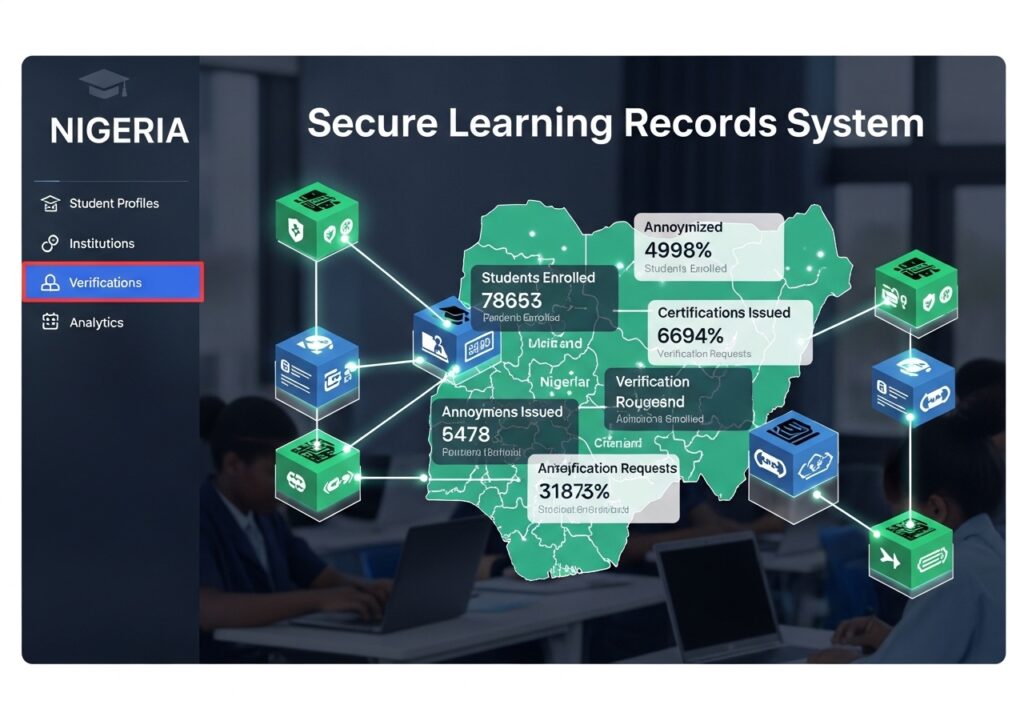
The advantages of adopting blockchain for digital academic credentials extend well beyond fraud prevention, though that benefit alone is substantial. For institutions, the most immediate operational gain is speed. Verification processes that previously took days or weeks can be reduced to minutes. Administrative staff are freed from repetitive manual checking, and the risk of human error is significantly reduced.
The OECD has noted that blockchain’s verification technology can realign education’s credentialing system to today’s digital world, enabling individuals or institutions to validate claims about qualifications instantly and with a high level of certainty, while also allowing people to upskill, reskill, and move between jobs. That last point matters enormously in a labour market characterised by rapid change. A credentialing system that is portable, verifiable, and comprehensive gives learners genuine agency over their professional lives.
For schools and universities, the long-term value lies in institutional trust. When an institution’s qualifications can be verified immediately and definitively, the reputation of those qualifications strengthens over time. Employers who repeatedly experience fast, accurate verification are more likely to value and actively recruit from those institutions. The integrity of the credential becomes a form of institutional branding.
Challenges and Limitations of Blockchain Adoption
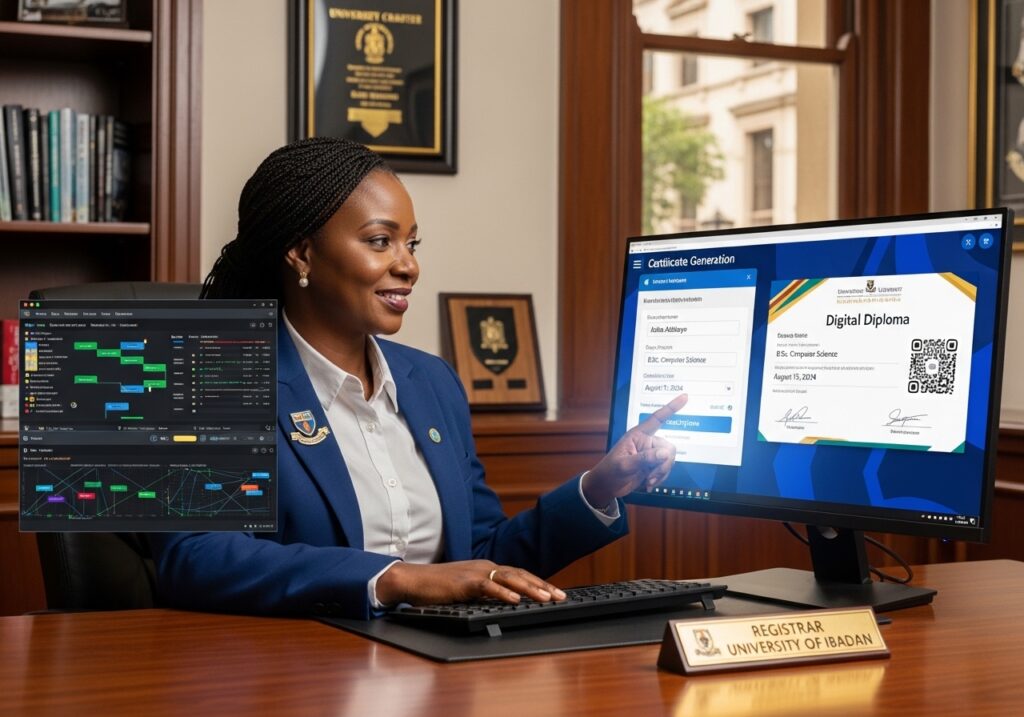
It would be a disservice to administrators and school leaders to present blockchain as a simple or cost-free solution. The implementation challenges are real, and they deserve honest consideration.
The most immediate barrier is financial. Building or integrating a blockchain-based credentialing system requires upfront investment in technology infrastructure, staff training, and ongoing maintenance. For smaller institutions or those in under-resourced contexts, this cost can be prohibitive without external partnerships or government support.
Integration with existing systems is another practical challenge. Most educational institutions operate a patchwork of student information systems, learning management platforms, and administrative databases that were not designed with blockchain in mind. Creating the bridges between these systems requires technical expertise and careful planning.
The regulatory landscape remains unsettled. As of 2024, no country has put in place any regulation or contract to govern access to data collected by commercial providers within public schools, and there is also no regulation or guidance about algorithms or automated decisions by EdTech providers operating within those settings. For institutions considering blockchain solutions, this regulatory gap introduces genuine uncertainty about data ownership, privacy obligations, and compliance. Governance structures must be established deliberately rather than assumed.
There is also the issue of technology adoption among staff, students, and external verifiers. A blockchain credential is only as useful as the willingness of all parties to use and trust the system. Without adequate training and communication, even well-designed implementations can fail through disuse.
Global Examples of Blockchain in Education

The institutions already deploying blockchain in education offer a useful map of what is possible. MIT, in collaboration with Learning Machine, uses blockchain technology to issue digital diplomas that are secure, tamper-proof, and easily verifiable, providing a reliable and efficient way for graduates to prove their qualifications. The Holberton School in San Francisco has issued blockchain-based digital certificates to its students, making verification immediate for any employer with access to the system. The University of Bahrain has used blockchain to secure and verify student degrees, an initiative that enhanced the integrity of academic credentials and reduced the risk of fraud.
At the policy level, UNESCO’s work on Education and Blockchain has highlighted the role of the technology in supporting SDG 4, particularly in enabling micro-credentials to be authenticated across institutional and national boundaries. UNESCO has noted that micro-credentials can be linked to a core system of identity verification through blockchain and authenticated more easily across institutional and national boundaries, which is also useful in promoting the transnational movement of qualifications. For schools and universities operating in international student markets, this has direct and immediate relevance.
The Future of Blockchain in Education
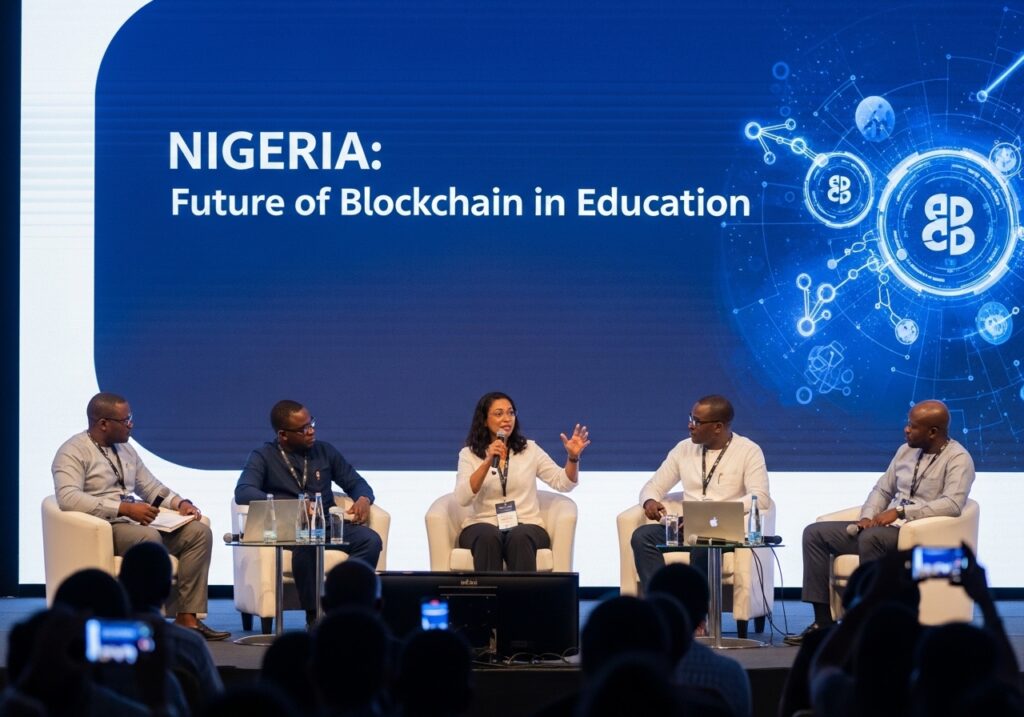
The trajectory of blockchain in education points toward something genuinely significant: a global, lifelong learning record that travels with each individual, verified by any institution, accessible anywhere. UNESCO’s 2024 publication on emerging technologies in lifelong learning examined the potential of blockchain to enhance personalised learning and digital credentialing, while identifying the need for interdisciplinary research and equitable access to ensure these technologies serve all learners.
The OECD’s Education Policy Outlook 2025 frames lifelong learning as central to building inclusive, resilient, future-ready societies, and the infrastructure to support that vision, spanning portable credentials, micro-qualifications, and cross-border record access, maps closely onto what blockchain in education is already beginning to deliver. As digital identity systems mature and interoperability standards evolve, the integration of blockchain learning records with national and international education frameworks will become increasingly feasible.
For school leaders and administrators, the practical message is this: the question of whether blockchain belongs in education has largely been answered. The more important questions now concern how to adopt it responsibly, with appropriate governance, realistic investment, and a focus on what genuinely serves learners. Those institutions that engage with these questions early will be better placed to offer credentials that travel further, verify faster, and carry the trust that education has always been built to create.
Explore more on digital transformation and innovation in schools at Edutech Global.