

Every time a student enrols, submits an assignment, accesses the library portal, applies for financial aid, or logs into a learning management system, they generate data. Multiply that across tens of thousands of students, hundreds of academic programmes, and dozens of administrative departments, and the scale of what a modern university manages becomes striking. Data governance in higher education has, as a result, moved from a back-office concern to a boardroom priority. Institutions that once treated data as a by-product of operations are now recognising it as one of their most valuable strategic assets, provided they can manage it properly.
The challenge is that managing data well is considerably harder than collecting it. Universities operate across fragmented systems, house sensitive personal records, conduct internationally funded research, and serve increasingly diverse student bodies with expectations shaped by the digital economy. At the same time, regulatory demands are tightening on multiple fronts. Whether an institution falls under GDPR in Europe, FERPA in the United States, or emerging national privacy frameworks across Africa, Asia, and Latin America, the pressure to handle data responsibly has never been greater. For senior leaders and policy makers, this is not a technical problem to delegate downward. It demands an institutional strategy.
Read more: Why Student Data Breaches Rise in Private Universities
What Data Governance Means for Universities

Data governance in higher education refers to the policies, processes, roles, and standards that determine how an institution collects, stores, shares, and uses its data. It is the institutional framework that answers foundational questions: who owns which data, who is authorised to access it, how long it is retained, and what quality standards it must meet.
At its core, education data governance assigns accountability. It establishes data stewards within academic and administrative units, creates shared definitions for how institutional data is categorised, and ensures that everyone from the registrar to the research office operates within a consistent, documented framework. Without this structure, a university has data assets but cannot trust or act on them reliably. University data management, in practical terms, spans student records, enrolment and progression data, financial and HR systems, research outputs, and institutional performance metrics. An effective governance strategy brings all of these under a coherent set of rules rather than leaving each department to manage its own corner of the estate.
Common Data Challenges Universities Face

The problems most universities encounter are well-documented, and they are costly. Student information often lives across multiple systems that do not communicate: a student information system here, a learning management platform there, a separate database for financial aid, and yet another for library records. When institutional data is siloed in this way, generating a simple cross-departmental report becomes an exercise in frustration, and strategic planning based on that data becomes unreliable.
Inconsistency is a close companion to fragmentation. Different departments may define the same metric in different ways, producing conflicting figures that erode trust in institutional reporting. EDUCAUSE’s 2025 research identifies the “data-empowered institution” as the sector’s number one priority, noting that data management, integration, and governance remain significant challenges even as more universities increase investment in analytics and AI tools.
Security and privacy risks compound the operational difficulties. The December 2024 PowerSchool breach, which affected an estimated 62 million student records, underscored just how exposed educational institutions can be when governance frameworks and vendor oversight are weak. Universities also navigate a complex web of overlapping regulations. GDPR can apply to any institution processing data on EU citizens, regardless of where it is based, whilst sector-specific frameworks like FERPA in the United States impose strict controls on student record disclosure. Non-compliance with GDPR, for instance, carries potential fines of up to €20 million or four per cent of total annual global turnover.
Core Components of an Effective Data Governance Framework

An institutional data strategy becomes actionable when it is built on clear structural components rather than aspirational documents that gather dust.
Clear data ownership and stewardship roles. Every significant data domain should have a named owner who is accountable for its integrity. This is not an IT role alone; it belongs to the academic or administrative unit that generates and relies on the data. A student records steward in the registrar’s office, a research data officer, and a finance data lead each carry specific responsibilities within the wider framework.
Standardised policies and data definitions. Governance without shared definitions is governance in name only. Institutions need agreed-upon standards for how key terms are defined, how data is classified by sensitivity, and what the acceptable use conditions are for each category. This is the foundation upon which consistent reporting and analysis can be built.
Data quality and validation procedures. Data quality does not maintain itself. Regular audits, automated validation checks, and clearly defined processes for identifying and correcting errors are necessary to ensure that the data informing institutional decisions is accurate and current.
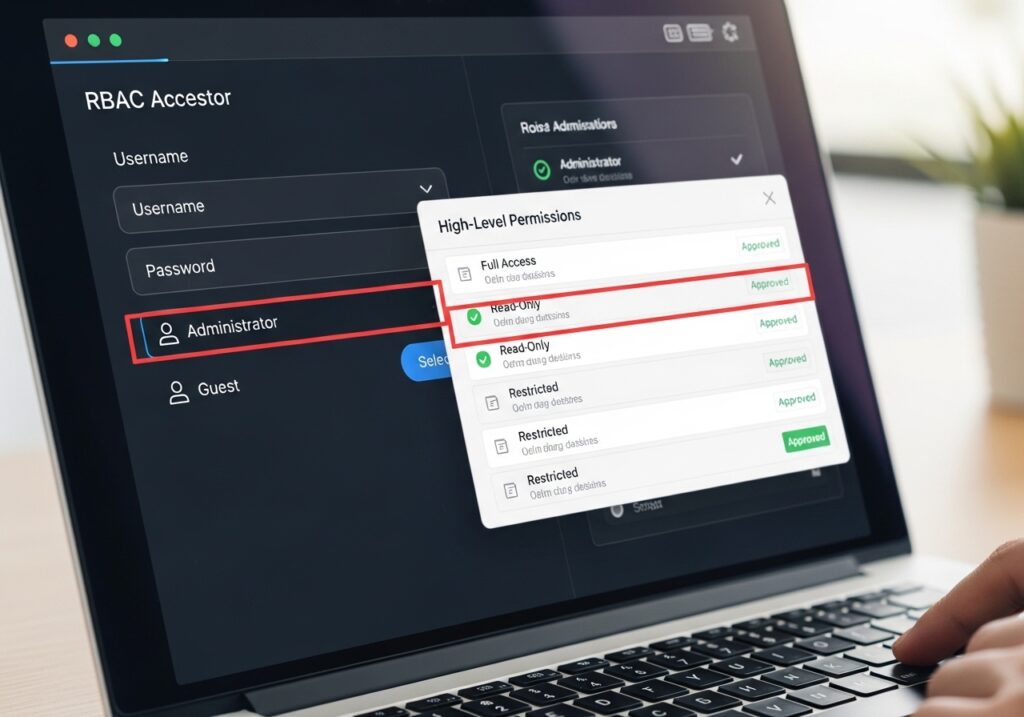
Access control and secure storage. Role-based access controls determine who can view, edit, or share specific data assets. Combined with encryption, multi-factor authentication, and regular security reviews, this reduces both the risk of breaches and the liability exposure that comes with them.
EDUCAUSE recommends establishing cross-functional data governance committees with representation from academic leadership, IT, student services, and legal or compliance teams, ensuring that governance is genuinely institution-wide rather than technically owned.
Benefits of Strong Data Governance in Higher Education
When data governance in higher education is implemented thoughtfully, the returns extend well beyond compliance. The most immediate benefit is better decision-making. When institutional leaders can trust the data in front of them, strategic planning improves. Enrolment forecasting becomes more accurate; student support services can identify at-risk learners earlier; resource allocation reflects real operational demand rather than departmental guesswork.
Regulatory confidence is another significant gain. Institutions with documented governance frameworks, clear audit trails, and trained data stewards are significantly better positioned when regulators or external auditors examine their practices. They are also better equipped to respond to student data requests, which are increasingly common as awareness of privacy rights grows.
The OECD has consistently highlighted the role of quality data in improving educational outcomes at the system level: when institutions can share reliable, comparable data, policy makers can design better interventions and allocate funding where it is most needed. At the institutional level, the same principle applies. Strong university data management creates the analytical foundation for continuous improvement across teaching, research, and administration.
Building a Data Governance Strategy for Universities

Universities rarely have the luxury of starting from scratch, so building a governance strategy must begin with an honest assessment of what already exists. That means mapping the current data landscape: identifying every major system, understanding what data it holds, who manages it, and whether current practices meet policy and regulatory requirements.
From that baseline, institutions can define governance policies that are proportionate to their size and complexity. A research-intensive university will have different needs from a teaching-focused institution, but both require clarity on data ownership, retention schedules, and access rights. Once policies are defined, cross-departmental data teams or governance committees give those policies practical teeth. Without human accountability, even the most sophisticated governance framework stalls at implementation.
Technology tools play a supporting role. Data catalogues, master data management systems, and integrated analytics platforms help institutions operationalise governance at scale. However, technology should follow strategy, not substitute for it. The World Economic Forum has noted that institutions which succeed in digital transformation treat governance as foundational infrastructure, not a software purchase.
Change management is equally important. Faculty and staff who understand why governance matters and who see the practical benefits in their daily work are far more likely to adhere to policies consistently. Training, communication, and visible leadership commitment make the difference between a governance framework that transforms institutional practice and one that exists only on paper.
The Future of Data Governance in Global Higher Education

The landscape ahead will demand more from institutional data strategies, not less. AI is already reshaping how universities operate, from student chatbots and predictive analytics to automated grading support and research tools. As EDUCAUSE notes, AI tools draw from a wide range of institutional data sources; if those sources are ungoverned, inconsistent, or contain outdated information, AI will amplify existing problems rather than solve them. Data governance is, in this sense, the prerequisite for responsible AI adoption.
Privacy regulations are also tightening globally. More governments are enacting comprehensive data protection legislation, and international student mobility means that many universities are simultaneously accountable to multiple legal frameworks. Institutions that have invested in governance infrastructure will adapt more readily; those that have not will face escalating compliance costs and reputational exposure.
The trajectory is clear. Data governance in higher education is shifting from a risk management exercise into a genuine strategic capability. Universities that treat institutional data strategy as central to their mission, rather than ancillary to it, will be better placed to serve students, attract research funding, satisfy regulators, and make the kind of evidence-based decisions that sustain institutional health in an increasingly competitive global sector.
The universities navigating this well are not the ones with the largest IT budgets. They are the ones where senior leaders have made a deliberate commitment to data governance, where accountability is distributed across departments, and where policy is translated into practice. If your institution is still working through fragmented systems, inconsistent reporting, or uncertain compliance positions, the starting point is not technology. It is clarity: clarity about what data you hold, who is responsible for it, and what standards govern its use.
Edutech Global supports education institutions in building the operational foundations they need to thrive. Explore our resources and insights for practical guidance on institutional strategy, technology adoption, and the future of higher education.