
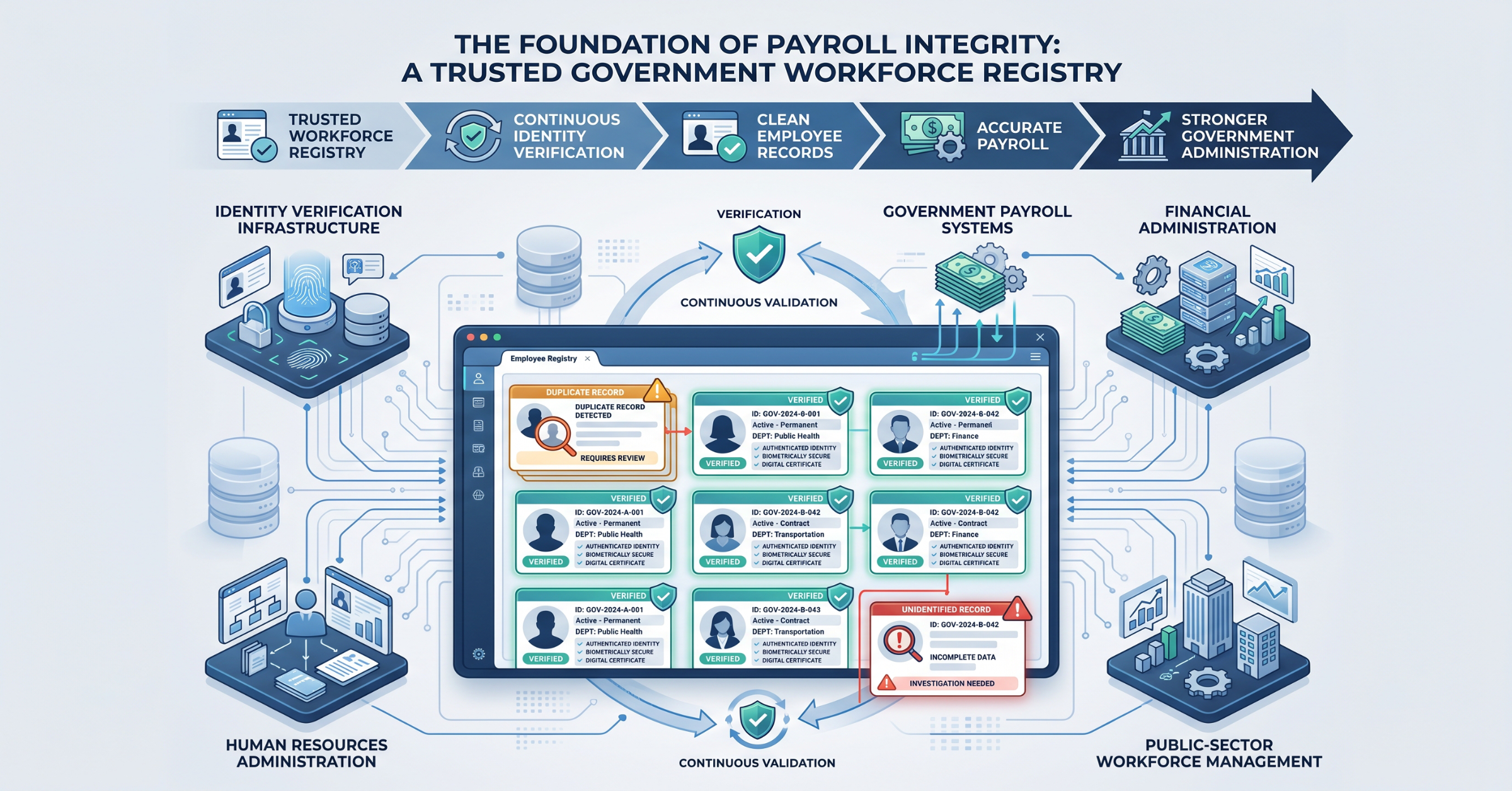
Ghost workers in Nigeria is not a new problem, but the scale of the money involved continues to make it difficult to dismiss as just another payroll irregularity. The Independent Corrupt Practices and Other Related Offences Commission (ICPC) has confirmed the final forfeiture of ₦941,994,079.86 traced to 908 suspected ghost workers uncovered across more than 50 federal ministries, departments and agencies, following a joint investigation with the Office of the Accountant-General of the Federation into IPPIS payroll fraud within the Integrated Payroll and Personnel Information System (IPPIS).
It is tempting to read that case as a story about 908 fraudulent names and move on once they are removed. That is precisely the wrong lesson. Every ghost workers scandal in Nigeria in recent history, from the 2016 IPPIS clean-up to this one, has followed the same script: names are found, names are deleted, payroll returns to normal, and a few years later the names return in a different form. The recurring pattern points to something deeper than any single list of fraudulent entries. It points to the absence of a continuously verified, trusted workforce registry that governments can rely on before a single salary is processed.
Read More: Data Sovereignty: Why African Institutions Are Rethinking Where Their Data Lives
What Are Ghost Workers?
A ghost worker is a name on a government payroll that does not correspond to a genuine, currently serving employee. The description covers a range of situations, and it is worth being precise about them rather than assuming every irregular entry is deliberate fraud. Ghost workers in Nigeria typically appear through:
- Duplicate records created when an employee is entered more than once across systems
- Fabricated identities inserted deliberately to divert salaries
- Former employees who resigned, retired or died but remain active on the payroll
- Genuine records containing incorrect employment or bank details
- Unauthorised entries added by officials with payroll access
- Weak verification processes that fail to catch any of the above before payment
The ICPC chairman, Dr Musa Adamu Aliyu, has described cases in which officials allegedly enrolled relatives, including one instance where a public official was accused of inserting the names of a wife, son and mother-in-law onto the payroll while collecting the salaries of twelve other workers. But not every ghost entry is engineered; some are administrative decay, a retirement never closed out, or a transfer updated in one database but not another, which is why government employee verification needs to run continuously rather than periodically.
How Ghost-Worker Fraud Affects Government
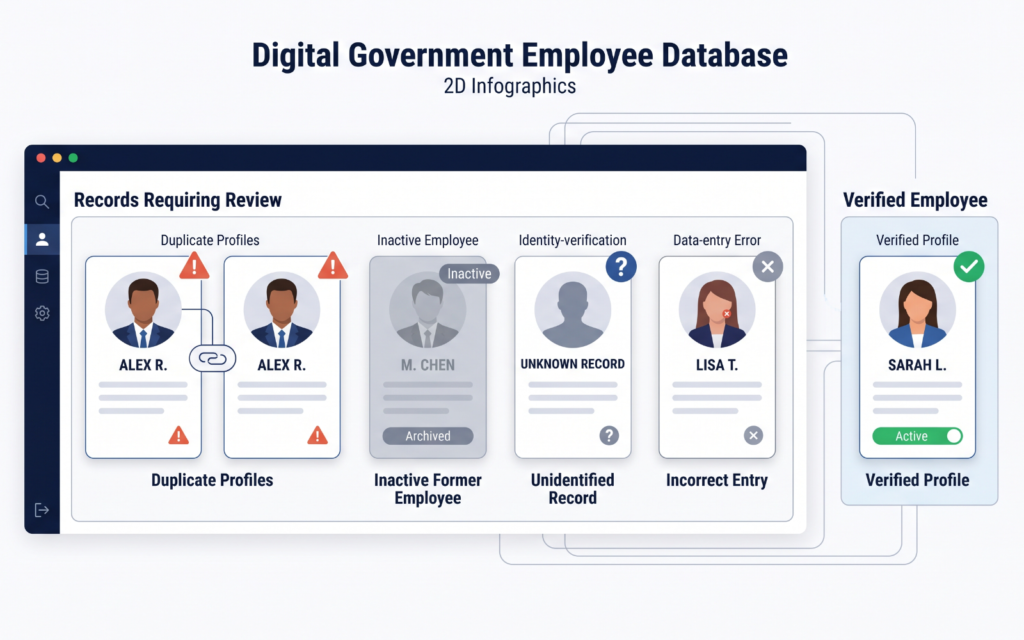
The direct cost is public money paid for work never done. But the more consequential damage sits underneath the headline figure. When workforce records are unreliable, a government cannot accurately plan its wage bill, forecast pension liabilities, or confidently answer how many teachers, nurses, or officers it actually employs in a given state. Budget accuracy suffers because personnel costs are the largest recurring line in most government budgets. Auditors are forced into repeated, expensive government payroll audit exercises rather than routine verification, ultimately a failure of public-sector payroll management rather than a one-off scandal. Public trust erodes every time a discovery makes headlines, because each one confirms the previous clean-up did not hold.
Why Payroll Audits Alone Are Not Enough
Periodic government payroll audit exercises, however well executed, share a structural limitation: they capture a single moment in time. A civil servant’s employment status is not static; people join, transfer, retire, resign or die, and each event needs to be reflected in the payroll record the moment it happens, not whenever the next audit is scheduled. An audit run once every few years will always be reconciling against records that have already drifted out of date.
This is the core distinction between an audit and verification. An audit asks whether the payroll matches reality as of a fixed date. Continuous identity verification asks whether each record is still true today, and keeps asking as circumstances change. Ghost worker verification efforts in Nigeria that rely solely on periodic sweeps will keep finding the same problem indefinitely, because the process that lets ghost entries form is never addressed.
Read More: The Digital Campus: Why Every Modern University Needs One to Stay Competitive
How a Verified Government Employee Registry Works
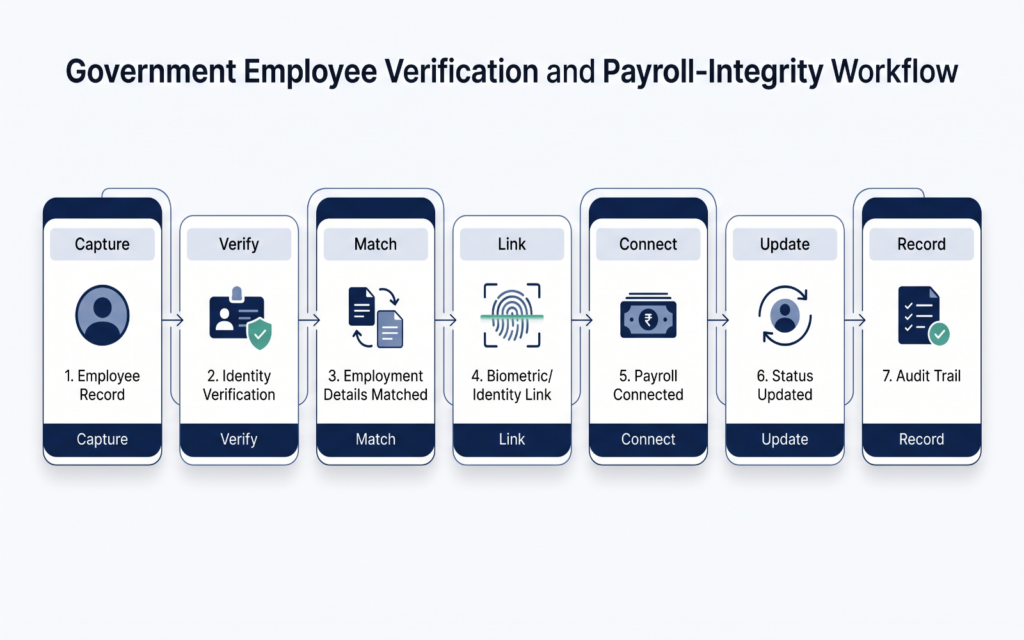
A verified registry replaces the one-off audit with a standing process, the kind of infrastructure that could have caught this IPPIS payroll fraud earlier. In practical terms, the workflow looks like this:
- An employee record is created when someone joins government service.
- Their identity is verified against an authoritative source.
- Employment details, such as role, grade and posting, are matched and confirmed.
- A biometric or digital identity record is linked to that employee file.
- The verified record is connected to the payroll system for salary processing.
- Employment status is continuously updated as changes occur.
- Every change generates an audit trail that regulators and auditors can review.
The specific verification method depends on a government’s existing identity infrastructure and its legal permissions to access national identity data, but the sequence itself, verify before pay, remains consistent across contexts.
The Role of Biometric and Digital Identity Verification
Biometric identity verification, whether through fingerprints, facial recognition or other physical identifiers, solves a specific problem: confirming that the person collecting a salary is the same person originally verified for that role. It is a strong tool against duplicate records and fabricated identities, since a fingerprint or facial match either confirms uniqueness or it does not.
Digital identity verification is broader. It includes biometrics but also covers matching an individual’s records against authoritative identity sources, such as the National Identity Number issued by the National Identity Management Commission, and checking that employment records stay consistent across the systems that reference them. Civil service biometric verification catches impersonation and duplication; digital identity verification confirms the underlying record itself is accurate. Governments generally need both, since neither alone closes every gap.
Connecting Identity Verification to Government Payroll
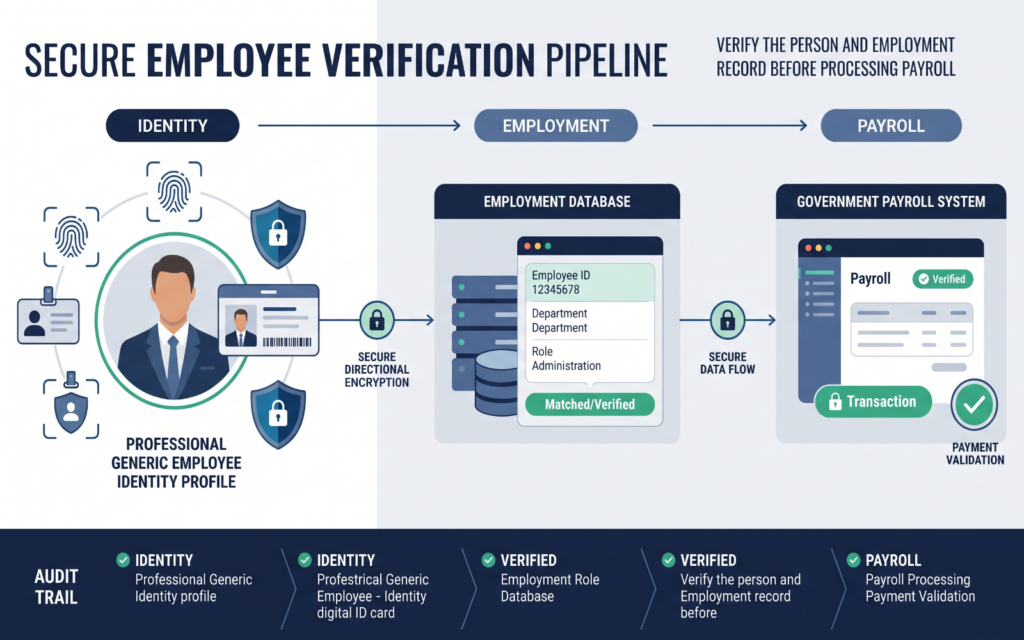
The operating principle is straightforward: verify the person and the employment record before the payroll record is ever relied upon for payment. A verified government registry, properly connected to payroll, can support:
- Validating that a payroll entry corresponds to a real, currently employed individual
- Flagging employment status changes before the next salary cycle runs
- Detecting duplicate records across departments or agencies automatically
- Maintaining an audit trail for every entry, update and payment
- Producing reliable workforce reporting for budget and planning purposes
- Reconciling payroll data against personnel data on an ongoing basis
Why State Governments Need Verified Registries
Much of the national conversation focuses on federal MDAs, but state governments face an equally significant ghost-worker exposure, often with fewer resources to manage it. State civil services, SUBEB-managed teaching workforces, local government employees and public programme staff are frequently recorded across separate, poorly connected systems: one database for the Ministry of Education, another for SUBEB, another for local government secretariats. Fragmented records across agencies make it difficult for any official to see the complete picture, which is precisely the condition ghost entries exploit. A verified government registry, applied consistently through proper civil service biometric verification, gives government technology teams and payroll administrators one accurate source of truth rather than several partial ones.
Beyond Payroll: What a Verified Registry Can Support
Framing this purely as an anti-fraud tool understates its value. A well-built registry becomes foundational government digital infrastructure supporting workforce planning, accurate public-sector benefits administration, education workforce records for teacher deployment, and streamlined government recruitment and credential verification. Once employee identity and status are reliably verified in one place, that same trusted layer can serve public-service administration far beyond the payroll function it was built to protect.
How EduTech Global Can Support Verified Government Infrastructure
EduTech Global works with institutions on the sovereign infrastructure and identity-linked records that sit beneath reliable public-sector payroll management, including verified registries, digital identity integration and secure data management built for African contexts, an approach explored further in our work on data sovereignty in Africa. Within that infrastructure layer, Enroli SIS provides identity-linked record management that institutions can build on for verified enrolment and employment records, without acting as a substitute for a nation’s own identity infrastructure. The message is straightforward: a trusted digital registry gives governments a reliable foundation for managing people, records and public services, and that foundation has to be built once, properly, rather than reassembled after every scandal.
Read More: The Future of Higher Education: Ten Trends Reshaping Universities Through 2030
What Governments Should Look for in a Verified Registry System
Before adopting any registry meant to address ghost workers in Nigeria at scale, government technology teams should confirm it offers:
- Identity verification against authoritative sources
- Biometric support for duplicate and impersonation detection
- Automated duplicate detection across departments
- Complete, tamper-evident audit trails
- Strong data security and encryption standards
- Role-based access control for different levels of government staff
- API connectivity to existing payroll and HR systems
- Compliance with data protection obligations
- Local infrastructure and data controls appropriate to the jurisdiction
- Scalability across agencies and state boundaries
- Real-time record updates as employment status changes
- Clear reporting for auditors and oversight bodies
- Interoperability with national identity and civil service systems
From Payroll Audits to Continuous Verification
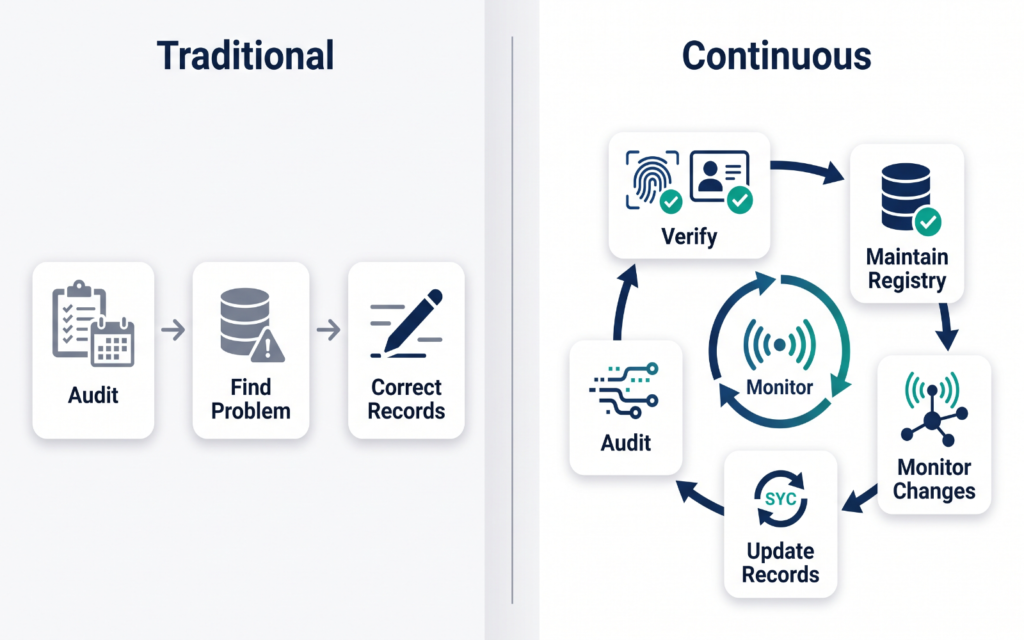
The traditional approach follows a familiar and exhausting sequence: audit, discover a problem, correct the records, and wait for the next audit to find the next problem. A modern approach reverses the order of operations entirely: verify identity and employment first, maintain the registry continuously, monitor changes as they happen, and audit on top of records that are already accurate rather than using the audit to find out how inaccurate they have become.
The ₦942 million case will not be Nigeria’s last ghost workers discovery, and no single audit, however thorough, will change that alone. What changes it is a shift from periodic clean-ups to continuously verified employee registries, built on biometric identity verification, government employee verification and proper audit trails, applied consistently from federal MDAs down to state and local government payrolls. Governors, SUBEB officials and public-sector decision-makers who want to stop discovering the same problem every few years should start by asking a simpler question than any audit does: can we verify, right now, that every name on this payroll belongs to a real person currently doing the job? If your institution is ready to build that foundation, EduTech Global can help you start the conversation.
Frequently Asked Questions
What are ghost workers in Nigeria? Names on a government payroll that do not correspond to genuine, currently serving employees, whether through fraud, duplication or outdated records.
How does ghost-worker fraud happen? Typically through fabricated identities, duplicate entries, unauthorised additions by officials with payroll access, or records that were never updated after an employee left service.
How can governments identify ghost workers? Through payroll audits combined with identity verification, biometric checks and cross-referencing of employment records across agencies and databases.
What is ghost worker verification? The process of confirming that each payroll entry corresponds to a real, currently employed individual, using identity matching and biometric or digital identity checks.
Can biometrics prevent ghost workers? Biometrics reduce duplication and impersonation significantly, but they work best combined with broader digital identity verification and continuous record maintenance.
What is a government employee registry? A centralised, continuously updated record of verified employees, linking identity, employment status and payroll data in one system with a full audit trail.
How does digital identity verification support payroll? It confirms that each person on the payroll is real and currently employed before salary processing occurs, rather than discovering discrepancies after payment.
What is the role of IPPIS in government payroll management? IPPIS is the Federal Government’s centralised payroll platform, administered by the Office of the Accountant-General of the Federation, designed to standardise personnel records and salary payments across enrolled MDAs.
Can a verified registry be used across government agencies? Yes. A properly built registry is designed to be interoperable, allowing federal, state and local government agencies to verify records against a shared, trusted source.