
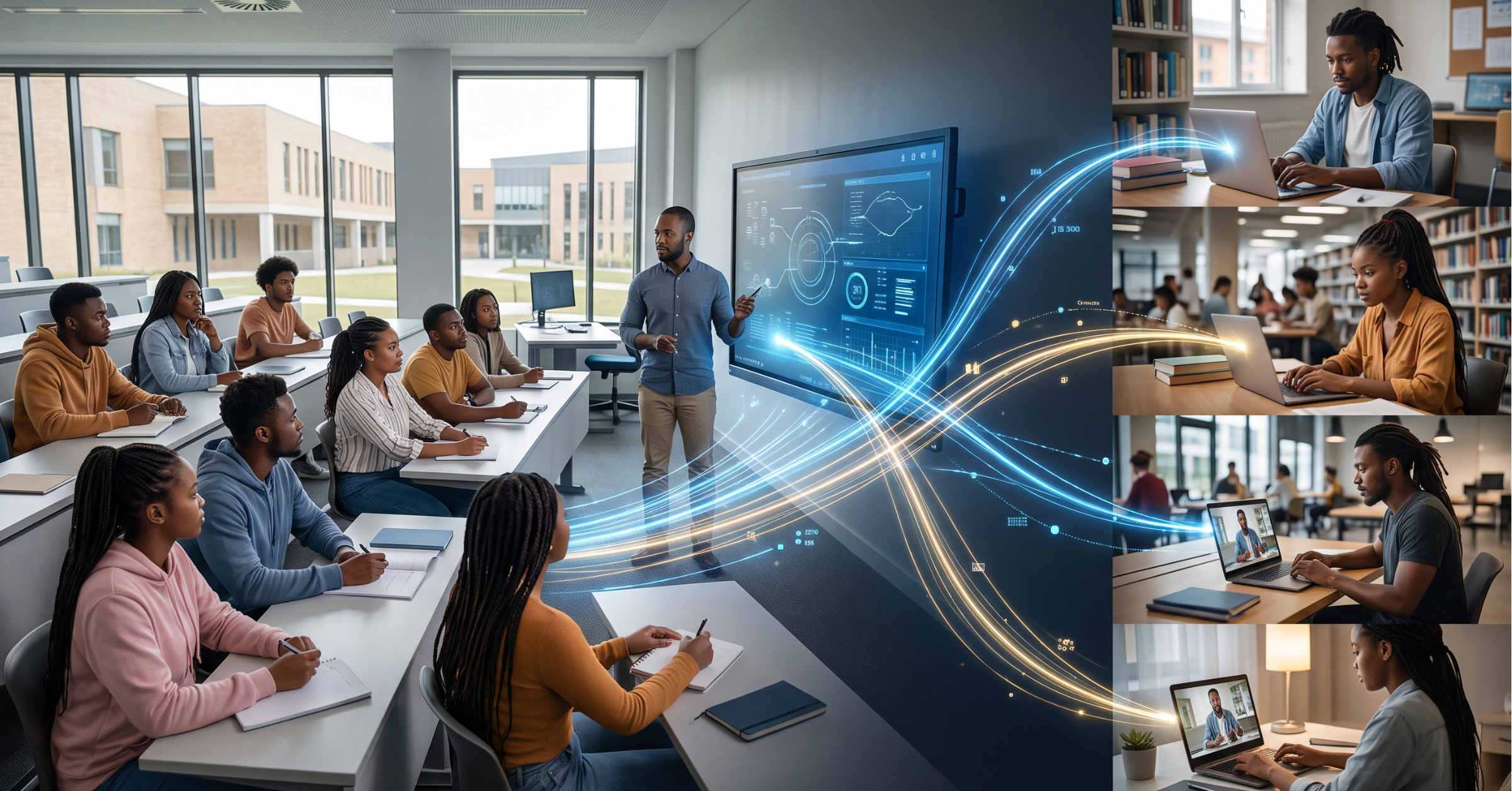
Blended learning in higher education has moved past the old online versus campus debate. Students now expect the flexibility to study around work, family and location, while still valuing the interaction, mentorship and sense of belonging that a physical campus provides.
That combination creates a genuine strategic question for institutions: how do you bring physical and digital education together without producing two disconnected experiences stitched around a shared timetable? Done well, blended learning in higher education is not a technology decision handed to the IT department, nor is it simply a hybrid learning model borrowed from corporate training. It is an institutional model that touches programme design, faculty capability, infrastructure, governance and how success gets measured. This article sets out a practical framework for designing, delivering and measuring it, rather than another explainer of what the term means.
Read More: Cybersecurity in Higher Education: Protecting the Modern Digital Campus
What Is Blended Learning in Higher Education?
Blended learning in higher education combines structured classroom instruction with online content, independent study, digital assessment and collaborative activity, designed as one connected learning experience rather than two parallel ones. It typically includes recorded or live online content students engage with before or after class, in-person sessions built around discussion and application rather than one-way delivery, and digital tools for assessment, feedback and peer collaboration.
It is worth being precise here, because the term gets misused often. As Jisc’s Beyond Blended research notes, there is considerable inconsistency in how institutions define and apply the term across the sector. Simply uploading lecture slides or recorded videos to a learning platform is not a blended learning model; it is digitised content delivery with no real pedagogical design behind it. Genuine blended learning asks what each mode, physical or digital, does best, and builds the course around that division of labour.
Blended vs Hybrid vs HyFlex Learning
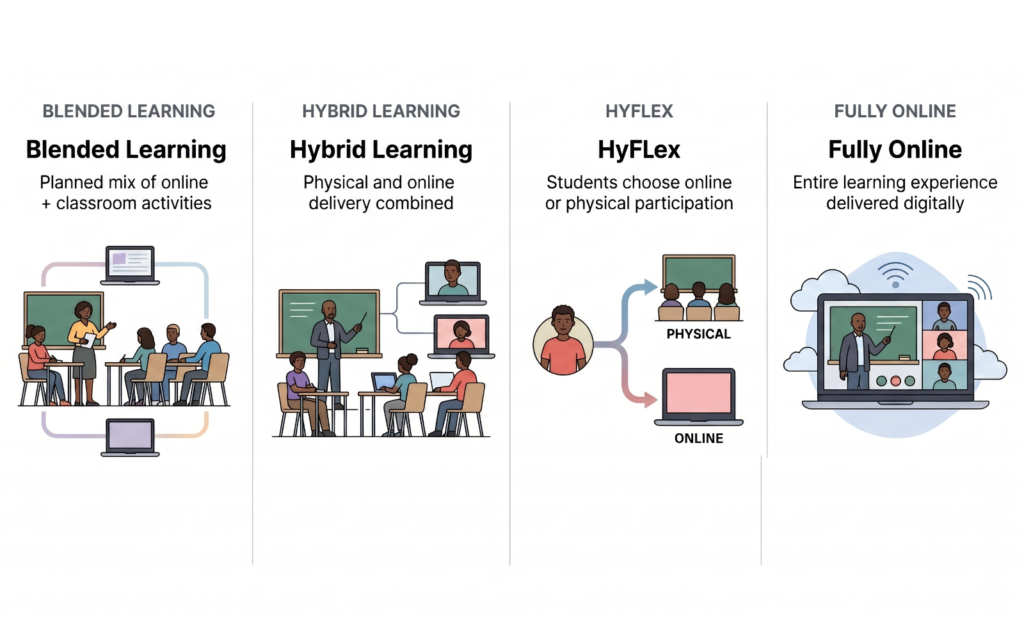
These terms are used inconsistently across the sector, which causes real confusion for students and staff alike. The table below sets out the practical distinctions.
| Model | How It Works | Student Choice | Physical Attendance | Best Use |
| Blended learning | Online and in-person elements are combined by design, each covering what it does best | Limited; the blend is fixed by the course designer | Usually required, at reduced frequency | Core programmess seeking flexibility without losing structure |
| Hybrid learning model | Online and face-to-face components run alongside each other, often replacing a set share of in-person time. | Little to none for a given session | Partially required | Programmes needing to reduce campus dependency without full flexibility |
| HyFlex education | Every session is offered in person, live online and recorded, with students choosing weekly | Full student choice per session | Optional, by design | Programmes serving highly diverse or working student populations |
| Fully online learning | All content and interaction happens digitally, synchronous or asynchronous | Full, but no physical option | None | Distance and lifelong learning programmes |
As EDUCAUSE’s guidance on the HyFlex course model explains, HyFlex education specifically gives students the option of attending sessions in the classroom, participating online, or doing both, and changing that choice week to week. That learner control is what separates HyFlex education from a hybrid learning model, where the instructor, not the student, decides how a given session runs.
Why Universities Are Investing in Blended Learning
The case for a well-designed blended learning model rests on several converging pressures rather than one. Working learners and students with caring responsibilities need flexible learning delivery that a rigid, campus-only timetable cannot offer. International students benefit from asynchronous access across time zones, without losing the interaction that fully online learning can lack. Campus space constraints, particularly at institutions with growing enrolment, make a fully in-person model increasingly expensive to sustain year on year. Institutions also report that well-designed hybrid higher education programmes support learning continuity during disruptions, from extreme weather to public health events, without requiring emergency improvisation each time a disruption occurs. None of these benefits appear automatically; they depend on programmes being built for online and in-person learning to reinforce each other, not simply to coexist on the same timetable, and on a digital learning strategy that treats flexibility as a design principle rather than a fallback option.
What a Strong Blended Learning Experience Looks Like
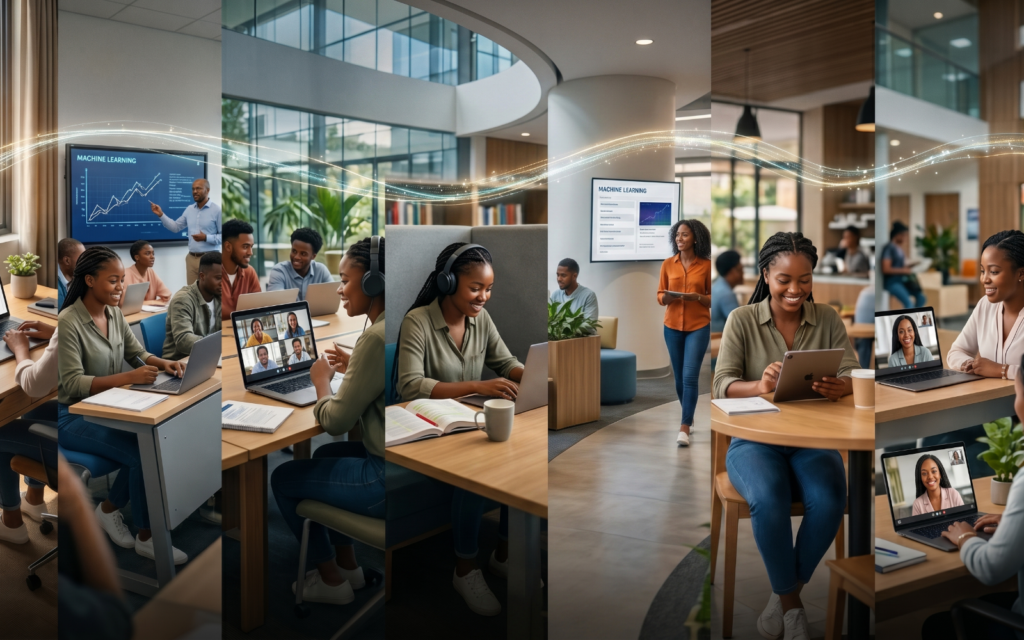
A well-designed blended learning model follows a deliberate sequence rather than a loose mix of activities. A typical learner journey moves through pre-class digital content that introduces core concepts, a campus session built around discussion, problem-solving or lab work rather than lecture repetition, online collaboration that extends the classroom conversation, independent activity to consolidate understanding, assessment that reflects both modes, and feedback and student support available regardless of which mode a student favours. The critical design principle is that physical and digital activities complement rather than duplicate one another. If a lecture is delivered twice, once online and once in the room, that is not a genuine blend; it is redundant effort for both staff and students, and it is exactly the kind of shortcut that gives blended formats a poor reputation among sceptical faculty.
Technology Infrastructure Required for Blended Learning
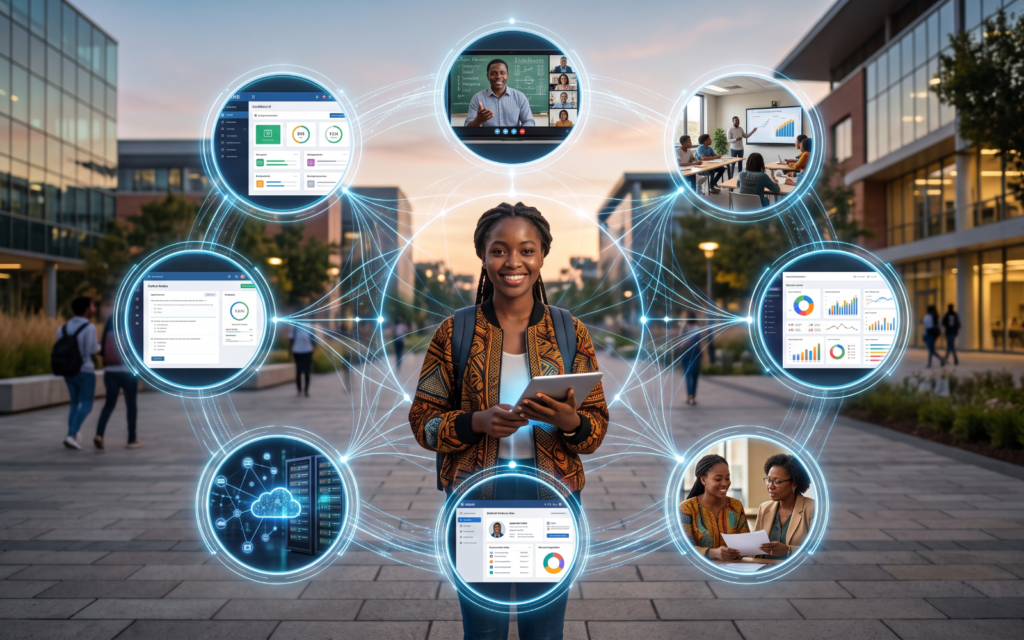
A digital learning strategy for blended delivery needs several systems working together rather than in isolation: a learning management system that supports both synchronous and asynchronous content, integration with the student information system so records and attendance stay consistent across modes, reliable virtual classroom tools, cloud infrastructure capable of scaling around peak demand, assessment platforms that work equally well on and off campus, analytics that track engagement across both environments, and dependable connectivity for staff and students alike. A connected digital campus matters more here than any single tool, since online and in-person learning break down quickly as one coherent experience when systems do not talk to each other. A student should not need to check three different logins to find a grade, a timetable and a reading list. The underlying cloud infrastructure needs to scale reliably as programmes grow, rather than being retrofitted once demand outpaces capacity, particularly during enrolment peaks when the strain on legacy systems is most visible.
Faculty Readiness Is as Important as Technology
Buying a learning platform does not create effective blended learning in higher education; faculty capability does. Redesigning a course for a hybrid learning model is a different skill from adapting a lecture for a webcam, and it requires genuine investment in digital pedagogy, not a single onboarding session. Institutions that succeed typically provide structured training in course redesign and assessment design for blended formats, ongoing teaching support rather than one-off workshops, and realistic change management that acknowledges redesigning a course takes time academic staff do not always have spare alongside existing teaching loads. Treating faculty development as equally strategic to infrastructure investment is what separates institutions with genuine flexible university learning from those left with an expensive, underused platform and frustrated staff.
Common Blended Learning Mistakes Universities Make
Several recurring mistakes undermine otherwise well-funded blended learning initiatives:
- Replicating classroom lectures online instead of designing distinct roles for each mode. Fix: define what each format does that the other cannot.
- Too many platforms creating a fragmented student experience. Fix: consolidate around a core digital campus rather than adding tools piecemeal.
- Weak or one-off faculty training that leaves course redesign to individual initiative. Fix: build sustained, structured development into workload planning.
- Inconsistent student experience across departments, where “blended” means something different in every faculty. Fix: agree an institutional definition and minimum standard, similar to the approach Quality Matters takes with its peer-reviewed course design rubric.
- Accessibility gaps where online and in-person materials are not equally usable. Fix: apply accessibility standards to both modes from the outset, not as a retrofit.
- No measurement framework, so institutions cannot tell whether the model is actually working. Fix: agree outcome metrics before launch, not after.
How Universities Should Measure Blended Learning Outcomes
Measuring blended learning in higher education means comparing outcomes, not counting platform logins. Useful indicators include course completion and assessment performance compared against previous delivery modes, attendance and retention trends, student satisfaction data disaggregated by mode of participation, and faculty adoption rates across departments. Frameworks such as the Quality Matters Higher Education Rubric, built around General and Specific Review Standards for course design, offer a useful reference point for institutions building their own internal benchmarks. Login counts and time-on-platform are activity metrics, not outcome metrics; a student can be highly active on a platform and still be disengaged from learning. The institutions getting the most value from a blended learning model are the ones comparing like-for-like cohorts across delivery formats over successive terms, rather than treating platform usage as a proxy for success.
Building an Institution-Wide Blended Learning Strategy
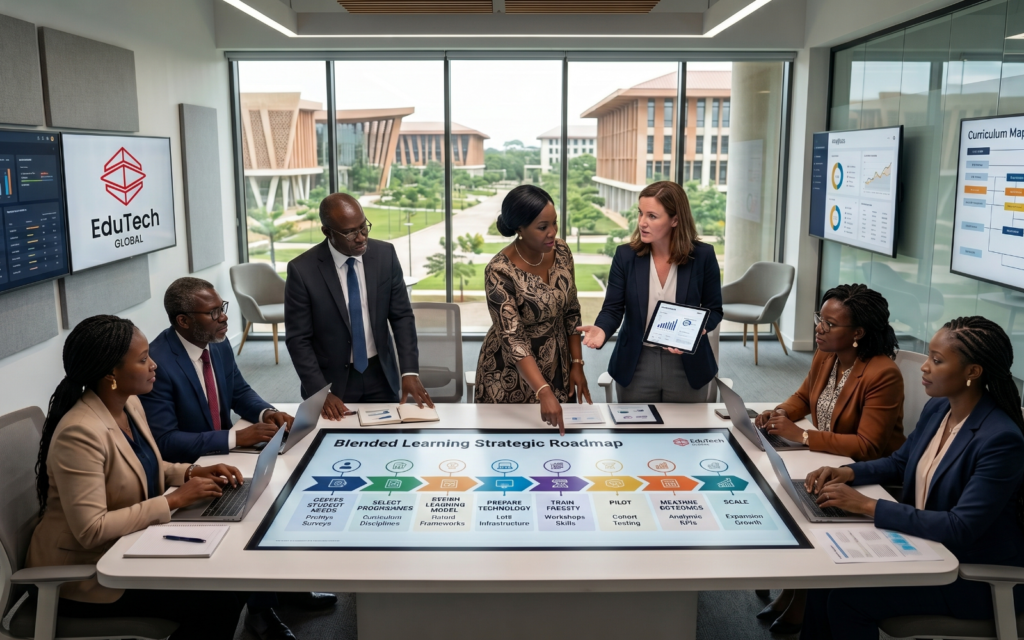
Moving from isolated pilots to an institution-wide approach to flexible learning delivery requires a clear roadmap rather than ad hoc expansion across departments with no shared standard:
- Assess student needs and current programme delivery patterns.
- Identify programmes best suited to a blended model, rather than applying it universally.
- Define the specific learning model, blended, hybrid or HyFlex education, for each context.
- Review infrastructure readiness against the technology requirements above.
- Prepare faculty through structured, sustained development.
- Pilot before scaling, with clear success criteria agreed in advance.
- Measure outcomes against the indicators set out above.
- Scale the models that demonstrably work, and retire those that do not.
A roadmap of this kind treats hybrid higher education delivery as a portfolio decision, made programme by programme rather than imposed uniformly across an entire institution.
Read More: Micro-Credentials in Higher Education: The Future of Skills-Based Learning
How EduTech Global Supports Flexible Education Strategy
Blended learning in higher education works when digital and physical education are designed as one connected experience rather than two competing systems. EduTech Global works with universities on the institutional strategy behind that shift: digital maturity assessment, learning model design, faculty capability building, infrastructure planning and programme development, brought together as a single, coherent strategy rather than a set of disconnected technology purchases. Speak with EduTech Global about building a scalable blended learning strategy for your institution.
Frequently Asked Questions
What is blended learning in higher education? Blended learning in higher education combines classroom instruction with online content, independent study and digital assessment, designed as one connected learning experience rather than two separate offerings running in parallel.
What is the difference between blended and hybrid learning? In a blended learning model, online and in-person elements are combined by design with limited student choice over format. A hybrid learning model similarly mixes both modes but often reduces in-person time by a set share, again without giving students a session-by-session choice.
What is HyFlex learning? HyFlex education lets students choose, session by session, whether to attend in person, join live online, or access recorded content later, with the institution supporting all three modes for every session.
Is blended learning better than fully online learning? Neither model is universally better. Blended learning suits programmes that benefit from structured in-person interaction alongside flexibility, while fully online learning suits distance and lifelong learners for whom no in-person option is practical.
What technology is required for blended learning? A functioning blended learning model needs an integrated learning management system, student information system connectivity, virtual classroom tools, scalable cloud infrastructure, assessment platforms and reliable connectivity, working together rather than as standalone tools.
How does blended learning improve student outcomes? Well-designed blended learning in higher education improves outcomes by extending access to flexible learning delivery, supporting learning continuity, and enabling more personalised support, provided the online and in-person elements are genuinely complementary rather than duplicated content.
How can a university introduce blended learning? Universities should assess student needs, choose suitable programmes rather than applying the model universally, prepare faculty through structured training, pilot before scaling, and measure outcomes against clear indicators agreed in advance.